acupoint
Sanyinjiao (SP6): Location, Traditional Context and Safety
Learn the anatomical landmarks for SP6, distinguish traditional uses from treatment evidence, and understand pregnancy and period-pain precautions.
By WellTao · Published: · Last updated: · Editorial Policy

Location
On the inner lower leg, 3 proportional cun above the inner ankle prominence, just behind the inner border of the shinbone
Function
Traditional reference point; not a diagnosis or a proven treatment for menstrual disorders
Where is SP6 located?
SP6 is on the inner lower leg, above the inner ankle prominence and just behind the inner border of the tibia, or shinbone. The proportional distance is three cun. A cun is a body-based unit, not one inch and not a universal number of centimetres.
The location is recorded in appendix B.4.3 of GB/Z 40893.4—2021. That document concerns paediatric tuina; only its anatomical location is used here. Its treatment schedules are not presented as adult self-care advice.
What does the traditional name mean?
“Three Yin Intersection” refers to a meeting of three channels in Chinese medicine theory. It does not mean three anatomical nerves cross there. Traditional descriptions connect the point with digestion and menstrual concerns, but a traditional association alone does not show that pressing it corrects a hormonal problem or treats irregular bleeding.
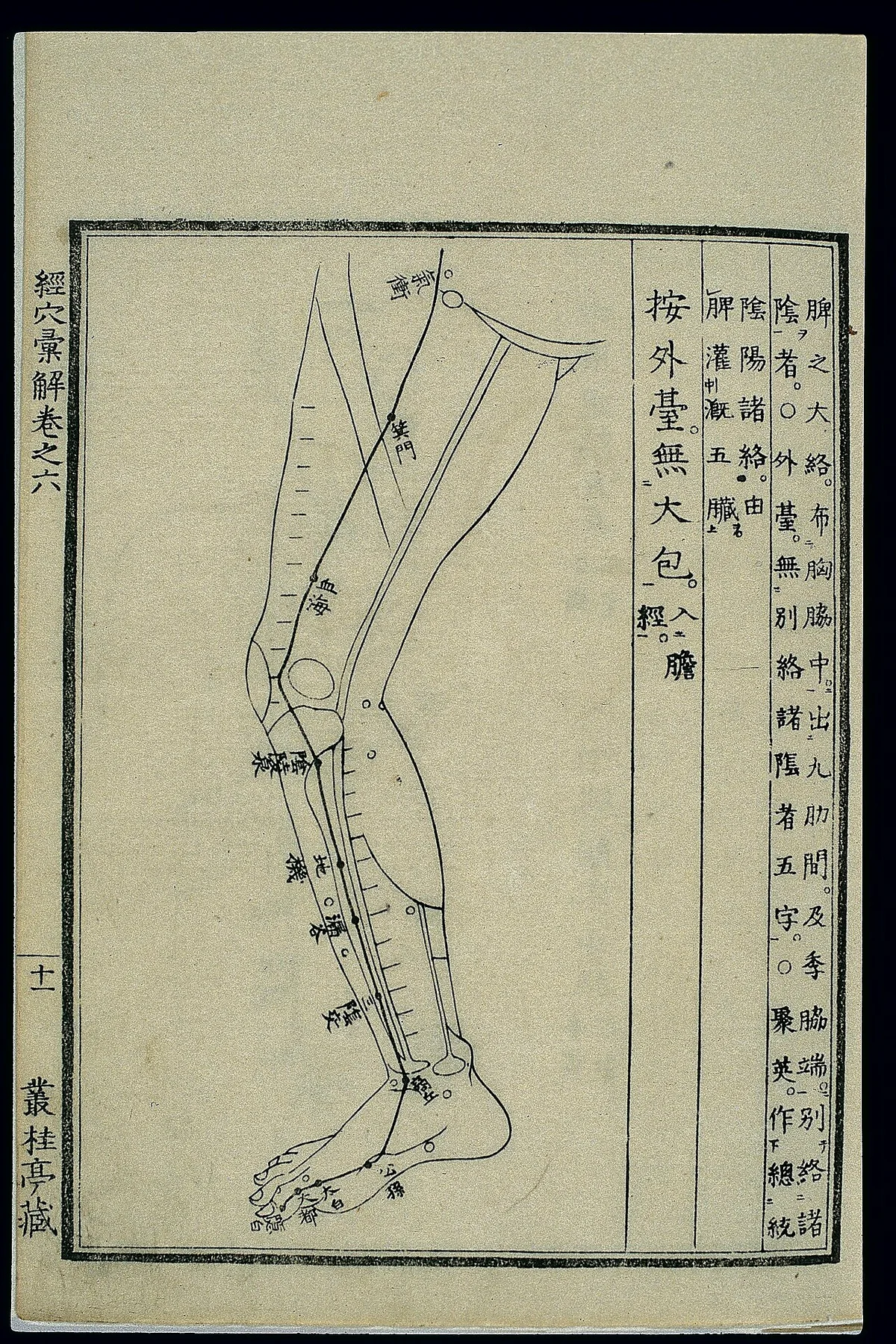
The historical illustration below shows how the channel was represented in an earlier medical text. It is not to scale and should not be used to calculate a location on your body.
What are the safety boundaries?
Avoid self-stimulation of SP6 during pregnancy; discuss any proposed acupressure with your maternity care team. Do not press an injured, inflamed or unexplained swollen area. No needling, burning or electrical stimulation is taught here. NCCIH’s acupuncture overview explains why professional acupuncture evidence and safety do not simply transfer to a home pressure routine.
What if period pain is the concern?
Keep the symptom separate from the point name. NHS period-pain advice recommends assessment for worsening pain, heavier or irregular periods, or pain that affects ordinary activities. Note when pain begins and whether bleeding has changed. Those observations can guide a consultation; finding a tender point cannot identify the cause.
References3 sources
- 01
国家标准化指导性技术文件 / 中华中医药学会公开文本
- 02
NHS
- 03
NCCIH / NIH
Download the App
Get personalized TCM health recommendations