How to Stop Snoring: A Step-by-Step Plan
Most snoring can improve. A week-by-week plan built on sleep position, alcohol timing, and nasal care, plus TCM acupressure and food therapy, with a snoring log and the red flags to rule out first.
By WellTao · Published: · Last updated: · Editorial Policy
More articles in this topicTable of contents
The Short Answer
Most snoring driven by lifestyle — sleep position, alcohol, weight, nasal congestion — can improve meaningfully without medication or devices. The four changes with the strongest backing from evidence and clinical experience: sleep on your side, stop alcohol 3–4 hours before bed, clear your nose, and get 7–9 hours of sleep. Side sleeping and cutting evening alcohol can pay off the same night; give the full plan 2–4 weeks and most people see change.
Two boundaries come first. One: rule out sleep apnea before anything else. If your snoring comes with breathing pauses, choking wake-ups, or severe daytime sleepiness, self-care is a complement at best, and professional treatment (such as CPAP therapy) is the main line — the standard of care with strong evidence behind it. Two: the acupressure and food therapy in this guide are traditional wellness practices, not medical treatment. Do not press Hegu (LI4) during pregnancy, and never stop a prescription sedative on your own.
Can You Manage Your Snoring Yourself
Occasional snoring is normal variation: after an exhausting day, a few drinks, or a stuffed-up cold, anyone can get louder. What deserves a plan is the other kind — snoring most nights, loud enough to bother a bed partner, and unaffected by rolling over. Self-management is for that kind of “simple snoring,” with one precondition: take a minute with this checklist, and if any item fits, see a doctor first.
- A bed partner has witnessed pauses in your breathing (snoring stops for tens of seconds, then resumes with a gasp or snort)
- You wake up choking or fighting for breath
- Severe daytime sleepiness despite enough hours in bed (nodding off in meetings or behind the wheel)
- Morning headaches most days
- Snoring alongside high blood pressure, especially blood pressure that’s hard to control
These point to obstructive sleep apnea (OSA), which is treated on a different track from ordinary snoring. None of them fits? Then the rest of this guide was written for you. If you’d like to pin down your own causes first, read Why Do I Snore?.
What Modern Medicine Says
Start with where the sound comes from. Once you fall asleep, muscle tone drops throughout the body, and the soft tissues of the throat — the soft palate, the uvula, the base of the tongue — vibrate with each breath. That vibration is the snore. The narrower the airway, the faster the airflow, the louder the vibration. So anything that narrows the airway, relaxes the muscles further, or forces air onto a different route makes snoring worse:
- Back sleeping: on your back, gravity drags the tongue and soft palate toward the rear wall of the throat and the airway narrows visibly. Side sleeping removes most of that pull, which is why positional snorers go quiet the moment they roll over.
- Alcohol and sedatives: alcohol markedly relaxes the throat muscles, peaks about two hours after drinking, and can last all night — people who never snore may snore after drinks. Many prescription sedatives and muscle relaxants worsen snoring through the same mechanism.
- Tissue around the neck: a thicker neck means fat pressing on the airway wall from the outside, leaving less room inside. Neck circumference, not total weight, is the number that tracks risk.
- Nasal congestion: a blocked nose forces mouth breathing, and an open mouth lets the jaw drop back, carrying the tongue with it and narrowing the throat further. Allergic rhinitis is an underappreciated driver here.
- Sleep deprivation: chronic short sleep deepens muscle relaxation during sleep, so the throat muscles go even softer — true even for lean people who don’t drink.
One step further down this road is where doctors take over: if the airway repeatedly closes completely and breathing stops for tens of seconds before restarting, that’s obstructive sleep apnea. A night of repeated low oxygen and micro-awakenings buys you daytime sleepiness and morning headaches, and it’s associated with high blood pressure — the causal chain the NHLBI lays out. A Cochrane review confirms CPAP significantly improves OSA symptoms and daytime function, which is why “rule out OSA first, then self-manage” isn’t excessive caution. It’s routing: the two conditions have different main-line treatments.
The TCM View
Chinese medicine doesn’t read snoring as an isolated noise problem. It looks along two lines: “there’s extra material in the airway” and “the strength holding the airway open is weak.” What follows is the traditional framework, offered for self-observation. It’s an empirical model, not a diagnosis in the modern medical sense.
The first line is phlegm-dampness. In traditional thinking, the “Spleen” runs transformation and transportation — you can picture it as the body’s fluid-processing line. When that line runs slow, fluids pool instead of moving, and the pooled fluid becomes “phlegm-dampness,” which rises with qi and clogs the throat, especially in a lying position at night. The Ming-dynasty physician Li Zhongzi put the chain in one sentence in the Yizong Bidu: “the Spleen is the source that produces phlegm; the Lung is the vessel that stores it” — the root is in processing, and it merely shows up in the throat. The second line is qi, the functional energy that, among other jobs, maintains muscle tone. When qi runs short, the throat muscles go soft and slack, and in a back-lying position they sag into the airway.
Along these two lines, snoring shows up in two common patterns:
Phlegm-damp congestion type: loud, continuous snoring; heavy, phlegmy, foggy mornings; a heavier build; a thick greasy tongue coating; a sweet tooth. Direction: resolve dampness and support digestion.
Weak-qi slackness type: low-pitched, intermittent snoring with labored-sounding breathing; soft, under-toned muscles; easy fatigue; a weak voice; shortness of breath on exertion. More common in older adults, the chronically overworked, and people recovering from illness. Direction: strengthen Lung and Spleen qi so the throat holds its tone.
One more common situation deserves a note: snoring that clearly worsens after stressful days or a run of late nights. That pattern works mostly through emotion and schedule degrading sleep depth and muscle tone, so it’s handled in the emotional-care section below rather than listed as a type of its own.
The traditional constitution framework uses categories such as phlegm-dampness constitution, qi-deficiency constitution, the nine TCM constitution types to describe everyday tendencies. Linking the patterns above to these categories explains that framework; it does not establish a medical cause, predict symptoms or select treatment. Experiences overlap and can change with sleep, diet, illness and medication. A qualified practitioner needs to assess any TCM pattern individually. The NCCIH overview of TCM explains research and safety limits; a constitution self-check cannot replace medical assessment.
The evidence boundary deserves the same plainness: NCCIH’s overall assessment is that acupuncture is relatively well studied for pain, while research quality in many other areas of Chinese medicine, including herbal medicine, is too uneven for firm conclusions — and results from needle studies can’t be read as proof that pressing with your fingers works the same way. The TCM content in this guide is a self-observation and daily-care framework, not a substitute for evaluation and treatment.
Everyday Adjustments
Small changes done consistently beat big changes done occasionally. Here are the five, in order of how fast they tend to pay off, each answering one mechanism above.
1. Sleep Position: Back to Side
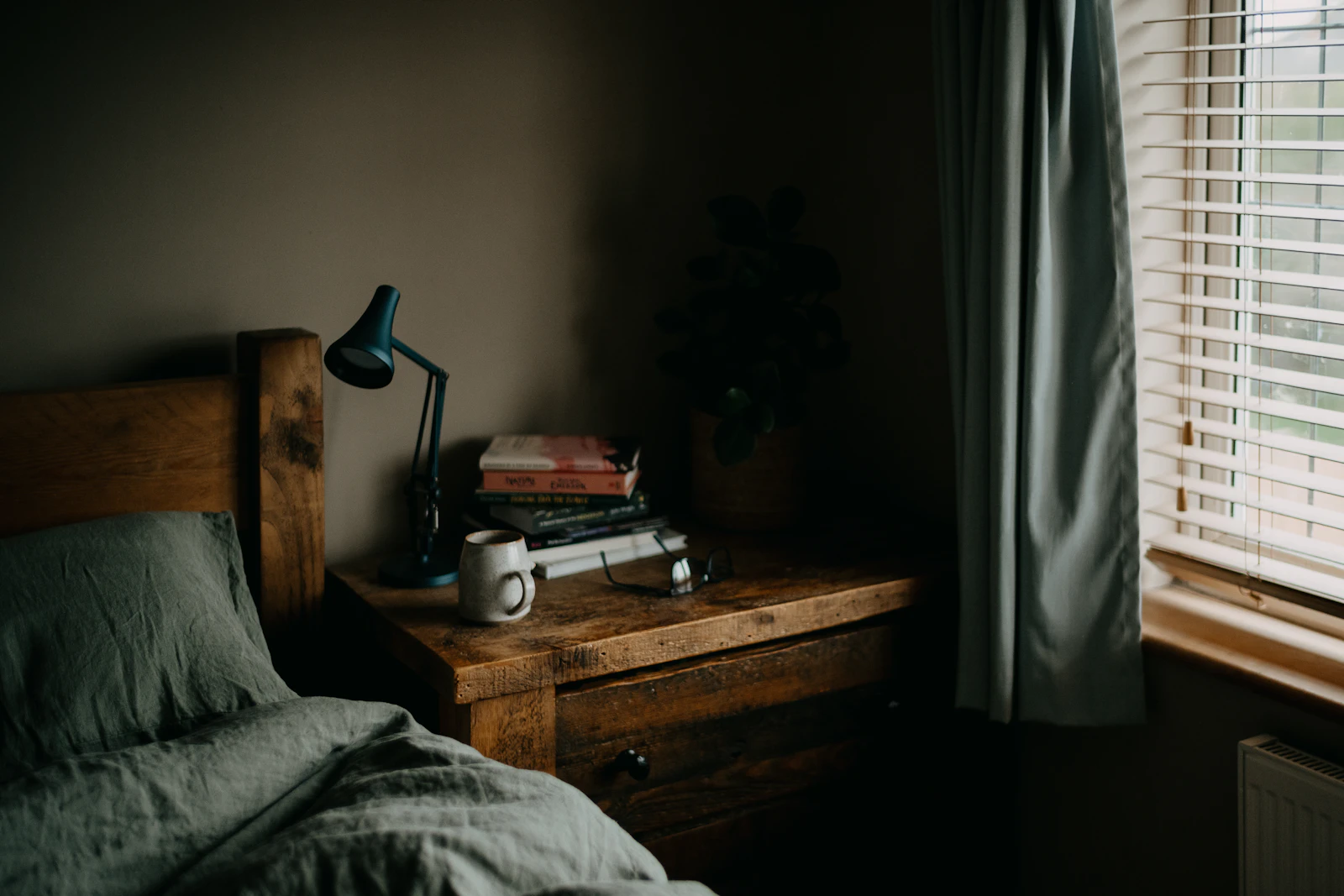
The most direct change for most people, and for purely positional snorers it may be enough on its own. Make side sleeping stick:
- Place a firm pillow or rolled towel behind your back — the discomfort of rolling onto it nudges you back to your side.
- Hug a long body pillow in front to hold the position naturally.
- If you can’t stay on your side, a wedge pillow that raises your upper body 10–15 cm (4–6 in) is a workable fallback.
A new sleep position usually takes 2–3 weeks to stabilize. Don’t be discouraged by rolling onto your back at first.
2. Alcohol and Sedatives
The adjustment is one line: finish drinking at least 3–4 hours before bed. If you take prescription sedatives or muscle relaxants, raise the timing question with your doctor, and don’t stop them on your own — many of these drugs worsen snoring through the same mechanism as alcohol.
3. Nasal Airway Support
When congestion is a main driver, treating the nose beats everything else for speed:
- Saline rinse before bed: a neti pot or squeeze bottle with isotonic saline clears mucus and shrinks swollen membranes. Many people with nose-driven snoring report improvement with nightly use.
- Nasal dilator strips: adhesive strips that mechanically widen the nostrils — cheap, non-invasive, and well suited to narrow nostrils.
- Allergy management: antihistamines, nasal steroids, or allergen avoidance treat the cause upstream — ask a doctor or pharmacist which option fits you. If congestion and sneezing are a year-round fixture, see our allergic rhinitis hub.
4. Weight Management
For people carrying extra tissue around the neck, gradual weight loss is one of the most durable long-term fixes. Risk climbs clearly above about 40 cm (16 in) of neck circumference in women and 43 cm (17 in) in men. A 5–10% weight reduction is a reasonable first goal — enough to see whether weight is your main driver.
5. Sleep Schedule
Seven to nine hours a night and a fixed wake time (weekends included) directly address the over-relaxed-muscle factor. If you’re chronically short on sleep, move this one up the priority list.
TCM Methods
The five categories below answer to the two patterns above. They’re traditional wellness practices for daily self-care. Start with the one or two easiest to sustain, not all of them at once.
Acupressure
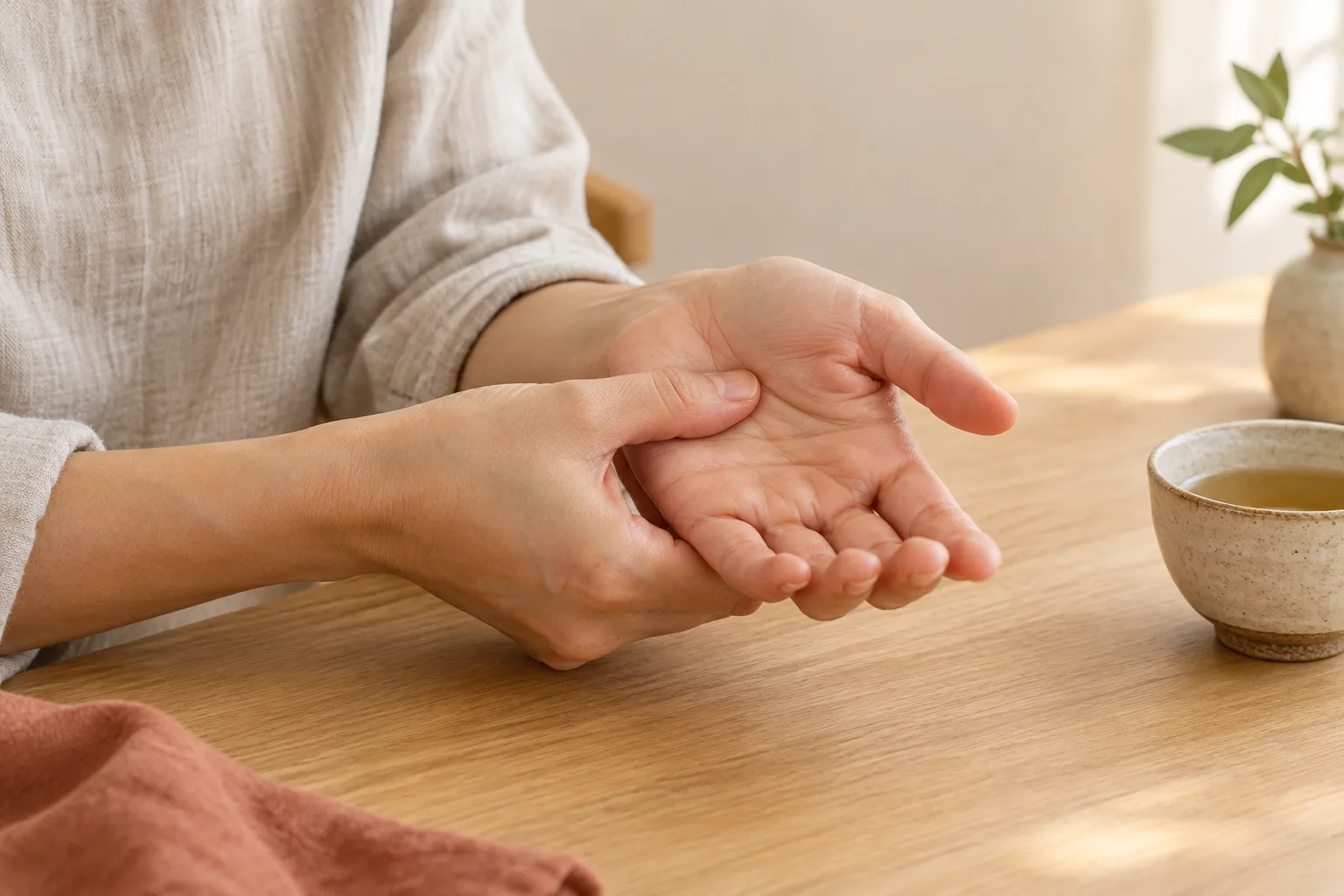
Before bed, press each point with the pad of your thumb or index finger in slow circles, 30–60 seconds per point, just firm enough to feel a mild ache, breathing slowly throughout. A full round takes about 10 minutes.
Fenglong (ST40) Location: on the outer lower leg, midway between the ankle bone and the knee, about two finger-widths out from the shin bone’s front edge. Traditional use: the primary phlegm-resolving point in TCM, traditionally used to support the Spleen’s fluid metabolism and clear the airways. The core point for the phlegm-damp congestion type. 60 seconds per leg.
Zusanli (ST36) Location: four finger-widths below the kneecap’s lower edge, one finger-width out from the shin bone. Traditional use: traditionally strengthens digestion and overall energy, supporting fluid metabolism at the root. Suitable for every pattern, and the lead point for the weak-qi slackness type. 60 seconds per leg.
Yingxiang (LI20, “Welcome Fragrance”) Location: in the grooves beside each nostril, where the nose wing meets the cheek. Traditional use: the most direct point for opening the nasal passages — ideal for congestion-driven snoring. Press both sides with index fingers for 30–60 seconds; many people feel airflow improve immediately.
Lieque (LU7) Location: about two finger-widths (1.5 cun) above the wrist crease, in the hollow just outside the thumb-side wrist bone. Traditional use: a Lung channel point traditionally used to descend Lung qi and clear the throat — a good match for snoring tied to chronic rhinitis or throat irritation. 30–60 seconds per hand.
Baihui (GV20) Location: at the crown of the head, where the line between the ear tips crosses the midline. Traditional use: traditionally lifts clear yang and calms the mind — used for the heavy, foggy mornings of the phlegm-damp type. Gentle circles for 60 seconds before bed.
Hegu (LI4) Location: on the back of the hand, at the high point of the muscle between thumb and index finger. Traditional use: traditionally opens the Lung system and clears the nose — suited to congestion-related snoring. 30–60 seconds per hand. Do not use during pregnancy.
If you lean phlegm-damp, lead with Fenglong; if you lean qi-deficient, lead with Zusanli; on congested nights, add Yingxiang and Hegu. Press more lightly if you’re generally frail, and skip any broken skin. For more on anti-snoring acupressure technique, see acupressure for snoring.
Food Therapy
The principle is one sentence: stop feeding the dampness, and favor warm, soft, easy-to-digest food. Everything here is a food-therapy use of culinary-grade ingredients; if you intend to use any of them as medicinal herbs, consult a licensed TCM practitioner first.
Chinese home-style track:
- Job’s tears and adzuki bean congee: 30 g Job’s tears (also called Chinese pearl barley, sold as yi yi ren at Asian supermarkets or online) and 30 g adzuki beans (small red beans, same sources), soaked 2 hours ahead, then simmered in about 800 ml of water for 40 minutes into a thin porridge. Eat as breakfast 3–4 times a week. The classic pairing for draining dampness and supporting digestion — first choice for the phlegm-damp congestion type.
- White radish and ginger soup: 200 g daikon (the long white radish, widely stocked in Western supermarkets too) sliced, plus 2 slices of fresh ginger, simmered in about 500 ml of water for 15 minutes, salted lightly. Traditionally used to descend qi and dissolve phlegm — works as a dinner side.
- Aged tangerine peel tea (chenpi): 3–5 pieces of dried tangerine peel (sold as chenpi at Asian grocers or online) steeped in hot water for 5 minutes, sipped after meals. Traditionally moves qi and resolves phlegm. (Food-therapy use; if you mean to use tangerine peel as a medicinal herb, consult a practitioner.)
- Pear and tremella soup: 1 pear (Asian pear if you can find it, any ripe pear otherwise) cored and cubed, plus 10 g dried tremella (snow fungus, a pale dried mushroom sold at Asian supermarkets) soaked until soft, simmered in water for 40 minutes until silky, lightly sweetened with rock sugar. Traditionally moistens the throat — a warm bowl before bed for snorers who wake with a dry, scratchy throat.
- A modest dinner, low on sweets and fried food: cutting the source of dampness beats any single dampness-draining ingredient.
Western everyday track:
- Pumpkin and red lentil soup: 300 g pumpkin peeled and cubed, 80 g red lentils rinsed, simmered in about 800 ml of water for 20 minutes until soft, salted lightly. Warm, soft, and easy to digest — the same idea as the Job’s tears congee, built from a Western pantry. Serve as dinner.
- Honey ginger tea: 3 slices of fresh ginger simmered in water for 10 minutes, cooled to warm, with 1 teaspoon of honey stirred in. The evening cup that replaces the nightcap; if you like it sweeter, our ginger tea recipe works too.
- Steamed sweet potato with clear chicken soup: 1 sweet potato (about 200 g) steamed until soft, alongside a clear soup from 1 chicken leg simmered 40 minutes with 2 slices of ginger, fat skimmed. Gently nourishing and easy on digestion — the qi-deficiency type’s first choice for dinner.
- Baked pear with cinnamon: 1 pear cored, dusted with cinnamon, baked at 180°C (350°F) for about 25 minutes. The Western cousin of the pear-tremella soup, eaten warm before bed.
Both tracks run in the same two directions: the congee-and-soup items for the phlegm-damp tendency, the chicken soup for the qi-deficiency tendency, and the pear dishes for a dry throat. If you run cold or cold food bothers your stomach, eat everything warm.
Emotional Care
People under stress often notice their snoring tracks their mood — stress lightens sleep and fragments it, so muscle tone rises and falls through the night and the snoring rises and falls with it.
- Five minutes of belly breathing before bed: one hand on your chest, one on your belly. Inhale through the nose for 4 counts (belly only), hold gently for 2, exhale for 6–8. This activates the parasympathetic nervous system and lets the throat muscles settle into a steady relaxation instead of being tugged around by stress.
- Check your thoughts at the bedroom door: before lights-out, jot down whatever is on your mind, one line per item, with tomorrow’s handling time next to it. From then on the page holds them; the bed is for sleeping.
- An outlet during the day: a walk, a conversation, writing it down — anything that moves emotion out. Feelings bottled up in the daytime collect their debt in light sleep at night.
Movement and Exercise
- Throat-muscle (oropharyngeal) exercises: ① press the tongue tip against the roof of the mouth just behind the upper front teeth and slide it backward, 20 times; ② open your mouth and say “ah” while lifting the soft palate as high as you can, hold 5 seconds, 10 times; ③ puff your cheeks with air and push it side to side, 20 times. One to two sets a day. A 2020 Cochrane review of nine studies (in OSA patients) found these exercises probably reduce snoring intensity and daytime sleepiness compared with sham exercises; direct evidence in simple snorers is thinner, but they cost nothing and carry no risk.
- Regular aerobic exercise: 30 minutes of brisk walking or easy jogging, 3–5 times a week, enough for a light sweat without getting winded. For anyone above the neck-size thresholds, this is the long game alongside weight loss, and it suits the phlegm-damp tendency especially well.
- Baduanjin or tai chi: slow-paced and a good starting point if your fitness is low, 10–15 minutes a day.
- Timing: no vigorous exercise within 2 hours of bedtime — it makes falling asleep harder.
Sleep and Daily Rhythm
- In bed by 11 p.m. where possible: on the traditional body clock, the hours after 11 p.m. belong to the Gallbladder and Liver systems, and chronic late nights are thought to worsen dampness and stagnation. The modern view agrees in its own words: late nights cut into deep sleep and deepen muscle relaxation. Two languages, one fact — the full mapping is in the TCM body clock.
- Fixed wake time, within an hour on weekends, and 7–9 hours of sleep.
- A warm, modest dinner, nothing within 3 hours of bed: even without obvious digestive symptoms, a warm light dinner eases the digestive load and, in the traditional view, reduces overnight dampness.
- A 15–20 minute easy walk after dinner, 30–60 minutes after eating — traditionally supports digestion and reduces dampness accumulation.
Different constitution tendencies call for different emphasis, and that’s by design: phlegm-damp works on diet and movement first, qi-deficiency leads with regular meals, regular sleep, Zusanli, and the chicken soup. If you can’t tell whether you’re the phlegm-damp or the qi-deficiency kind of snorer, spend a few minutes on the free test at the bottom of the page — it scores all nine tendencies one by one, and the highest score tells you which adjustments to start with. Think of it as a mirror, not a medical verdict.
Your Four-Week Card and Snoring Log
Change starts with measurement. First record 7 baseline nights using your phone’s recorder (leave it by the bed) or a partner’s report. Then work the card below, logging as you go, and compare after two weeks.
The four-week card:
- Week 1 — position and alcohol: side sleeping every night (pillow behind your back or body pillow in front); alcohol finished 3–4 hours before bed; nightly saline rinse if your nose is a factor. TCM starter: nightly acupressure on Fenglong, Zusanli, and Yingxiang (about 5–8 minutes), plus the congee or the tangerine peel tea this week.
- Week 2 — deepen: add Lieque and Baihui to the pressing round; add five minutes of belly breathing before bed; start the daily log.
- Week 3 — build: add the throat-muscle exercises, one to two sets a day; if your neck size is above the thresholds, put three brisk walks on the calendar.
- Week 4 — evaluate: keep everything running and compare objectively against week one — recordings or a partner’s report, not feel.
The snoring log (one minute each morning):
| What to record | How to record it | Example |
|---|---|---|
| Snoring score | Partner’s rating or playback from the recording (0–10) | 6, louder after midnight |
| Alcohol that evening | Any, and when you finished | 2 glasses of wine, done by 9 p.m. |
| Sleep position | The position you woke in | Woke on my back |
| Congestion | 0–10 | 3, clear after the rinse |
| Sleep duration and wake time | When you slept and woke | 11:30 p.m.–7:00 a.m. |
| Morning state | Dry mouth, headache, grogginess | Noticeable dry mouth |
| What you did | Points pressed, food therapy, breathing | 3 points pressed, peel tea |
After a week the log speaks for itself: louder after drinks means alcohol is your driver; high scores on back-sleeping nights point to position; nothing stands out but the snoring persists — bring the log to your appointment, because this record is also the best material you can hand a doctor.
How Long Until You See Improvement
- Side sleeping and cutting evening alcohol: feedback from your partner within the same night to a few days.
- Saline rinse and nasal strips: days to a week; easier breathing is noticeable the first night.
- Acupressure, food therapy, and rhythm changes: one observation cycle is 2–4 weeks, scored against your log.
- Throat-muscle exercises: study protocols run for months; give them 6–12 weeks before judging.
- Weight loss: aim for 5–10% of body weight and count in months — the slowest change, and the most durable.
Use 4 weeks as the checkpoint: clear improvement, keep going. Still nothing after six to eight honest weeks? That’s where self-help stops and an evaluation begins — gritting your teeth won’t move it.
When to See a Doctor
Prioritize a professional evaluation over self-management when:
- A bed partner witnesses breathing pauses, choking, or gasping;
- Daytime sleepiness is severe enough to affect work or driving;
- Morning headaches are the norm, or you wake frequently fighting for breath;
- Snoring comes with high blood pressure;
- Six to eight weeks of consistent self-care brings no improvement — a structural cause (deviated septum, enlarged tonsils) may be involved and needs an ENT evaluation.
This article is health education, not a substitute for a doctor’s diagnosis or individualized advice. Acupressure and food therapy are traditional wellness practices; if you take prescription medication, discuss any changes with your doctor first.
Common Questions
Does this plan work for a child who snores?
No. In children, the most common cause of snoring is enlarged tonsils or adenoids — a structural problem, where home care is not the main line. The NHLBI likewise points to enlarged tonsils and adenoids as the leading cause of sleep apnea in children. If a child snores regularly, breathes through the mouth at night, or sleeps restlessly, book an ENT evaluation early rather than trying home remedies first.
Can I just buy an anti-snoring mouthpiece?
Oral appliances (mandibular advancement devices) have real evidence behind them — the American Family Physician review of OSA lists them as an option for people who can’t tolerate CPAP — but that evidence is for custom devices fitted by a dentist. Over-the-counter “boil-and-bite” versions fit far worse and deliver far less, and anyone with jaw-joint problems should ask first. And get the order right: before shopping for a mouthpiece, make sure you don’t have the kind of apnea that needs CPAP.
Want to understand your snoring’s causes first? Read Why Do I Snore?. For the fullest natural routine — throat exercises, breathing practices, the six-point acupressure sequence — see How to Stop Snoring Naturally. For every article on this topic, start at the snoring hub.
Why does the same plan work differently for different people?
The free constitution test maps your tendencies across nine traditional body types, helping you pick the methods that best fit your constitution. It describes wellness tendencies only and is not a medical diagnosis.
References7 sources
- 01
U.S. National Heart, Lung, and Blood Institute (NHLBI / NIH)
- 02
American Family Physician
- 03
Cochrane systematic review
- 04
Cochrane systematic review
- 05
U.S. National Center for Complementary and Integrative Health (NCCIH / NIH)
- 06
U.S. National Center for Complementary and Integrative Health (NCCIH / NIH)
- 07Yizong Bidu (Essential Readings in Medicine), Li Zhongzi
Classic of Chinese medicine, Ming dynasty
Personalized guidance
Use the app for constitution-friendly ideas and structured plans when available.
Download the App
Get personalized TCM health recommendations