How to Get Rid of a Headache Without Medicine: What Actually Helps
Headache now and don't want painkillers? A medicine-free toolkit ranked by speed: water, cold vs. heat by headache type, dark-room rest, smart caffeine timing, acupressure, and breathing, plus a one-hour action card, TCM patterns, and red flags.
By WellTao · Published: · Last updated: · Editorial Policy
More articles in this topicTable of contents
The Short Version
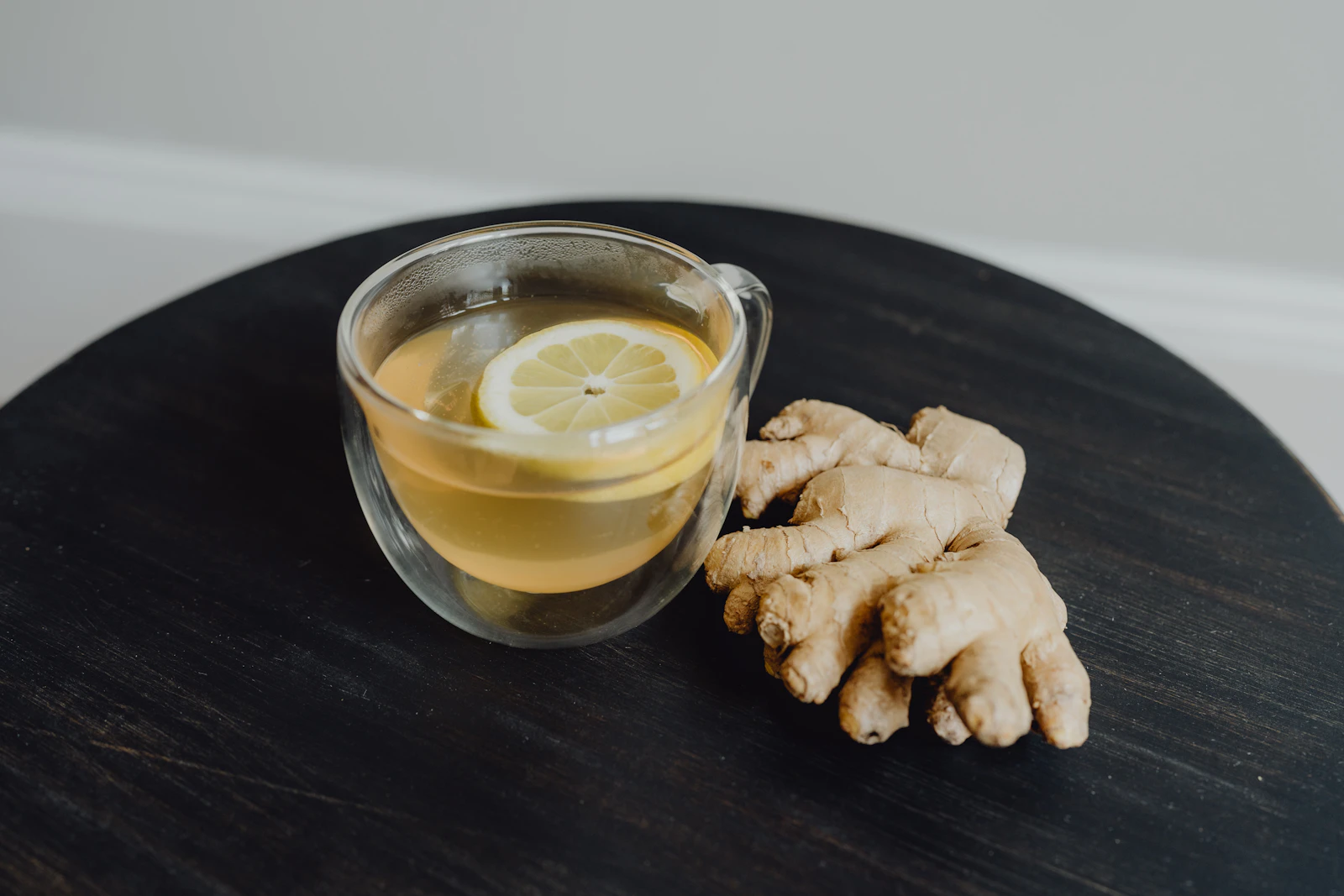
To get rid of a headache without medicine, start with the three cheapest moves: drink a glass of warm water, step away from screens and rest somewhere quiet and dim, then match the compress to the pain — a cold pack on the forehead for one-sided throbbing that hates light and noise, a warm compress on the neck and shoulders for a dull, band-like squeeze on both sides. This routine suits occasional tension-type headaches and mild to moderate migraine attacks, and most people feel some relief within the hour. Acupressure and slow breathing stack on top; both are covered below.
One counterintuitive warning: if you take painkillers for headache more than two or three days a week, the pain itself may be caused by the medication. The more you take, the more it hurts, which is exactly why the no-pill route deserves a serious try. A sudden, explosive “worst headache of my life,” or any headache with limb weakness or slurred speech, is outside the scope of this article — go straight to when to see a doctor.
Which Headache Is Yours?
Remedies only work when they match the headache, so take one minute to check:
- The tight band: both sides or the whole head, like a strap pulled snug. Steady rather than throbbing, mild to moderate, no worse when you walk or climb stairs, often with a stiff neck and shoulders. This is close to a tension-type headache, the most common kind.
- The throbber: one temple pulsing in time with your heartbeat, moderate to severe, made worse by light, noise, and any movement, sometimes with nausea. This is the shape of a migraine attack.
- The obvious-trigger kind: a cold or fever, a full day squinting at a screen, the morning after drinks, an afternoon with barely any water. The cause came first, so treat the cause.
If the pain arrived suddenly, is the worst you’ve ever had, or comes with fever, a stiff neck, or numbness or weakness anywhere, skip self-care and get medical help.
What Modern Medicine Says
A widely misunderstood fact: the brain itself cannot feel pain. Headache signals come from nerve endings in the scalp, the membranes around the brain, blood vessels, and the muscles of the neck and shoulders. Something irritates them, and they report it upward. Common, reversible triggers:
- Dehydration: both the NHS and NINDS list not drinking enough as a common trigger. The exact mechanism is still being studied, but the clues are plain: dark urine, a dry mouth, no bathroom trip in half a day.
- Hunger and skipped meals: when the blood sugar supply wobbles, headaches move in. The NHS specifically advises against skipping meals while you have a headache.
- Posture-driven muscle tension: hours hunched over a screen keep the neck and scalp muscles contracted. They develop “trigger points,” spots that hurt when pressed, and the pain spreads upward into the head.
- Sleep disruption: too little sleep triggers headaches, and so does too much. The NHS advises against sleeping longer than usual during a headache.
- Caffeine’s double edge: caffeine constricts blood vessels in the brain, so a small amount sometimes eases pain, which is why some combination painkillers include it. But a daily coffee drinker who skips or delays a cup can get a withdrawal headache. The NINDS trigger list includes both “caffeine” and “caffeine withdrawal.”
- Stress, and the let-down after it: emotional stress is the biggest driver of tension-type headache. Some people reliably get hit on weekends instead, when the pressure suddenly drops, the alarm stays off, and the morning coffee runs late.
Frequent acute-medicine use can contribute to medication-overuse headache, but medicine days alone do not diagnose it. ICHD-3 criteria include an existing headache disorder, headache on at least 15 days a month and regular overuse for more than three months. Drug-specific use thresholds are generally 10 or 15 days a month. Needing acute medicine more than 2–3 days a week is a reason to review treatment with a clinician, not a diagnosis or a safe-use allowance. Do not change prescribed or frequently used medicines without advice.
The Chinese Medicine View
Traditional Chinese medicine (TCM) sorts headaches into two broad lines: “external” headaches arrive suddenly after wind, cold, or a weather swing; “internal” headaches keep coming back and travel with your emotions, diet, and sleep, which points to something stuck inside. What follows is the traditional framework, offered for self-observation. It is an empirical model, not a diagnosis in the modern medical sense.
The theory’s master rule for pain is “where there is blockage, there is pain.” The classical text Suwen, in its “Discourse on Pain,” says the body’s channels run in an unbroken circuit, and when something lodges in a vessel so the flow cannot pass, pain arrives at once. In plain terms, qi and blood — the body’s working energy and circulation in TCM terms — move like traffic on a ring road. Where traffic jams, pressure builds, and pain reports from that exact spot. The head sits highest and is dense with channels, so this traffic is especially sensitive to emotion, food, and sleep.
Recurring headaches usually show up in one of three patterns:
The tight, frustrated kind: a band-like squeeze or stuffy pressure reaching into the neck and shoulders, clearly worse after anger or a bottled-up day, with frequent sighing; women often notice it around their period. The blockage is powered by emotion — qi stalls, and pain follows.
The heavy, foggy kind: the head feels wrapped in a wet towel, muddled and unclear, with chest tightness, queasiness, no appetite, and a thick, greasy tongue coating. Common in people who sit all day and eat plenty of sweet, rich food. In TCM terms, digestion runs slow and metabolic waste hangs over the head like fog.
The fixed, stabbing kind: the pain sits in exactly the same spot for years, needle-sharp, worse at night, sometimes traceable to an old injury. This is the most “solid” kind of blockage, blood pooled and stuck in one place.
Traditional accounts also discuss tendencies using categories such as qi-stagnation constitution, phlegm-dampness constitution, blood-stasis constitution. These are classifications within the traditional framework, not validated predictions of symptoms or explanations of a medical cause. A few episodes, a clock time or a quiz result cannot establish a diagnosis. Persistent symptoms need medical assessment; any TCM pattern needs individual practitioner assessment. See the NCCIH overview for research and safety limits.
What the research does and doesn’t say: studies reviewed by NCCIH suggest acupuncture may help reduce how often migraine and tension-type headaches strike, with moderate-quality evidence. Those studies used needles placed by licensed practitioners, and the results don’t transfer to pressing points with your own fingers. Everything under the Chinese-medicine headings is a self-observation and daily-care framework, not a substitute for evaluation or treatment.
Everyday Relief Without Pills
In rough order of how fast they work, with who each one suits and when to change tactics:
- Drink water first: 300–500 ml of warm water (about 1¼–2 cups), in one go if you can. If you need the bathroom within the hour and the pain has eased, dehydration was the culprit. Nothing changed? Move down the list.
- Cold or heat, by type: throbbing pain gets cold — wrap an ice pack in a towel and rest it on your forehead or temples for 15 minutes at a time, stopping if the skin goes numb. Mayo Clinic lists cold compresses among the first self-care steps during a migraine attack. Band-like tightness gets heat — a warm water bottle or heated towel across the back of the neck for 15–20 minutes, so the locked muscles can let go. If the “right” one feels wrong, switch; your body’s feedback outranks any rule.
- Rest in a dark, quiet room for 20–30 minutes: essential for the throbbing kind, since light and sound are both irritants mid-attack. Eyes closed is enough, and don’t sleep it off too long, because oversleeping can make things worse.
- Time caffeine carefully: if you rarely touch it, a small coffee or strong tea early in the attack sometimes helps. If you drink it daily, ask whether today’s cup came late. Don’t add extra for pain; that just books tomorrow’s headache.
- Breathe slowly for 5 minutes: in for 4 seconds, out for 6. The longer exhale is the point — it tells your nervous system the alarm is off. NCCIH rates relaxation training as possibly helpful for some headache sufferers, with limited study quality, so treat it as a free add-on.
- Don’t run on empty: eat at mealtimes, something warm and light if your appetite is off. If nausea tags along, warm ginger tea helps; recipe below.
If a method does nothing after one or two honest rounds, stop stacking it and switch tactics — record what happened with the card below, or get evaluated.
TCM Approaches
Five categories, matching the three patterns above. Start with the one or two easiest.
Acupressure
Press with a fingertip pad, firm enough for a mild, achy sensation, 60–90 seconds per point. For locations and combinations beyond these, see our guide to pressure points for headaches.
Hegu (LI4) Where: the back of the hand, in the web between the thumb and index finger bones, at the spot that feels distinctly sore when pressed. Traditional use: an old acupuncture verse says “for the face and mouth, Hegu commands” — it is the most-used point for head and face discomfort and suits both the tight-frustrated and fixed-stabbing patterns. Do not press during pregnancy.
Taiyang (EX-HN5) Where: in the hollow about one finger-width behind the corner where the eyebrow ends and the outer corner of the eye begins, right at the temple. Traditional use: direct local relief during an attack. Circle gently with a fingertip for 1–2 minutes, light pressure only.
Fengchi (GB20) Where: at the base of the skull, in the hollows on either side, just outside the two large neck muscles. Traditional use: traditionally used to release wind from the surface and loosen the neck. It pairs well with heat for the tight-band kind and is a classic choice for headaches that follow a chill.
Sanyinjiao (SP6) Where: on the inner leg, about four finger-widths above the tip of the inner ankle bone, just behind the edge of the shin bone. Traditional use: linked in TCM to three channels (Liver, Spleen, Kidney) and traditionally favored when headaches arrive in step with the menstrual cycle. Do not use during pregnancy.
Hegu plus Taiyang suits qi-stagnation and blood-stasis tendencies mid-attack. For the foggy, phlegm-dampness kind, add Zusanli (ST36), four finger-widths below the outer knee. Worth repeating: the needle research does not transfer to self-acupressure. Pressing these points is a safe, low-cost way to relax, and that is its job description.
Food Therapy
Chinese home-style track
- Warm first during an attack: warm water, warm congee (rice porridge), hot soup. Skip iced drinks.
- Chrysanthemum tea: 5–6 dried Hangzhou white chrysanthemum flowers (sold as “Hang Bai Ju,” small white buds, in the tea or herb aisle of Asian supermarkets, or online). Steep in hot water, covered, for 5 minutes. Traditionally, chrysanthemum clears wind-heat and settles the Liver, so it suits a distending headache with irritability or one that follows a long day of screen strain (food-therapy use; consult a licensed TCM practitioner before using these as medicinal herbs).
- Ginger tea: simmer 3–5 slices of fresh ginger in water for 10 minutes; it suits headaches with nausea or those that followed a chill. Full method on our ginger tea remedy page. NCCIH’s verdict on ginger: the strongest evidence is for nausea, while direct evidence for headache itself is limited. Its job here is the queasiness and stomach upset that ride along.
- The foggy kind cuts the sweet and greasy first: sugary drinks, fried food, and alcohol all thicken the fog. If you lean phlegm-dampness, run this rule for a week before judging.
Western everyday track
- Pumpkin oatmeal: 40 g (about ½ cup) quick oats, 100 g (about 3.5 oz) pumpkin cut into small cubes, 500 ml (2 cups) water. Simmer gently 10–15 minutes until thick. When appetite is gone mid-attack, this works as a whole meal — warm, mild, filling — and delivers the “warm first” principle. A pinch of cinnamon or a chopped date or two is a fine variation if you want it sweeter without the sugar spike.
- Honey ginger tea: 3–5 slices of fresh ginger (about 10 g) simmered in 300 ml (1¼ cups) water for 10 minutes, cooled to sipping temperature, then a teaspoon of honey. Same job as the ginger tea above, same evidence boundary.
- Ginger chicken soup: bring 250 ml (1 cup) store-bought low-sodium chicken broth to a boil with 2–3 ginger slices, drop in a handful of leftover rice or shredded cooked chicken, simmer 3 more minutes, salt to taste. When nausea makes solid food impossible, a warm savory soup goes down easier than anything sweet.
- If a skipped meal lit the fuse: eat a banana, or a medium sweet potato (about 150 g / 5 oz) — scrubbed and microwaved on high for 5–6 minutes. Both steady you without the blood-sugar rollercoaster a soda would cause.
Chrysanthemum tea suits the qi-stagnation tendency with irritability best. The ginger teas and ginger chicken soup are all warming; skip them if you have a hot-type cold with a sore throat. Phlegm-dampness types should keep the oatmeal plain and go easy on the honey.
Emotional Care
The tight, frustrated pattern often has an emotional root — qi gets bottled up, and pain checks in.
- During an attack, leave the conflict, even if it’s just to go pour a glass of water.
- Give feelings a daytime exit: a walk, a conversation, writing it down. Catch yourself sighing through the afternoon? That’s tension looking for a door — give it a real one.
- Watch for weekend headaches: if attacks reliably land after you finally relax, the problem is the rhythm of stress and release. Build small breathing spaces into weekdays instead of saving the crash for Saturday.
This section speaks most directly to the qi-stagnation tendency, but anyone in a high-pressure stretch can use it.
Movement and Exercise
- No exercise during an attack: throbbing headaches punish movement. Rest instead.
- Regular aerobic exercise between attacks: a brisk 20–30 minute walk daily. Mayo Clinic notes that regular aerobic exercise may help prevent migraine attacks. Warm up first, since sudden hard exertion can itself trigger a headache.
- Desk workers, add neck breaks: every 30–40 minutes of work, slowly roll your neck and shrug your shoulders a few times, interrupting trigger points before they form.
Sitting is costlier for blood-stasis and phlegm-dampness tendencies. Qi-stagnation types do best taking the walk outdoors — the body moves, and the mood gets an exit.
Sleep and Daily Rhythm
- Pin your wake-up time, within 30 minutes every day, weekends included. Sleeping in is a classic weekend-headache trigger.
- Aim for lights out by 11 pm; on a headache day especially, go to bed on time rather than scrolling because the pain keeps you up.
- Every 30–40 minutes, take your eyes off the screen — look into the distance or close them. Eye strain is the most quietly underestimated source of office headaches.
Rhythm fixes aren’t constitution-specific, but phlegm-dampness types should guard the no-lie-in rule hardest: extra sleep only deepens the fog.
If your headaches keep returning, you’ll notice the same trigger produces a band-like squeeze in one person and a heavy fog in another — the response emphasis genuinely differs. The free constitution test at the end of this page is a self-observation tool (not a diagnosis) that shows your leanings across nine traditional body types, so you know which end to start adjusting.
Your One-Hour Response Card
During an attack, run this sequence; the whole cycle takes about an hour:
| Step | What to do | Time |
|---|---|---|
| 1 | Stop what you’re doing; drink 300–500 ml (1¼–2 cups) of warm water | 5 min |
| 2 | Identify the type: band-like on both sides → warm compress on neck and shoulders; one-sided throb with light sensitivity → cold compress on forehead, dark room | 15–20 min |
| 3 | Press Hegu and Taiyang, 60–90 seconds each | 3–5 min |
| 4 | Slow breathing: in 4 seconds, out 6 seconds | 5 min |
| 5 | Assess: easing → keep resting; unchanged or worse → log it and consider next steps | at 30–60 min |
After each attack, spend one minute noting: when it started, how long it lasted, intensity (0–10), what you ate in the previous 24 hours, how you slept, any stressful event, and where you are in your cycle. These are the headache-diary essentials NINDS recommends. After three or four attacks, read back over the log and the trigger pattern surfaces on its own; the same record is the most useful thing you can bring to a doctor’s visit.
How Long Until It Helps
Treat review dates as opportunities to assess symptoms, not guarantees of relief. Headache courses differ, and self-pressure, tea, posture or routine changes do not share an established timetable for benefit.
- During an attack: note whether rest or optional gentle pressure makes you more comfortable. Stop if it does not help, worsens symptoms or hurts; do not delay your agreed treatment to finish a routine.
- Review your diary weekly: summarize headache days, severity, associated symptoms and medicine days. The record helps a clinical conversation; it cannot establish a cause.
- Get assessed when needed: first exertional headache, pain worsened lying down, or new, changing or persistent headache warrants assessment rather than a mandatory one- or two-week trial. Discuss frequent acute-medicine use with a clinician; they decide any medication change. The emergency signs below need immediate help.
See MedlinePlus advice on seeking care.
When to See a Doctor
Self-care suits the occasional, mild-to-moderate headache with a familiar pattern. Get emergency help immediately for any of these:
- a sudden, explosive, worst-of-your-life headache;
- weakness or numbness in a limb, trouble speaking, vision changes, confusion, or loss of balance;
- high fever with a stiff neck, or a rash that doesn’t fade when pressed;
- a headache that starts after a head injury;
- a headache with convulsions or difficulty breathing.
Book a regular appointment, no need to tough it out, if:
- attacks come twice a week or more, or the pattern or intensity shifts noticeably over a few weeks;
- you’re taking painkillers two or three days a week or more, or methods that used to work are fading;
- headaches start for the first time after age 50, or at any age if you have a history of cancer or a weakened immune system;
- coughing, bending over, or straining sets off or worsens the pain;
- recurring attacks are already costing you work and life. If your tension headaches just won’t leave, read what to do about a tension headache that won’t go away and bring your headache diary to the appointment.
This article is for general health education and can’t replace a doctor’s diagnosis or personalized advice. Headaches during pregnancy and children’s headaches should be discussed with a doctor before self-treating. If you take any prescription medication, confirm any change with your doctor or pharmacist first.
Common Questions
Can I Drink Coffee During a Migraine Attack?
It depends on your habit. If you rarely have caffeine, a small amount early in the attack can sometimes ease the pain. If you drink it daily, the headache itself may be a withdrawal signal, and the fix is getting back to your regular schedule rather than pouring more. Either way, using caffeine as a daily painkiller walks straight into medication overuse territory.
Why Do I Always Get a Headache on Weekends?
Three factors usually stack: weekday stress suddenly releases and the tension in your blood vessels and nerves shifts with it; sleeping in scrambles your sleep rhythm; and the morning coffee arrives an hour or two late, so mild withdrawal slips in. The fix is keeping your wake time and caffeine time close to your weekday schedule; you don’t need to stay tense on weekends.
Going without medicine doesn’t mean gritting your teeth through it. Most occasional headaches have a natural, non-drug solution once you match the method to the type and the timing. For the bigger picture on headache types and care frameworks, start at the headache topic hub; to find your own constitution tendency, take the free test below.
Headaches keep coming back? Your body type may hold the clue
A band-like headache after a stressful day and a heavy, foggy one after too much rich food call for different daily routines. The free constitution test shows your tendencies across nine traditional body types, so you know where to start managing triggers. It is for self-observation, not medical diagnosis.
References9 sources
- 01
UK National Health Service (NHS)
- 02
U.S. National Institute of Neurological Disorders and Stroke (NINDS / NIH)
- 03
Mayo Clinic
- 04
MedlinePlus, U.S. National Institutes of Health
- 05
U.S. National Center for Complementary and Integrative Health (NCCIH / NIH)
- 06
U.S. National Center for Complementary and Integrative Health (NCCIH / NIH)
- 07
U.S. National Center for Complementary and Integrative Health (NCCIH / NIH)
- 08
U.S. National Center for Complementary and Integrative Health (NCCIH / NIH)
- 09Huangdi Neijing, Suwen, "Ju Tong Lun" (Discourse on Pain)
Classic of Chinese medicine, compiled circa 2nd–1st century BCE
Personalized guidance
Use the app for constitution-friendly ideas and structured plans when available.
Download the App
Get personalized TCM health recommendations