Pressure Points for Migraine Headaches: Where to Press, When, and the Limits
Hand and foot pressure points discussed for migraine comfort, gentle technique, evidence limits and pregnancy precautions. Acupressure does not replace acute medication.
By WellTao · Published: · Last updated: · Editorial Policy
More articles in this topicTable of contents
The Short Version
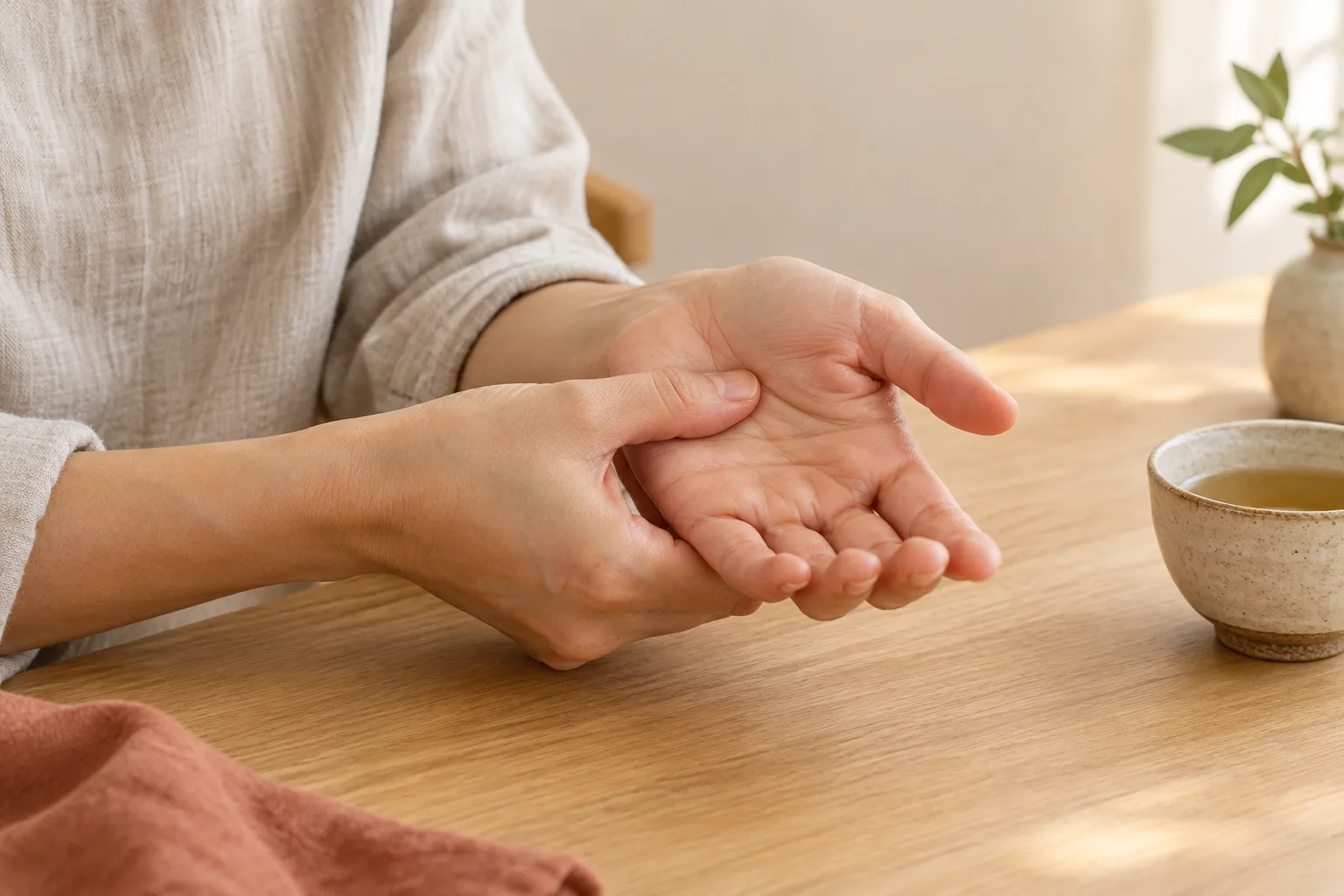
Acupressure may offer comfort for some people with migraine, but direct evidence is limited. If your scalp is painful to touch, avoid rubbing it. Gentle pressure away from the head is optional; stop if it worsens symptoms. It does not replace your acute treatment plan. Follow your clinician’s advice on when to take medication, and discuss frequent use with them. NHS migraine guidance.
Some headaches should never be managed at home: a sudden explosive headache, trouble speaking or weakness on one side, high fever with a stiff neck, or any headache after a recent head injury. Those mean calling emergency services now (911 in the US, 999 in the UK). The full list is in when to see a doctor.
First, Make Sure It's a Migraine
The pressing strategy depends on what you are actually dealing with, so check this first. A migraine typically looks like this: throbbing pain on one side of the head, worse with movement, with sensitivity to light and sound and often nausea; one attack usually runs 4 to 72 hours. A tension-type headache is different: a tight band on both sides, much milder, and it rarely stops you from your day. That kind often responds well to rubbing the neck and shoulders, and the approach in this article only partly applies to it. For a broader, general headache routine, see where to press for headaches.
Migraine has one feature that works in your favor: it announces itself. In the hours to two days before an attack, many people feel unusually tired, yawn constantly, crave certain foods, or notice a stiff neck. These are prodrome symptoms. Some people also get an aura: zigzag flashes or bright spots in their vision, or tingling in a hand or foot, usually clearing within an hour. Recognizing these signs can help you follow your agreed migraine plan. There is not enough evidence to identify a best time for self-acupressure.
One more thing worth tracking: menstrual migraine. Attacks that land around your period tend to run longer and hit harder. If yours follow your cycle, mark the cycle days in your log, because that is exactly the kind of information a doctor will want.
What Modern Medicine Says
Why acting early matters
Modern medicine understands migraine as a neurovascular condition: changes in the brain’s nerves and blood vessels amplify pain signaling, which is why the pain throbs and why moving, coughing, or bending over makes it worse. Migraine runs in families, and women get it about three times as often as men (MedlinePlus / NINDS).
Advice to treat early concerns acute medication, not proven timing benefits for finger pressure. Nausea or vomiting can make oral medicine difficult; ask your clinician about appropriate alternatives rather than relying on pressing alone. Evidence about acupuncture or anti-nausea pressure devices does not establish that early self-acupressure prevents a migraine.
Triggers and the room you have between attacks
Triggers vary from person to person. The common ones: stress and the letdown after stress (the “weekend migraine”), too little or too much sleep, skipped meals, caffeine or caffeine withdrawal, alcohol, hormonal shifts around the period, bright light and noise, sudden weather changes. This means attack frequency can come down by managing triggers. Alongside medication, the NHS prevention advice includes regular meals, regular exercise, and stress management, with acupuncture on the list too.
What the evidence actually says about pressing
A 2016 Cochrane review examined practitioner-delivered needle acupuncture for prevention, not finger pressure during an attack. A 2012 wristband study enrolled 40 women with migraine without aura; 32 completed it. Nausea scores were lower during wristband attacks than during attacks without it. Participants were not blinded, and nausea was the outcome, so the study cannot establish pain relief, attack prevention or a benefit from pressing earlier.
How Chinese Medicine Reads a Migraine
Chinese medicine places migraine under “headache” and “one-sided head wind,” and the core idea is “no free flow, then pain”: qi and blood fail to reach or move through the head properly, or Liver fire flares upward along the channels into the head. What follows is a plain-language explanation of a traditional model, meant for self-observation. It is not a diagnosis in the modern medical sense.
In TCM, qi, Liver and phlegm-dampness are concepts used to describe function and experiences; they are not measurements of circulation or anatomical organ disease. Traditional accounts group emotional tension, fixed pain and a heavy head differently. Those groupings have not established a biological mechanism for migraine. The observable descriptions below are educational examples, not a diagnostic checklist.
Along these lines, migraine commonly shows up in three patterns:
Throbbing, distending pain (the constrained Liver qi turning to fire, Liver yang rising direction): throbbing at one or both temples, often preceded by emotional upset or bottled-up anger, with irritability and a bitter taste. Clearly worse during stressful stretches and after late nights.
Fixed or stabbing pain (traditionally discussed as blood stasis): this describes a quality of pain in TCM; it cannot diagnose a migraine or its cause. New, persistent focal pain needs medical assessment.
Heavy, foggy head with nausea (the phlegm-dampness direction): the head feels weighted and wrapped, foggy more than throbbing, with obvious nausea and chest tightness. More common in people carrying extra weight who eat a lot of sweet, greasy food.
The traditional constitution framework uses categories such as qi-stagnation constitution, blood-stasis constitution, phlegm-dampness constitution to describe everyday tendencies. Linking the patterns above to these categories explains that framework; it does not establish a medical cause, predict symptoms or select treatment. Experiences overlap and can change with sleep, diet, illness and medication. A qualified practitioner needs to assess any TCM pattern individually. The NCCIH overview of TCM explains research and safety limits; a constitution self-check cannot replace medical assessment.
Everyday Adjustments
During an attack:
- Get somewhere dark and lie down: a quiet, dark room with your eyes closed. Light and sound are genuine pain amplifiers during an attack, not just annoyances.
- Cold on the forehead or the back of the neck: a cool towel or an ice pack wrapped in cloth, about 15 minutes.
- Sip water in small amounts: dehydration worsens headache. When nausea is strong, take small sips often rather than a full glass at once.
- Eat a little if you can: low blood sugar both triggers and worsens attacks. A couple of plain crackers or a few spoonfuls of rice congee beats toughing it out on an empty stomach.
- Take acute medication early if you use it: painkillers work best right as the headache starts. But keep them under two days a week, or you risk medication-overuse headache.
Between attacks (bringing the frequency down):
- Fix your sleep rhythm: both too little and too much sleep trigger migraine, and weekend lie-ins are the classic cause of the weekend migraine. Keep your wake time within one hour every day.
- Eat three regular meals, no skipping.
- Keep caffeine steady: about the same amount at about the same time daily. Sudden withdrawal is itself a trigger.
- Regular moderate exercise: a 30-minute brisk walk or bike ride 3 to 5 times a week. But do not exercise during an attack, since activity intensifies the pain.
- Keep an attack diary: there is a ready-made log below.
TCM Methods
The five categories below answer to the three patterns from earlier. Acupressure is the main thread of this article; the other four work on attack frequency. Start with the one or two easiest to keep up, rather than attempting everything at once.
Acupressure Points for Migraine Relief
There is no established best time for self-acupressure. Follow your agreed acute-treatment plan first; optional gentle pressure must not delay it. If touch is uncomfortable, skip it. For comfort, try a point for 1–2 minutes with light pressure and stop for pain, tingling or worsening symptoms.
Hegu (LI4) Location: on the back of the hand, between the bones of the thumb and index finger, roughly level with the midpoint of the index finger’s metacarpal bone. Traditional use: the most-used distal point for head and face pain; the classical saying is “for the face and mouth, go to Hegu.” During an attack, press with the pad of your thumb toward the index finger bone for 1 to 2 minutes. Do not use during pregnancy (a traditional precaution, not proof that gentle pressure causes contractions).
Taichong (LR3) Location: on the top of the foot, between the bones of the big toe and second toe; slide up toward the ankle until your finger drops into a depression. Traditional use: the source point of the Liver channel, traditionally used to soothe the Liver and bring rising fire back down, which makes it the direct answer to the throbbing pattern’s “fire flaring upward.” First choice for emotion-triggered attacks. Press 1 to 2 minutes each side.
Neiguan (PC6) Location: on the inner forearm, about three finger-widths up from the wrist crease, in the hollow between the two tendons. Traditional use: the go-to point for settling the stomach and stopping vomiting. When nausea is the problem, press here first; this is the exact point the Italian study pressed continuously with a wristband. You can press it on and off through the whole attack, or let an acupressure wristband do the holding.
Sanyinjiao (SP6) Location: on the inner lower leg, about four finger-widths above the tip of the inner ankle bone, just behind the inner edge of the shin bone. Traditional use: the meeting point of three traditional channels. There is no established evidence for a specific pre-period self-pressure schedule to prevent migraine. During pregnancy, consult your maternity clinician before any acupressure.
This distal set suits qi-stagnation, blood-stasis, and phlegm-dampness tendencies alike. Skip any point with broken skin. During pregnancy, discuss any pressing with your maternity clinician first. Once more: pressing is an add-on and cannot replace acute medication.
Diet
The Western everyday track
- Ginger tea during an attack: 3 to 4 thin slices of fresh ginger (about 10 g) in 250 ml of hot water, steeped 5 to 10 minutes, with 1 teaspoon of honey stirred in. Sip slowly. When nausea is strong, this warm cup plays the same role as mint tea.
- A steady-blood-sugar breakfast: half a cup of quick oats (about 40 g) simmered 5 minutes in 250 ml of water or milk, topped with half a sliced banana and a pinch of cinnamon. Migraine hates skipped meals and blood-sugar swings; the value of this bowl is that it shows up every day, not how it tastes.
- A gentle main meal for the heavy, foggy pattern: 80 g of lentils and 200 g of diced pumpkin or sweet potato simmered 20 minutes in 500 ml of low-salt chicken broth, with a little salt at the end. Warm, plain, and easy to digest, and far kinder to a “wrapped in a wet towel” head than a greasy takeout.
- Small attack-phase eating: a soft-boiled egg (6 minutes in boiling water) with a couple of crackers, or a small bowl of plain rice, keeps blood sugar off the floor when a full meal is out of the question. If a skipped meal triggered the attack, two or three pitted Medjool dates are a quick, gentle way to get some sugar in.
The Chinese home-style track
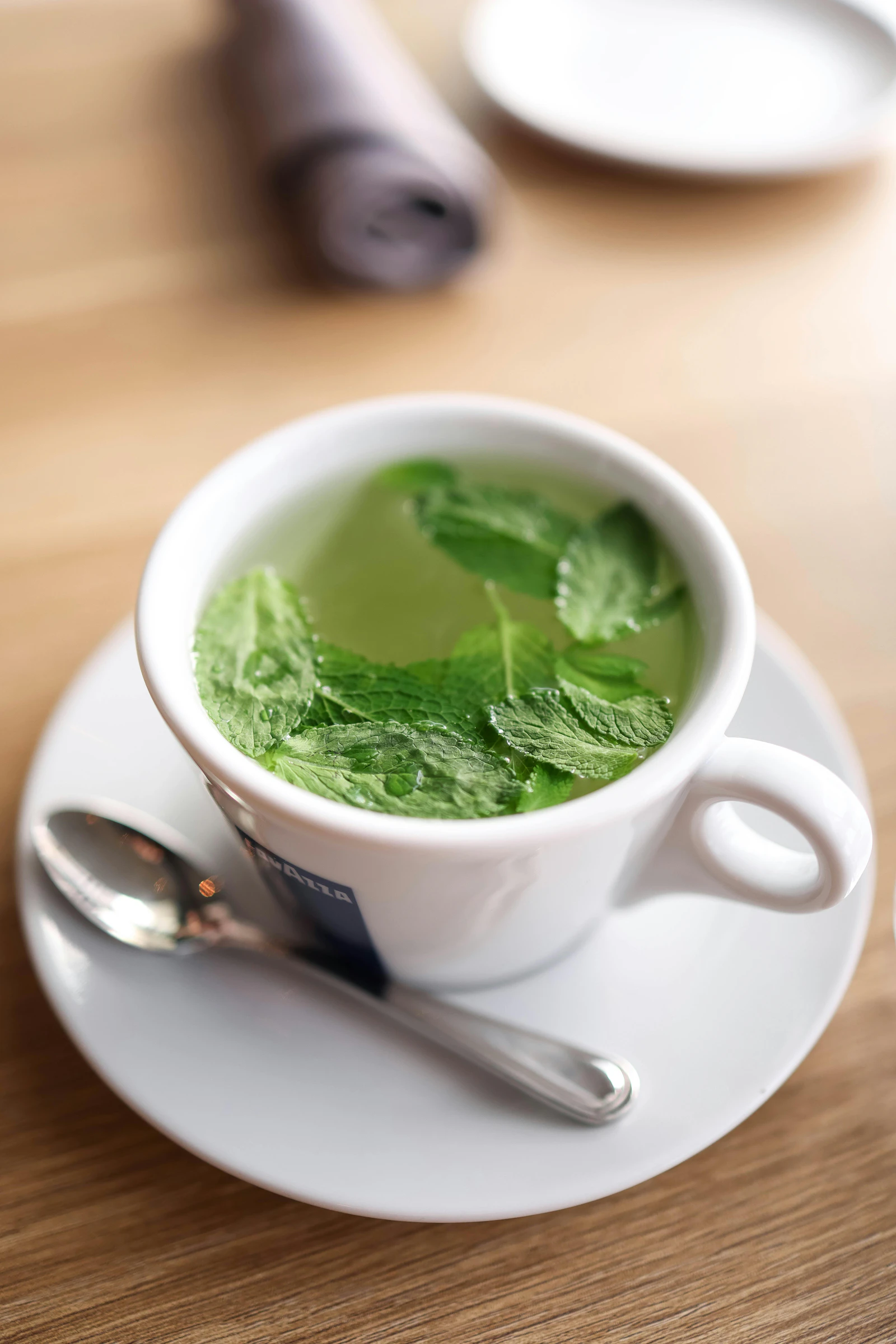
- Attack-phase mint tea: 5 to 6 fresh mint leaves (or 1 teaspoon dried) steeped in hot water for 5 minutes, sipped slowly; warm water with a slice of lemon works too. Fresh mint is in any supermarket herb section. Skip alcohol and strong tea during an attack, and keep coffee at its usual amount rather than adding more.
- Plain rice congee: a quarter cup of white rice simmered in about 2 cups (500 ml) of water for 30 to 40 minutes until soupy. This is the classic gentle food for the hours when your stomach wants nothing, and a few spoonfuls count.
- Chrysanthemum-goji tea between attacks: 3 to 5 dried chrysanthemum flowers (look for Hangzhou white chrysanthemum, sold as hang bai ju, in Asian supermarkets or online tea shops) and 10 goji berries (also called wolfberries, same shops or online), steeped in hot water and drunk as tea. Traditionally, chrysanthemum clears Liver fire and goji nourishes the Liver, so this suits the throbbing pattern’s day-to-day care. Food-therapy use only; consult a licensed TCM practitioner before using these as medicinal herbs.
Goji can interact with warfarin; discuss it with your prescriber before drinking goji tea. Skip ingredients you are allergic to, and ask your maternity clinician about herbal teas during pregnancy. MSK goji safety information.
- Trigger testing: alcohol, aged cheese, cured and fermented foods, and MSG are common migraine food triggers. Cut one at a time for two weeks and check against your attack diary, rather than banning everything at once.
Both tracks offer ordinary food options for regular meals and small portions during nausea. Choose foods you tolerate; these recipes are not proven migraine prevention. A tea’s traditional description does not mean ginger, mint and chrysanthemum have interchangeable therapeutic effects.
Emotional Care
Emotions rank among the top migraine triggers, and both stress itself and the relaxation right after stress can set off an attack.
- Slow breathing twice a day: in for 4 counts, out for 6, for 5 minutes. An exhale longer than the inhale directly turns down your nervous system’s arousal.
- Make room for stress relief: a walk, a short note or a conversation may help you unwind. Stress can be associated with attacks, but bottled-up anger does not inevitably cause one.
- No “revenge relaxation” on weekends: keep your sleep and caffeine rhythm the same as weekdays, or Monday attacks you.
This section maps most closely to the qi-stagnation tendency, but any constitution under high pressure can use it.
Movement
- Between attacks: a 30-minute brisk walk, bike ride, or swim 3 to 5 times a week. Regularity beats intensity, and sudden hard workouts can themselves be a trigger, so start at 15 minutes and build week by week.
- Baduanjin and tai chi, slow traditional movement practices, suit beginners well: about 15 minutes, morning and evening.
- Stop during attacks. Lying down takes priority.
Regular movement is a general lifestyle option when tolerated; constitution categories cannot establish who benefits most. Stop during an attack or if activity worsens symptoms.
Sleep and Routine
- Keep a consistent wake time: aim for a similar time each day, including weekends. This can support regular sleep but does not guarantee prevention.
- Get to bed by 11pm where possible, sleeping enough but not oversleeping. For migraine, too much sleep triggers just as surely as too little.
- Track menstrual timing: keep meals and sleep regular throughout the month. Discuss predictable period-related attacks with your clinician; there is no proven special seven-day self-care window.
Routine adjustments apply regardless of constitution. If you lean phlegm-dampness, the two lines to hold hardest are eating breakfast and not oversleeping.
The three patterns were never going to share one priority list: the throbbing pattern starts with emotions and sleep, the fixed stabbing pattern leans on attack-time pressing plus everyday activity, and the heavy foggy pattern starts with food. If you want to know which constitution tendency you have, the free test at the end of this article is a self-observation tool (not a diagnosis): it shows your tendencies across the nine traditional body types and helps you decide what to work on first.
Your Migraine Log and Pressing Step Card
The log: spend two minutes filling it in after each attack. After 4 to 8 weeks of entries, the pattern surfaces on its own.
| What to record | How to record it | Example |
|---|---|---|
| Warning signs | Yawning, neck stiffness, sweet cravings beforehand? | Yawning all afternoon |
| Likely triggers | Sleep, skipped meals, alcohol, stressful events, cycle day | 5 hours of sleep last night; day 1 of period |
| The pain | Location, 0–10 score, how long it lasted | Left side, 7 out of 10, about 12 hours |
| Company it kept | Nausea, light sensitivity, aura | Strong nausea; zigzag flashes for 20 minutes |
| Pressing | Which points, at what stage, did it help | Pressed Hegu + Taichong during aura; nausea eased |
| Medication | Name, when taken, when it kicked in | Ibuprofen 400 mg, 30 minutes in, relief at 1 hour |
The step card (for during an attack):
- When familiar symptoms begin, follow your clinician-approved acute plan. New weakness, speech trouble or an unfamiliar aura needs assessment rather than pressing.
- Optional gentle Neiguan pressure may be tried for comfort. Stop if it hurts; worsening nausea or vomiting that prevents fluids or medication needs medical advice.
- Rest somewhere dark and quiet; try a cool compress wrapped in cloth. Do not delay prescribed treatment to complete these steps.
- If the pain runs past your usual level, or past 72 hours without easing: stop self-managing and see a doctor.
If you made changes after two weeks of logging, run another round to compare. This log is also the single best thing to bring to an appointment.
How Long Until You See a Change
Treat review dates as opportunities to assess symptoms, not guarantees of relief. Headache courses differ, and self-pressure, tea, posture or routine changes do not share an established timetable for benefit.
- During an attack: note whether rest or optional gentle pressure makes you more comfortable. Stop if it does not help, worsens symptoms or hurts; do not delay your agreed treatment to finish a routine.
- Review your diary weekly: summarize headache days, severity, associated symptoms and medicine days. The record helps a clinical conversation; it cannot establish a cause.
- Get assessed when needed: first exertional headache, pain worsened lying down, or new, changing or persistent headache warrants assessment rather than a mandatory one- or two-week trial. Discuss frequent acute-medicine use with a clinician; they decide any medication change. The emergency signs below need immediate help.
See MedlinePlus advice on seeking care.
When to See a Doctor
Pressing and self-management are only for migraine that is already diagnosed and follows a stable pattern. For any of the following, put this article down and get medical care.
Call emergency services now (911 in the US, 999 in the UK) for any one of these:
- A headache that comes on suddenly and is extremely severe (“the worst headache of my life”);
- Trouble speaking, memory confusion, unusual drowsiness, or clouded consciousness;
- Loss of vision, blurred or double vision;
- A seizure, or weakness in one side of the body or one side of the face;
- High fever with a stiff neck (the meningitis warning sign);
- A recent head injury.
Get seen the same day or within 24 hours:
- A single attack lasting more than 72 hours without relief;
- Aura symptoms lasting more than an hour at a time;
- Migraine appearing during pregnancy or shortly after giving birth, or any change in your headache pattern.
Book an appointment:
- Attacks have stepped up to once a week or more, or the pain pattern is clearly different from before;
- You use painkillers on more than 2 days a week (watch for medication-overuse headache);
- Attacks land reliably around every period and disrupt work and life;
- You have self-managed for 4 to 8 weeks and frequency has not come down.
Bring your attack log, and be ready to state attack frequency, duration, what you have taken, and how well it worked. Those details are exactly what a doctor uses to judge whether preventive treatment is warranted.
This article is general health education and cannot replace a doctor’s diagnosis or individualized advice. Acute migraine medication, preventive treatment, and managing migraine in pregnancy all need to be decided face to face with a clinician. Do not use pressing or food therapy in place of proper care, and do not stop a prescribed preventive medication on your own.
Common Questions
Can pressing replace my migraine medication?
No. Pressing is an add-on by design: the better-evidenced acupuncture research studied prevention delivered by professionals, and direct research on self-acupressure is scarce. The right order is acute medication taken early, with pressing alongside it for nausea and tension. The two do not conflict.
Is aura the best time to press?
There is not enough evidence to recommend pressing specifically during aura. Early-treatment advice concerns your clinician-approved medication plan; do not assume pressure shares the same benefit. The small wristband study concerned nausea in migraine without aura, not preventing attacks or comparing early and late pressure.
Can I press these points while pregnant?
Consult your maternity clinician before trying acupressure. Traditional warnings about Hegu and Sanyinjiao do not prove either that gentle pressure causes contractions or that other points are safe to use yourself. New or worsening headache in pregnancy needs prompt assessment, including for preeclampsia when appropriate.
If your migraines keep recurring, start with the headache topic page for the TCM framework on headache types. For the general headache point routine aimed at tension-type pain, see where to press for headaches. And to pin down your own constitution tendency, take the free test below.
Migraines keep coming back? Which body-type tendency do you lean toward?
The same migraine calls for different daily work depending on whether you lean toward qi stagnation, blood stasis, or phlegm-dampness. The free constitution test shows your tendencies across nine traditional body types, and pairs well with the attack log in this article when you decide what to change first. It is a self-observation tool, not a medical diagnosis.
References6 sources
- 01
NHS (UK National Health Service)
- 02
MedlinePlus / NINDS, U.S. National Institutes of Health
- 03
U.S. National Center for Complementary and Integrative Health (NCCIH / NIH)
- 04
Cochrane systematic review
- 05
Neurological Sciences, via PubMed Central
- 06
U.S. National Center for Complementary and Integrative Health (NCCIH / NIH)
Personalized guidance
Use the app for constitution-friendly ideas and structured plans when available.
Download the App
Get personalized TCM health recommendations