How to Stop Hot Flashes Fast (and What Actually Helps Long-Term)
No pill stops a hot flash instantly, but the first 90 seconds are manageable: cool down, breathe long, sip cool water. The quick-response protocol, evidence-backed non-drug options, and a one-week trigger hunt.
By WellTao · Published: · Editorial Policy
More articles in this topicTable of contents
The Short Answer First
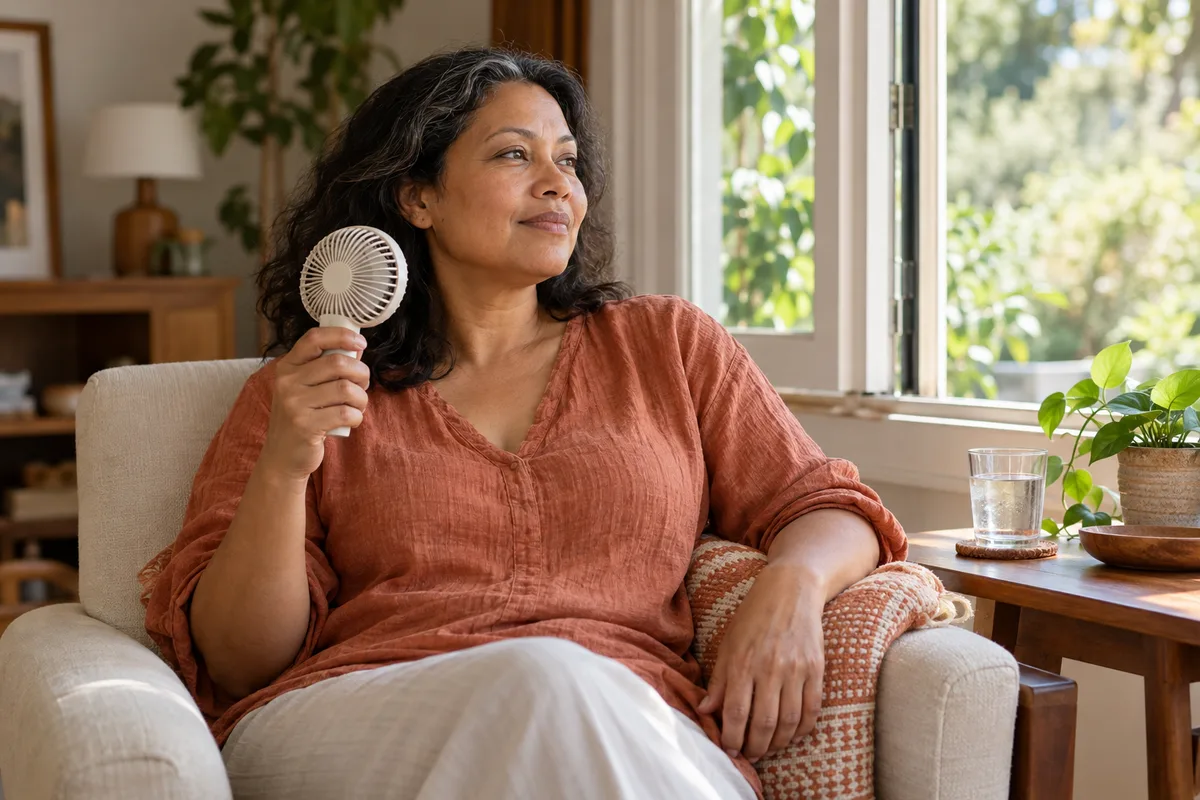
There is no self-help switch that kills a hot flash on the spot — but the in-the-moment rescue sequence is very concrete: cool down, get air moving, sip cool water, slow your breathing, and you can dissipate the heat within about 90 seconds. The long-term side rests on trigger-hunting plus lifestyle subtraction. The NIA’s official guidance puts lifestyle adjustment ahead of medication for a reason: no side effects, and for most people the effect is meaningful.
Say it up front: herbal products marketed as curing hot flashes (black cohosh, DHEA, soy isoflavone supplements) are flagged by the NIA as “no reliable evidence of benefit, and some carry liver-injury risk.” They are not the self-help path this article recommends.
When do you run to a doctor instead? “Several times a week, disrupting sleep and life” is the line; emergency signals (chest pain, a persistently abnormal heart rate) don’t wait at all. Details in when to see a doctor.
Should You Manage This Yourself?
Sort yourself before reaching for a protocol:
- Good fit for self-first: moderate frequency, sleep and work not yet seriously disrupted, and you can name suspicious trigger habits. This is the group with the most room to improve.
- Limited returns solo: flashing most nights a week, clusters at night, or insomnia and low mood tangled up with it.
- Not for self-management: flashes with chest pain, a clearly abnormal heart rate, or drenching sweating with fever and weight loss. That’s not the ordinary perimenopausal pattern. See a doctor directly.
Cleveland Clinic’s three-lane framework is a useful map: natural methods → non-hormonal medications → hormonal medications. Self-management lives in lane one; each lane up requires a clinician’s evaluation.
What Modern Medicine Says
Why fast response works: helping the body dump heat faster. A hot flash is a complete heat-dumping event — the hypothalamus’s thermostat setting shifted by hormones, and the body discharges heat in one go through vasodilation plus heavy sweating. So the essence of self-relief isn’t “stop the sweating”; it’s cooperate with the sweating: let airflow carry away heat and moisture, drop the ambient temperature ahead of the wave, let your skin breathe. Anything that “wraps it in” makes the event hotter and longer.
Why breathing helps. A racing heart rides along with every flash. Exhaling long (inhale 4 seconds, exhale 6 or more) stimulates the parasympathetic system, lowering heart rate and the feeling of emergency, which shortens how long the flash feels. You can’t guarantee you’ll switch the flash itself off, but you can change how composed you are through it.
The evidence-backed non-drug menu (NIA’s official list). Layered clothing you can shed flash by flash; a personal fan; skipping alcohol, spicy food, and caffeine; limiting sugar and sweet drinks; quitting smoking; weight control (flashes tend to be more frequent and severe with excess weight). On the mind side, the NIA notes early research suggests hypnotherapy and mindfulness may support flash management — adjunct-level help rather than a substitute for medical care — fair game as self-help.
Why the medication lane belongs to doctors. Non-hormonal prescriptions that act on the temperature-control center and hormonal therapy both work; both carry risk profiles — hormone therapy especially involves weighing thrombosis, stroke, and breast-cancer risks against your personal history. ACOG’s menopause FAQ makes discussing options with a doctor the backbone of symptom management. The self-help lane’s job is building the foundation so that if medication ever enters, it starts from the best possible baseline.
How Chinese Medicine Reads — and Responds to — a Flash
Tradition files hot flashes under “deficiency heat” (the finer three-way split — yin fire, heart-kidney disconnect, mixed hot-cold — lives in the nighttime flashes article). One line from the Suwen covers the mechanism: “yang added to yin makes sweat.” Sweat is yang qi moving fluids outward. So the goal of quick relief isn’t to suppress yang; it’s to let yin and yang find their own rhythm again.
Several traditional operating points you can use immediately:
- Cool from the head and neck first (the physical layer): a room-temperature damp cloth on the back of the neck and forehead is endorsed by both traditions — the closest thing to a universal move.
- Cooling foods — but match your constitution: cooling teas suit yin-deficiency heat; for a yang-deficiency person with cold limbs they can backfire. “Use cold against heat” requires differentiation; it’s not a menopause catch-all.
- Emotion first for the agitated type: flashes that flare with mood swings belong to stagnation-turned-fire. NCCIH’s overview of Chinese medicine marks where traditional intervention meets the evidence boundary — “my flashes multiply when my mood does” is observable by yourself; tea and breathing won’t cure it but can support you through it.
Traditional constitution theory links to its pages (yin deficiency, yang deficiency, qi stagnation). Tendency maps one way onto pattern: first ask “am I cold-prone? is emotion driving this?” — don’t default to cooling. A licensed practitioner settles the real diagnosis in person.
The 90-Second Rescue, Step by Step
In time order, every step a concrete action:
- 0–10 seconds: physical cooling. Throw off one layer of bedding, undo your collar, drop a jacket; open a window or turn on the fan and let air carry heat off your face and neck.
- 10–30 seconds: drink cool. Two or three small sips of cool water — not an ice slam (ice constricts vessels sharply, and the rebound isn’t pleasant). If you carry a spray bottle, a mist on face and neck works too.
- 30–90 seconds: lengthen the exhale. Three or four rounds of in-4, out-6-to-8 breathing, attention on the release as the air leaves. This is the most direct way down from the racing heart.
- Close-out: log the trigger. Immediately after it passes, jot what happened in the 30 minutes before — food, place, activity. Same-day memory beats reconstruction.
Keep on standby: a pocket fan, a water bottle, a shawl or jacket you can shed, and the trigger sheet. At the office, park all four within arm’s reach so an emergency never means hunting for them.
Chinese Medicine Methods
Five categories for everyday self-help, each marked with the tendency it suits and cautions. Food therapy uses food amounts; consult a practitioner before using any ingredient as a medicinal herb.
Acupressure
- Neiguan (three finger-widths above the wrist crease, between the tendons): 60–90 seconds when a flash brings palpitations or nighttime chest tightness; alternate sides.
- Taixi (hollow between inner ankle and Achilles tendon): the kidney meridian’s source point, traditionally nourishing kidney yin; morning and evening, 60 seconds each — especially fitting when palms and soles run hot.
- Hegu (the highest point of the thumb-index web): regulates surface qi; 60 seconds when a flash brings head heat or general agitation.
- Cautions: sanyinjiao is contraindicated in pregnancy; don’t press broken skin; during heavy menstruation, skip deep pressing if damp-heat signs or fever are active.
Food Therapy
Eastern-style:
- Chrysanthemum-mint infusion: 5 white chrysanthemum flowers with 3 fresh mint leaves (or 1g dried) steeped 3 minutes in 80°C water, warm in the afternoon. Traditionally clears upper-body heat; suits pronounced facial flushing. Skip the daily cup if digestion runs cold or stools are loose.
- Tremella and lily soup: half a tremella head with 10g dried lily bulbs, simmered 40 minutes; a small warm bowl about two hours after dinner, in the moisten-yin direction; no sugar if you’re limiting it.
- Bitter-melon with egg (twice a week): half a bitter melon sliced thin, two eggs. Traditionally cooling — but it’s food, not treatment; eat less of it if you run cold, and swap in luffa when cold sensitivity dominates.
Western-style:
- Greek yogurt with blueberries and chia: 150g unsweetened Greek yogurt, a handful of blueberries, a teaspoon of chia seeds. A light, slow-digesting snack timed for the flash-prone 3–4pm window.
- Roasted salmon plus quinoa (twice weekly, dinner baseline): omega-3s offer general mood support and line up with the NIA’s “healthy weight + balanced diet” direction.
- Mint sparkling soda instead of alcohol or coffee: soda water + mint + lemon. A concrete lever for replacing evening alcohol and sweet drinks — the NIA lists alcohol as a clear flash trigger, and a standing replacement works better than “drink less.”
Emotional Regulation
- The flash-emotion link is directly observable: irritation makes the next wave arrive faster. Ten minutes of daily mindfulness (a guided audio is fine), or build decompression into your rhythm — work block, lunchtime walk, evening stretch.
- Talk to people: emotional stress amplifies flashes, and sharing with a partner, a friend, or a menopause community itself reduces the reactive kind.
- Sleep is the soil of mood — flashes break sleep, thin sleep lowers emotional tolerance, and the loop tightens. Screen lights off after 10pm; reconsider your bedding layers if overheating is chronic.
Movement
- The baseline: 150 minutes a week of moderate activity (brisk walking, swimming, cycling), avoiding hot, stuffy, windless settings.
- Timing: not within two hours of bed (the temperature bump delays sleep); early morning and early evening suit this stage best.
- Strength twice a week: bodyweight squats, resistance bands, dumbbells — long-term benefits for bone density and metabolism. Post-workout metabolic heat triggering a flash sensation is normal; cool down 10–15 minutes before showering.
Sleep Routine
- Fixing the wake time matters more than fixing bedtime (it anchors the body clock); keep both within 30 minutes.
- Naps under 30 minutes, none after 3pm.
- Air the bedroom 10 minutes during the day to lower the night’s starting temperature; keep a light airflow from fan or AC overnight.
Three patterns, three directions. Whether a given flash is yin fire, mixed hot-cold, or emotional fire takes continuous self-observation, not one bad episode. If you want to know your own tendencies better, the free constitution test at the end of this article is a start; its result is for self-observation, never for diagnosis.
The Trigger Hunt Sheet
Troubleshooting “why did that flash hit now?” lives or dies on continuity. For one natural week, six small data points a day:
| Time | Setting (home / office / out) | Previous 30 min | Food & drink | Mood | Flashes: count & intensity |
|---|---|---|---|---|---|
| e.g. 10am | office | packed meeting room | 1 coffee | pre-presentation nerves | 1, strong |
| e.g. 4pm | home snack shelf | none | iced milk tea | calm | 2, moderate |
| e.g. 11pm | bedroom pre-sleep | very hot shower | 2 chocolates | agitated scrolling | all night, multiple wake-ups |
After the week, overlay “flash-heavy” rows against: food (caffeine / alcohol / spicy / sweet), environment (hot / crowded), emotion (stress / excitement), water temperature (hot showers), time of day (afternoon / night). Most people find one or two. Remove them for two weeks and check the trend on the sheet.
This is a self-observation tool, not a diagnostic scale — it locks in candidate relationships; it can’t tell you what “medically causes” your flashes.
How Long Until It Helps
- In-the-moment protection (airflow, layering, breathing): effective on every single wave — though that’s a separate outcome from lowering total frequency.
- Trigger removal (caffeine / alcohol / spicy): visible in the sheet within one to two weeks; results vary by person.
- Exercise and weight: review monthly; correlates with the weight-and-exercise changes the NIA describes, but not same-day. Individual response varies a lot.
- Food therapy and constitution work: two to four weeks as the observation unit. This won’t make flashes vanish overnight; the target is “less dense, fewer night-long wake-up streaks.” If symptoms persist or worsen, return to the doctor boundary. No log predicts when improvement will come.
When to See a Doctor
- Flashing several times a week, clustering at night, clearly disrupting sleep and work — time to evaluate medical options (see also the care section of the nighttime flashes article).
- Flashes with chest pain, marked palpitations, labored breathing, dizziness, or leg swelling — immediate care.
- Suddenly heavy periods, longer periods, or bleeding between periods is an independent red line, unrelated to flashes, needing prompt attention — ACOG’s FAQ lists sleep problems and abnormal bleeding among what to report to a doctor during perimenopause.
- With any history or risk of breast cancer, thrombosis, or stroke, hormone therapy requires individualized evaluation — never self-prescribe.
This article is general health information, not a substitute for diagnosis or individualized advice.
Common Questions
Won’t a cold towel make my body recoil hotter?
External cooling carries heat straight off the skin; it doesn’t block the process. The body is already dumping heat during a flash — a cold cloth cooperates with that, it doesn’t fight it. Practice: forehead and neck, airflow on, small sips. Most flashes wind down on their own in two to three minutes.
Exercise gives me flashes. Should I still move?
Yes — the post-workout temperature bump can trigger flash sensations without meaning exercise worsens flashes. Solutions: avoid the hottest hours, choose ventilated settings, cool down 15 minutes after. The NIA’s evidence direction is that sustained exercise and weight management lower total flash burden. Don’t cut movement over this.
Can I take black cohosh?
First the standing caution: the NIA is explicit that black cohosh and similar “natural” products are unproven for flashes, and some carry liver-injury risk. Interactions with other drugs (especially liver-metabolized ones) are also possible. Clear any supplement with your doctor or pharmacist first.
To see menopause whole, read the menopause hub; for nights shredded by repeated heat wake-ups, see hot flashes at night and perimenopause insomnia; for how many years this lasts, see how long hot flashes continue.
Your flash may run on yin-deficiency heat, mixed hot-cold, or emotional fire — the plan changes accordingly
The free constitution test maps your tendencies across nine traditional types and pairs well with the trigger-tracking sheet below. For self-reflection, not medical diagnosis.
References4 sources
- 01
U.S. National Institute on Aging (NIA / NIH)
- 02
Cleveland Clinic Health Essentials
- 03
American College of Obstetricians and Gynecologists (ACOG)
- 04
U.S. National Center for Complementary and Integrative Health (NCCIH / NIH)
Personalized guidance
Use the app for constitution-friendly ideas and structured plans when available.
Download the App
Get personalized TCM health recommendations