Hot Flashes at Night: Why They Wake You and How to Sleep Through Them
Nighttime hot flashes are daytime hot flashes after dark — a narrowed thermostat plus broken sleep. The mechanism, the five most common triggers, same-night tools that work, and when to see a doctor.
By WellTao · Published: · Editorial Policy
More articles in this topicTable of contents
The Short Answer First
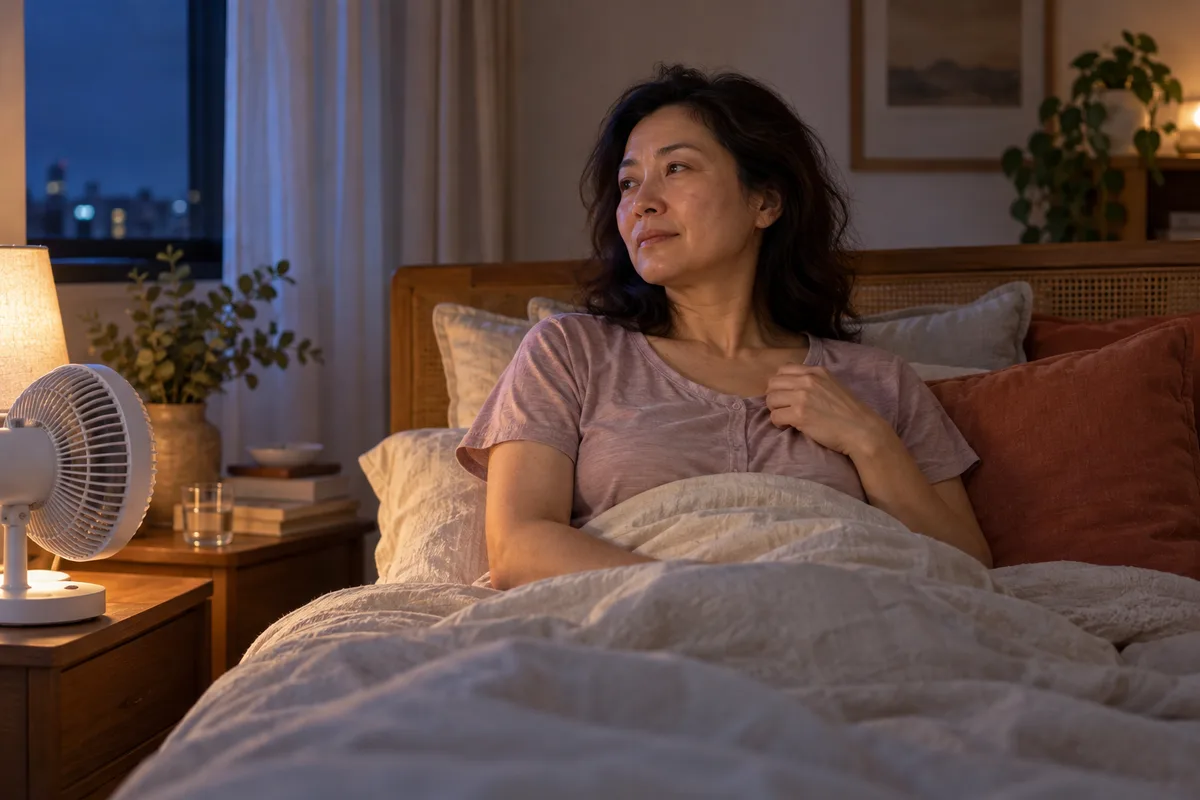
Being jolted awake by heat is one of the most common nighttime complaints of menopause — by day it’s a hot flash, at night the NIA calls it night sweats. On its own it isn’t dangerous, but it tears sleep in half, and over time daytime fatigue, mood, and patience all pay for it. That cost is what makes it worth managing seriously.
Three things to do now: turn the bedroom into a cold zone, find your trigger list, and shorten the recovery from one heat wave enough to fall back asleep. If prescription options (hormonal or non-hormonal) come into play, that’s a doctor’s evaluation — not an over-the-counter experiment.
If hot flashes keep waking you several nights a week and clearly erode sleep and daily life, that’s the signal to see a gynecologist or menopause specialist rather than pushing through.
How Bad Are Your Night Hot Flashes?
Rate yourself on three axes:
- Frequency: a few episodes one night a week isn’t abnormal. If multiple nights each week bring repeated wake-ups that require a change of clothes, it has crossed the treat-it line.
- Recovery: whether you can fall back asleep within about 10 minutes after the sweat is the real dividing line — slow recovery is what actually wrecks sleep.
- The bill: is daytime fatigue, scattered attention, or short temper arriving along with it? Cleveland Clinic physicians classify this as a “quality-of-life issue,” which means: you may not need treatment, but you still deserve a serious answer.
One common mistake: “I haven’t stopped having periods, so this can’t be menopause.” Perimenopause — the transition before the last period, lasting several years on average — is precisely when hot flashes most often begin. Periods are usually getting irregular at that point, not gone.
What Modern Medicine Says
The core mechanism: a narrowed thermostat. Per Cleveland Clinic’s explanation, as estrogen falls in late perimenopause and early menopause, the brain’s temperature-control center becomes sensitive to a narrower range of temperatures. Swings that once went ignored now call for an instant response, and the body reaches for its most dramatic cooling tool: the hot flash. It typically starts with a wave of heat rising from the chest, flushing, and a faster heartbeat, then heavy sweating; a flash usually lasts a minute or two, and a chill can follow.
Why it lands hardest at night. Body temperature is supposed to keep falling across the night — that descent is a physiological precondition for falling and staying asleep. Night flashes aren’t necessarily more frequent or intense than daytime ones, but they hit sleep at its most vulnerable threshold, so they’re magnified: heat, then sweat, then dampness, then full alertness. One loop and your sleep pressure is gone.
One related fact: the timeline is elastic. The SWAN study found hot flashes can persist for years, with a median duration of about 7.4 years and large individual variation (more in how long until it helps). “Push through two years and it’s over” may turn out to be true — or to underestimate the runway considerably. Learning your coping toolkit beats guessing an end date.
The five classic trigger families (from the NIA’s itemized guidance plus Cleveland Clinic’s additions):
- Hot baths, hot showers, saunas;
- Spicy food, alcohol, caffeine, and sugary drinks;
- Smoking;
- Standing or exercising too long, hot or stuffy environments;
- Anxiety and stress (which can bunch flashes back-to-back).
How Chinese Medicine Reads Nighttime Hot Flashes
The traditional positioning for menopausal hot flashes is “kidney qi waning, tiangui running out.” The Suwen describes this age as “at seven times seven, the Ren vessel is empty, the Chong vessel is failing, and tiangui is exhausted” — around 49, the kidney qi supporting reproduction and yin-yang balance naturally weakens. (This is the traditional experience model speaking to symptom patterns, not a modern diagnosis.) As yin loses its moistening, deficiency heat generates internally and flares upward from the lower body.
Three traditional terms worth knowing in this framework:
- Kidney yin deficiency: heat concentrating in the upper body and face, sweat that doesn’t fully soak, warm palms and soles, dry mouth and throat, worse at night — the most common route for menopausal flashes.
- Heart and kidney not communicating: flashes with trouble falling asleep, vivid dreams, palpitations and agitation — “heart fire floats while kidney water is too low to balance it.”
- Kidney yang deficiency mixed in: some women have clearly cold limbs alongside drenching nighttime heat — heat above, cold below, a mixed pattern that needs in-person differentiation rather than homebrew cooling.
WHO and NCCIH position Chinese medicine as a tradition of early-symptom intervention: its models organize symptom directions but don’t replace modern diagnosis and treatment assessment.
Within the framework, three nighttime patterns recur:
- Heat-above pattern (yin deficiency with fire): flushing sweats on waking, warm palms and soles, thirst, shallow sleep that breaks easily.
- Heat-above cold-below pattern: drenching nighttime heat, but cold hands and feet and aching lower back and knees by day.
- Stagnation turning to fire: flashes surge in sync with emotional swings; before each wave there’s often a tight, restless feeling in the chest, and sighing helps.
Traditional constitution theory uses yin deficiency, yang deficiency, and qi stagnation categories to describe wellness tendencies. The direction runs one way: a yin-deficiency tendency calls for attention to warm palms and nighttime dry mouth; a yang-deficiency tendency needs cold addressed first — “menopause” on its own is not a reason to cool the body; a qi-stagnation tendency shows flashes flaring with emotional load. Several patterns can coexist and shift across the cycle; a licensed practitioner does the real differentiation in person.
Everyday Adjustments
Organized as “right now” plus “long-term subtraction,” drawn from the NIA and Cleveland Clinic:
Surfing one heat wave:
- The moment it starts, throw off one layer of bedding and turn on a fan or AC to move air;
- Sip cool water from the nightstand;
- Keep a damp washcloth or a spray bottle within arm’s reach and use it as soon as the wave passes;
- Sit up for half a minute after toweling off before lying back down, so the post-sweat chill doesn’t deepen your alertness.
Long-term subtraction:
- Layer everything: pajamas and bedding in removable layers, cotton and linen first, no non-breathing synthetics.
- The bedside cooling four-pack: a fan or AC, cool water, a wiping cloth, a throw-off blanket. When a wave hits at night, this kit solves it in one or two minutes without leaving the bed.
- Hunt your triggers: pause spicy food, alcohol, caffeine, smoking, very hot baths, and heavy late dinners one at a time, track each night, and find the one or two that clearly move the needle for you.
- Weight and exercise: the NIA notes hot flashes tend to be more frequent and severe in women with overweight or obesity. Regular movement and a moderate weight are among the few lifestyle interventions with real supporting evidence.
- Mind-body work: the NIA notes early research suggests hypnotherapy and mindfulness meditation may help. Where accessible, worth knowing as a non-drug path.
Chinese Medicine Methods
Five categories centered on nighttime flashes, each marked with the tendency it suits and cautions. All food therapy uses food amounts; consult a practitioner before using any ingredient as a medicinal herb.
Acupressure
Within 30 minutes of bedtime, or during a pause between waves; press with fingerpads in small circles for 60–90 seconds, to a gentle ache:
- Sanyinjiao (four finger-widths above the inner ankle bone): traditionally nourishes yin and blood; 60 seconds each side for heat-wave sweating; contraindicated in pregnancy, and check first if you have a bleeding tendency.
- Taixi (the hollow between the inner ankle and the Achilles tendon): the kidney meridian’s source point, traditionally used to nourish kidney yin and settle deficiency heat; 60 seconds each side.
- Neiguan (three finger-widths above the wrist crease, between the two tendons): for palpitations, vivid dreams, or chest tightness before a wave; press 60 seconds with your own thumb.
- Yongquan (the hollow in the upper third of the sole): soak feet 10 minutes in warm water (about 40°C), then press one minute — traditionally sends heat downward.
Cautions: with diabetes, keep foot-soak water lukewarm and gentle; stop at once if pressing hurts or skin breaks.
Food Therapy
Eastern-style:
- Rose flower tea: 5–6 dried rose buds steeped 5 minutes in 80–90°C water, warm in the afternoon. Traditionally moves qi and eases constraint — especially suited to flashes that flare with mood swings; if yin deficiency and dry mouth dominate, steep with chrysanthemum to temper its warmth.
- Tremella and lotus-seed soup: half a tremella head simmered 40 minutes with 10 lotus seeds; a small bowl about two hours after dinner. Traditionally nourishes yin and calms the spirit for flashes with shallow, dream-heavy sleep; skip the rock sugar if blood sugar is a concern.
- Ophiopogon and lily water: 6g ophiopogon and 10g dried lily bulbs steeped in boiled water as a tea. For pronounced dry mouth and warm palms; not a regular drink if your stomach runs cold or stools are loose.
Western-style:
- Oat and chia porridge: 40g oats, 1 tablespoon chia seeds, 200ml soy milk, simmered 6 minutes; eat it at dusk. Plant protein and soluble fiber digest slowly, blunting the blood-sugar dips that jolt you awake.
- Roasted salmon with roasted vegetables (dinner baseline): a protein source with balanced omega-3s and vitamin D that also cooks fast; finish dinner 3 hours before bed so nighttime temperature has nothing extra to work with.
- Warm cinnamon applesauce: one chopped apple microwaved 2 minutes with a pinch of cinnamon. More comforting than cold fruit and kinder to nighttime arousal than a slice of chocolate cake.
Emotional Regulation
The frustration loop after a flash — soaked sheets plus a fully awake mind — feeds itself. Before getting back into bed, spend 10 minutes on something quiet: a bit of calm music, a light show, a few pages of an undemanding book. Not the news, not social feeds. Mindful breathing (4–7–8 rhythm, three rounds) after a wave mainly lowers the tension of trying to fall asleep again.
If nighttime flashes keep hitting several times a week, low mood has lasted past two weeks, and the sweat has visibly disrupted your days, bring sleep and mood into the medical evaluation together — ACOG is explicit that perimenopausal mood changes are real and deserve their own attention, not a shrug bundled in with the flashes.
Movement
Thirty minutes of brisk walking or swimming, four to five days a week, morning or early evening. The point isn’t suppressing a flash in the moment; it’s lowering overall flash intensity and frequency, and stacking with weight, sleep, and mood gains. Tai chi and Baduanjin qigong, at low-to-moderate intensity with steady breathing, are especially sustainable. Keep intense workouts out of the two hours before bed — they collide with the window where your temperature needs to fall.
Sleep Routine
- Fix the bedroom time: the same entry into the bedroom and lights-out every night, within 30 minutes.
- The bedroom is for sleep: when you wake mid-night, reset the conditions in one pass — temperature, airflow, toweling off — and only then lie back down; no scrolling in bed in between.
- Daytime napping strategy: cap naps at 20–30 minutes and none after 3pm; otherwise you dilute the night’s sleep pressure, and falling back asleep after a flash-driven wake-up gets even harder.
Three patterns, three directions — self-observation through the traditional constitution framework is the path to knowing which is yours. The free constitution test at the end of this article maps your tendencies across nine traditional types. It is for self-observation only, never a diagnostic.
The Night Hot-Flash Response Card
Put this at the bedside or print it out; execute it on the night a wave arrives:
| Situation | What to do right now |
|---|---|
| Flash starting (chest tightening, heat rising) | throw off one layer, fan on, small sips of water, breathe in for 4 and out for 6 |
| Heavy sweat, pajamas damp | sit up half a minute, towel off, swap the pillowcase or use the throw-off blanket, cool cloth on the back of the neck for a minute |
| Chilled after sweating | add one thin layer; change out of damp pajamas before sleeping on |
| Fully awake, sleepiness gone | get up and walk 5 minutes instead of suffering in bed; return once sleep conditions are reset |
| Daytime mood worse | note what happened that night, adjust one variable tomorrow; if a full week stays bad, open the doctor list |
How to use it: this card is for protecting tonight’s sleep, not for judging “do I need treatment” — that judgment depends on your pre-bed baseline state and total frequency, not one bad night.
How Long Until It Helps
- Cold zone and tool setup: less stacking of heat and disturbance from the very first night.
- Trigger hunting: one or two triggers usually stand out; a couple of weeks of diary work locks them in, and then it’s a matter of keeping the habit.
- Exercise and weight: measured in weeks to months, tracking with total flash frequency. The NIA’s headline: improving weight and exercise habits gives flashes room to ease, though individual response varies.
- Food therapy and constitution work: traditionally observed over two to four weeks, not overnight; if there’s no sign of improvement, return to standard care and see a doctor.
- Write the catch in your diary: a quiet-flash week may just mean a good environment, not that “the herbs kicked in.” Record continuously. SWAN found a median duration of about seven years; over that runway, keeping the toolkit ready and not escalating beats waiting for a cure.
When to See a Doctor
Put these on the appointment list:
- hot flashes or night sweats several times a week, ongoing, clearly affecting sleep or life;
- daytime fatigue or low mood lasting past two weeks (ACOG recommends watching perimenopausal mood in step with the rest);
- suddenly heavy periods, longer periods, or bleeding between periods — that’s not a hot-flash problem but a separate red line (see the irregular-periods article in this hub) and needs prompt attention;
- flashes with marked palpitations, recurring chest pain, or labored breathing — immediate care;
- if you’re considering medication (hormonal or not), discuss it with a doctor: the NIA notes hormone therapy is the most effective treatment for hot flashes in those who can use it safely, with trade-offs involving thrombosis and stroke that only an individualized evaluation can weigh. Don’t self-prescribe.
This article is general health information, not a substitute for diagnosis or individualized advice.
Common Questions
Will drinking soy milk fix my nighttime hot flashes?
The evidence doesn’t support turning it into a treatment. Plant estrogens such as soy isoflavones show promising signals in some studies, but the NIA’s summary is clear: study results haven’t consistently supported a clear effect on hot flashes, and long-term safety is still under study. Soy milk as a normal part of your diet is fine; downing soy or isoflavone supplements specifically for flashes is not recommended.
Is shivering after night sweats normal?
It’s the second half of the same hormone loop: after the heat wave the body overshoots the cooling, then the rebound chill kicks in. Alone, it’s not an emergency; combined with repeated nighttime palpitations or clear weight loss, it belongs on the doctor list above.
When can I conclude “this isn’t menopause”?
Hot flashes plus night sweats around 40, together with menstrual changes, points strongly that way — but only a clinician can make the diagnosis. Cleveland Clinic is explicit: only a healthcare provider can diagnose. Overactive thyroid, infection, and medication reactions can all cause nighttime sweating too; bring your period changes, medication changes, and any weight changes to the visit so everything gets weighed together.
For this life stage’s full management picture, read the menopause hub; when flashes are shredding your nights, see perimenopause insomnia; when drenching sweat needs comprehensive sorting, see why you sweat so much in your sleep.
The same hot flash can read as yin deficiency in one person, yang deficiency in another — the daily plan differs
The free constitution test maps your tendencies across nine traditional types and pairs well with the bedside toolkit below. For self-reflection, not medical diagnosis.
References4 sources
- 01
U.S. National Institute on Aging (NIA / NIH)
- 02
Cleveland Clinic Health Essentials
- 03
U.S. National Center for Complementary and Integrative Health (NCCIH / NIH)
- 04
American College of Obstetricians and Gynecologists (ACOG)
Personalized guidance
Use the app for constitution-friendly ideas and structured plans when available.
Download the App
Get personalized TCM health recommendations