Menopause Belly Fat: It's Where the Fat Went, Not Just How Much
Around menopause, fat shifts from under the skin to the abdomen. Why crunches can't fix it, how to tell belly fat from bloating, and the waist-first plan: strength, aerobic, protein, dinner structure.
By WellTao · Published: · Editorial Policy
More articles in this topicTable of contents

The Short Answer First
The perimenopausal belly is a redistribution problem, not simply a weight problem: the Mayo review records that as estrogen falls, storage shifts from under the skin to visceral (abdominal) fat — many women gain a pound or two on the scale while the waistline moves first. Mayo’s guide sets the priorities the same as the weight-gain article: strength training to hold muscle (twice weekly) + aerobic (150 minutes weekly) + a gentle calorie deficit + sleep repair. “Crunches to shrink the belly” doesn’t work — abdominal exercises build the muscle, they don’t melt what’s over it.
First, name your belly: the fat kind (firm, scale rising with the waist) runs the expenditure line; the bloating kind (soft, flat mornings and round evenings, burping and gas) runs the digestion line, handled fully in menopause bloating; some people carry both. The waist benchmark: ≥80cm for women is the line where management should start (how to read it lives in the waist log).
Belly fat’s relationship to metabolic and cardiovascular risk (Mayo’s page) outweighs what the scale says — which is exactly why the waist is this article’s headline metric.
Which Belly Is Yours?
- Visceral-fat type: waist climbing steadily, jeans tightening, upper body filling first — the classic redistribution shape (this article’s main subject).
- Bloating type: flat in the morning, a ring by evening, lots of burping and gas — a digestion problem (that’s the bloating article); the management plan is entirely different.
- Stress-eating type: the biggest meals land at night, and the belly accumulates as soft fat. Its first lever is stress-and-sleep, not workout volume.
- Muscle-lost type: strength fading while the waist rises — “the same softness, arrived differently.” Strength training is the main lever (the methods section).
- The medical amber light: belly girth and weight both rising fast, with unusual fatigue, thirst, or period changes — thyroid, blood glucose, and hormonal checks deserve attention (the doctor line).
Two quick discriminators matter: the morning-to-evening waist gap (≤2cm points to fat; >3cm leans bloat) and whether the loosened pants are needed from morning (steady all day = fat; worse by night = bloat). Unsure? Run both playbooks for two weeks and the answer appears.
What Modern Medicine Says
The hormone timeline. The Mayo review: the transition and early postmenopause are the fastest years for visceral fat gain, and this happens independently of BMI changes — the hormones redirect fat storage to the abdomen. That’s the explanation for “the belly became the headline with age.”
Why “spot exercises” don’t spot anything. Neither subcutaneous nor visceral belly fat is consumed by “the muscle above it working out” — muscle and fat are separate tissues, and sit-ups can’t selectively burn the layer on top. Belly fat yields only to the total picture: energy out (aerobic, strength, daily movement) and energy in (structured eating) — the opposite of the ab-blasting marketing.
Muscle and belly fat are locked in one loop. Muscle down → daily metabolism down → the surplus widens → fat piles up, abdomen first. The release is strength training (holding muscle = holding metabolism) plus protein supply (Mayo’s guide recommends the pair, same as the weight article).
Sleep and stress aim at the belly directly. Long sleep shortfalls scramble cortisol’s rhythm, and visceral fat is the tissue most sensitive to it — managing night wakings and stress pays into the waistline earlier than squeezing in extra workouts. That’s the main reason “the belly changed before the weight did.”
Two movement reminders (details in the methods section):
- Start with the smallest unit, five minutes of brisk walking daily — habit first, duration later.
- Don’t schedule strength within two hours of bed (temperature and neural arousal both delay sleep).
Eating principles: what’s wanted is “total deficit + baseline protein” as a structure — more reliable than “eat these magic items” is running the three main lines smoothly: dinner downsized, protein in place, vegetables up. “Special food combinations that burn belly fat” have no evidence — there is no “visceral-fat meal plan” and no food that melts fat on contact; don’t take such product claims seriously.
How Chinese Medicine Reads the Midsection
Tradition has watched the round belly for centuries, through three main routes:
- Spleen deficiency with damp retention: “transportation” slows, fluid and damp pool in the middle — a soft belly, heavy body, afternoon fatigue, loose stools. The most common traditional reading.
- Phlegm-dampness excess: in phlegm-damp-prone people once the spleen’s transport falters, “turbid phlegm” accumulates — the squishy “pouch” feel, oily face, phlegm. In tradition, “phlegm” is the fuller explanation for this kind of fat gain.
- Liver constraint with stuck qi: pent-up emotion plus stress eating, bouts of abdominal fullness, worst after meals — “when qi doesn’t flow, it swells.”
The classical summary for this stage: shrinking the belly isn’t starving it; it’s getting the transport system moving again — fortify the spleen, drain damp, move qi, transform phlegm, the four traditional handles (traditional model; the modern evidence boundary sits in NCCIH’s overview).
Constitution links: phlegm-dampness, qi deficiency, qi stagnation, yang deficiency (the “cold-damp” belly — cold-averse, cool and yielding to the touch). Tendency informs pattern in one direction; the actual judgment stays with a licensed practitioner.
The Weekly Plan
Movement line (a fixed four each week):
- Strength twice (hold the muscle = hold the metabolism, which bends the fat-distribution curve at the source): squats + kneeling push-ups + band rows + planks, 2–3 sets each, 30–40 minutes a session.
- 150 minutes aerobic (walk / swim / ride — the direct calorie line): thirty minutes of brisk walking daily is the version most people actually keep.
- Ten minutes walking after meals, two or three times: 20–30 minutes of free daily exercise that also pays post-meal blood sugar and bloating.
- Baduanjin qigong, 15 minutes daily (joint-friendly, and a traditional whole-body practice).
Food line (each move simple; the difficulty is persistence):
- A palm of protein every meal: breakfast is the one most often missed — eggs or Greek yogurt anchors both the strength training and the appetite.
- Halve dinner’s starch: half the rice or noodles traded for whole grains or vegetables; dinner’s surplus lands on the abdomen most visibly of all.
- Vegetables first, then protein and rice: a zero-cost sequence that stabilizes the post-meal glucose curve.
- Liquid sugar and alcohol to zero: drinks carry no satiety — the easiest calories you’ll ever save; alcohol also taxes sleep and hot flashes (the NIA list names it) — quitting beats “less.”
Rhythm line:
- Sleep (fix the night wakings) and stress-eating management — details in the insomnia article; one 20-minute quiet slot daily is standard equipment for this plan.
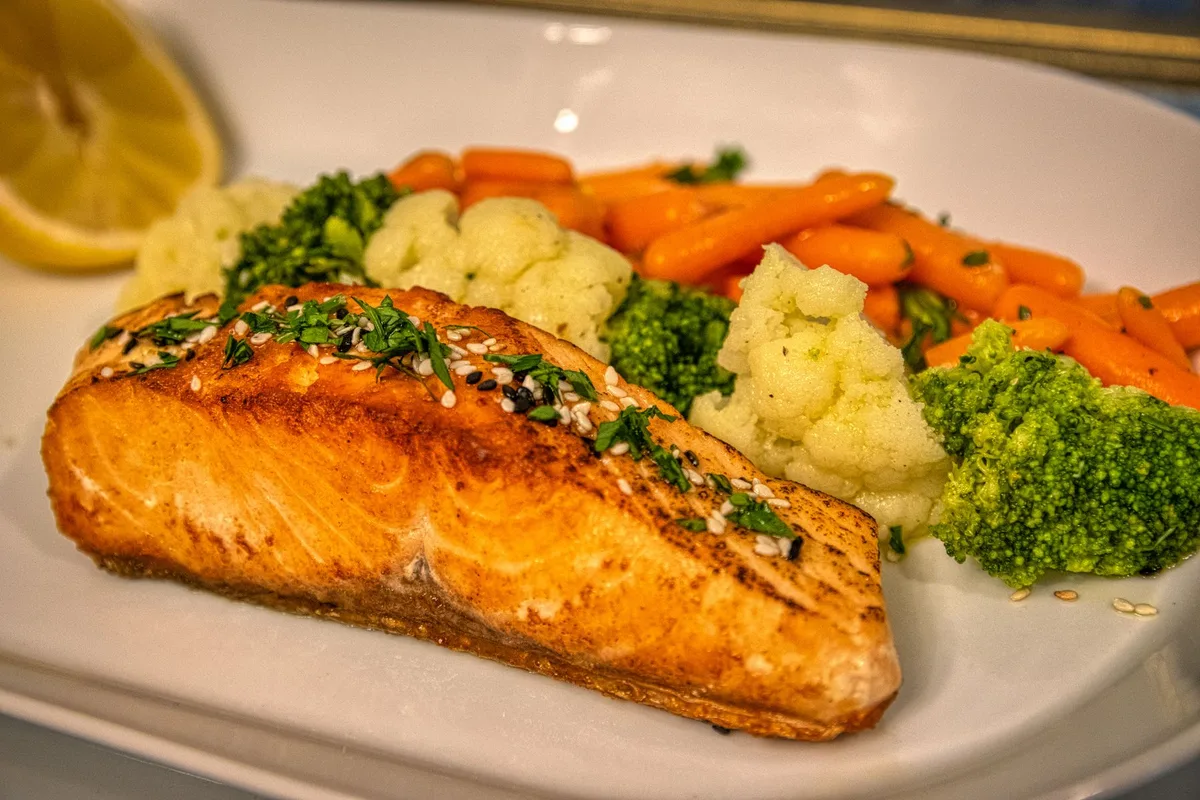
Chinese Medicine Methods
Five categories for the midsection, each marked with the tendency it suits and cautions. Food therapy uses food amounts; consult a practitioner before using any ingredient as a medicinal herb.
Acupressure
- Zusanli (four finger-widths below the outer knee): the traditional spleen-fortifying anchor; both sides, 60 seconds daily, alongside the slimmed dinner.
- Yinlingquan (the hollow below the inner knee’s upper edge): the main “drain water and damp” point; both sides, 60 seconds, on heavy or afternoon-puffy days.
- Zhongwan (four finger-widths above the navel): gentle rubbing, 60 seconds, for chronic post-meal fullness (half an hour after eating or later).
- Tianshu (two finger-widths beside the navel, both sides): the traditional “regulate the bowels” points; 60 seconds each for loose stools with bloating.
- Clockwise belly massage: 30–50 light circles around the navel before sleep — the household edition of “assist the transport.”
Food Therapy
Eastern-style:
- Winter melon, job’s-tears, and tangerine-peel soup: 300g winter melon, 20g raw job’s tears, 3g dried tangerine peel, simmered 40 minutes, two or three times weekly. Traditionally drains damp and moves qi — for the soft, heavy belly; job’s tears run cold: halve it for loose stools and skip it in pregnancy.
- Chinese yam brown rice: one-third a yam diced with 50g brown rice; three or four dinners a week instead of white rice — the daily-staple version of “fortify the spleen,” steadying blood glucose in the same bowl.
- Tangerine peel and hawthorn tea: 3g peel + 6g hawthorn, simmered 10 minutes, warm in the morning — for afternoon heaviness and gas; not on an empty stomach with acid issues, and less hawthorn if stools are loose.
Western-style:
- The fat-burner-adjacent breakfast floor: two eggs, two slices of whole grain, a pair of tomatoes — the day’s first deposit into both the strength-training account and the appetite account.
- Deep-sea fish two or three times weekly + one handful of nuts daily: protein and omega-3s as structural supply; count the nuts (a small handful, ~15–20g).
- A big salad or a clear soup first: vegetables and a light soup lead; the starch shrinks itself — portion control by structure, not willpower.
Emotional Regulation
- Replace the evening stress-eating window: 8–11pm is the high-risk stretch; fill it with a fixed ritual — shower, walk, three handwritten lines. Swapping the hour’s activity outperforms “just resist.”
- One flexible meal weekly: all-out prohibition raises the odds of a total blowout; planned ease protects persistence — the long-run key to eating at this stage.
- Ease up on self-criticism: read the body’s changes as physiology (hormones, muscle, sleep). “I lost discipline” adds the exact stress that fuels more stress eating.
Movement
- Strength is the spine (worth repeating): the belly’s final change rarely comes from sit-ups — squats, rows, and planks, done fully, are the work.
- Baduanjin qigong, 15 minutes daily: the gentle traditional qi-flow practice; suits those whose belly feels congested and heavy.
- Walking as the foundation: 30–40 minutes of brisk walking daily (split ok), plus the post-meal ten — movement and spleen-supporting digestion, each with a fixed slot in the day.
Sleep and Routine
- Fixed wake time + daylight: a stable clock has direct reach into evening appetite.
- Three hours from dinner to bed: reflux and late-meal metabolism both thank you for this rule.
- No nightcaps, no afternoon caffeine: alcohol taxes sleep and belly fat at once (consistent with the NIA list).
Five belly types, several lines — separate “fat or gas” first, then choose the expenditure line or the digestion line. The free constitution test at the end of this article is worth a look — a self-observation tool, not a diagnosis.
The Monthly Waist Log
Waist on the first of each month at rising, fasting (standing naturally, between lower rib and hip bone, no sucking in):
| Entry | Record |
|---|---|
| Waist | ×× cm (≥80cm women’s attention line) |
| Morning–evening gap | waist at waking vs. bedtime (>3cm leans bloat) |
| Strength sessions | × this month |
| Dinner’s starch | halved / normal / freestyle |
| Flexible meals | × per week |
| Waist change vs. last month | ± value |
After two months, read three things: the waist trend (0.5–1cm down a month is the healthy direction; a flat line doesn’t automatically mean wrong method — split out any “bloat component” with the morning–evening gap first); do strength sessions and waist moves correlate (more sessions, steadier change); is the gap stably small (a stable >3cm means the bloat type leads — move the main battlefield to the bloating article).
How Long Until It Helps
- Structural eating changes (dinner, protein): the jeans can report in from week two; the bloating type often improves faster still.
- Strength training: strength feel at four weeks, stable shape change at 8–12 — belly fat’s decline usually shows on the waist first within the opening eight weeks.
- Aerobic + post-meal walks: weeks to stabilize total expenditure; “easier in the body” arrives in days, the waist in months.
- Sleep and stress management: this article’s most underrated lever — once sleep steadies, the waistline often moves more than an extra workout day would ever buy.
- Food therapy and constitution work: two to four weeks to read digestion and body-feel; shape on a monthly gauge — fast is wrong here (fast always cuts muscle first).
When to See a Doctor
- Belly girth accelerating over months with no lifestyle explanation → the same medical-amber light as the weight article: thyroid and glucose first.
- Waist ≥80cm alongside elevated blood pressure, abnormal fasting glucose, raised triglycerides → the risk signals are pointing the same way; book a full check-up.
- The abdomen abnormally distended with fever or focal pain → that’s not a fat question; seek care directly.
- Period changes accompanying belly changes, or worsening bleeding → the periods article’s red lines apply (perimenopause irregular periods).
- Family history of cardiovascular disease: rising risk after menopause is one of this stage’s defining medical topics (ACOG’s FAQ covers it fully); waist, blood pressure, lipids, and glucose are the basic four to watch together.
This article is general health information, not a substitute for diagnosis or individualized advice.
Common Questions
So do sit-ups and crunches matter at all?
Train the core for core reasons — back protection, posture, stability — that’s worth doing. Just retire the expectation that they shrink the belly: abdominal fat can’t be burned by local training. The real combination stays eating structure + whole-body strength + aerobic; sit-ups are a bonus item, not the through-line.
Flat before dinner, round after — is that fat?
A big morning–evening gap (>3cm) is mostly bloating and digestion, not fat. Eating structure (dinner size and content), gut gas, and bowel rhythm own that battlefield, and the bloating article handles it far better than this one’s expenditure line.
Any traditional plan I can do “lying down”?
Tradition’s transport-first toolkit includes some wonderfully lazy moves — the clockwise belly massage before sleep, gentle walking, a structured table — all executable. But any promise of “lie there and get thin” deserves a hard discount. The tradition’s genuine value is the “fortify the spleen, aid transport” line, doing the same work as “exercise + food structure” in older vocabulary. “Lying thin” has never been evidence-based.
For the metabolic picture whole, read the menopause hub; the weight frame is in menopause weight gain; the gassy belly belongs to menopause bloating.
A soft, heavy, damp belly and a puffy, stress-tense belly don't take the same care
The free constitution test maps your tendencies across nine traditional types and pairs well with the monthly waist log below. For self-reflection, not medical diagnosis.
References5 sources
- 01
Mayo Clinic Proceedings
- 02
- 03
U.S. National Center for Complementary and Integrative Health (NCCIH / NIH)
- 04
U.S. National Institute on Aging (NIA / NIH)
- 05
American College of Obstetricians and Gynecologists (ACOG)
Personalized guidance
Use the app for constitution-friendly ideas and structured plans when available.
Download the App
Get personalized TCM health recommendations