How to Sleep With Period Cramps: Positions and a Bedtime Routine
Try side-lying with bent knees, a pillow under your knees, and a practical 15-minute bedtime routine. Learn why nights feel worse and when sleep-disrupting cramps need care.
By WellTao · Published: · Editorial Policy
More articles in this topicTable of contents
The short answer
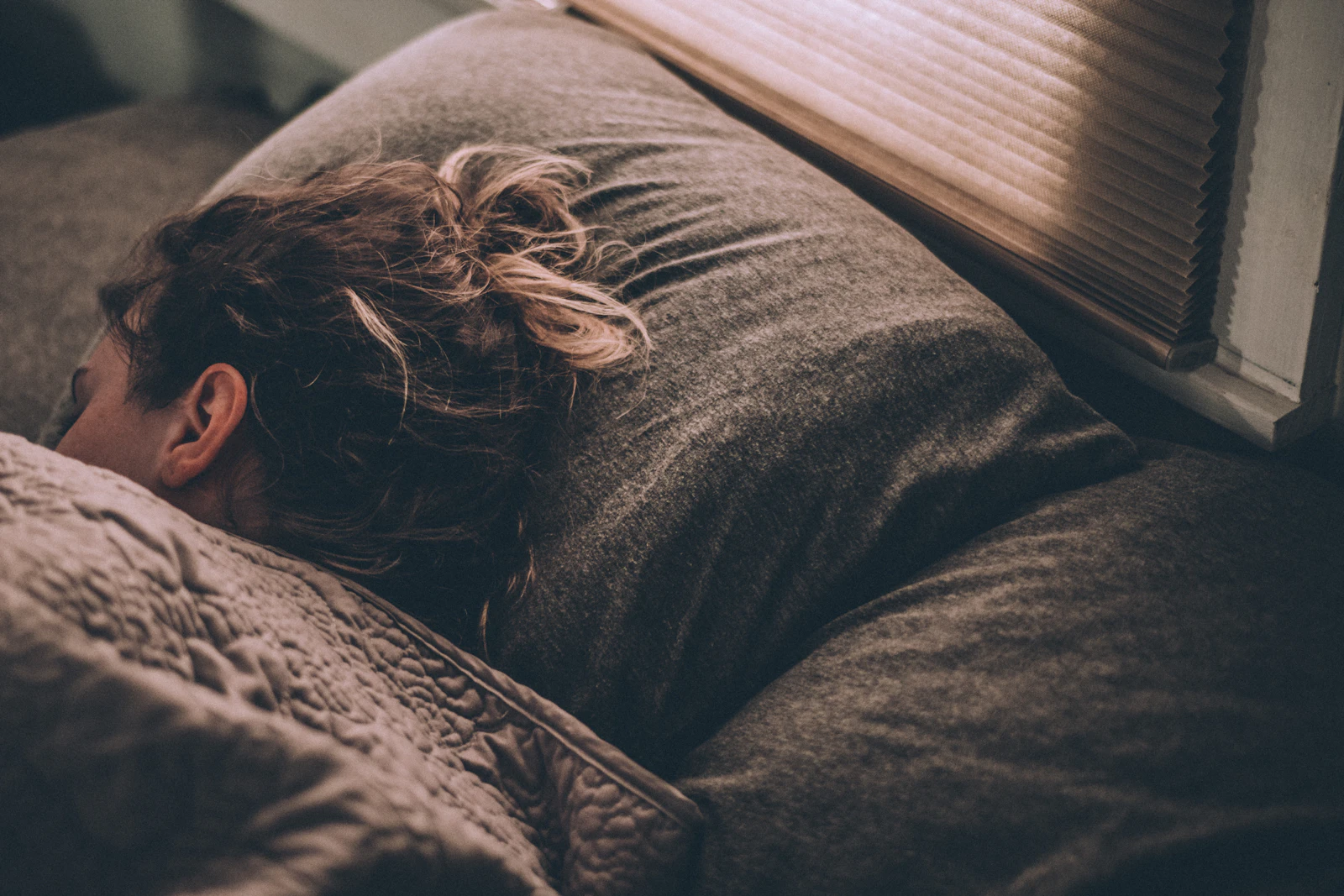
When cramps make a night difficult, start with position. Lie on your side with your knees bent toward your chest to relax the abdominal muscles and ease pulling across the lower belly. If you prefer lying on your back, put a pillow beneath your knees. Avoid sleeping on your stomach, which presses directly on the lower abdomen. Many people feel some relief as soon as they settle into a more comfortable position.
Add a bedtime routine: 15–20 minutes of heat, removed before sleep; two or three minutes of gentle stretching; a dinner with magnesium-containing foods; and a fairly cool bedroom while keeping your abdomen covered. The step card below brings these together. This advice concerns familiar primary cramps on the first night or two of a period. Repeated waking, being unable to sleep at all, or pain untouched by usual relief is itself a reason to seek care.
Which nighttime pattern fits you?
- You can sleep but wake once or twice when turning: typical early-period cramps or heaviness that ease enough with warmth or a new position to let you fall back asleep. The routine here is intended for this pattern.
- Pain feels louder as soon as you lie down: thinking about it makes you more alert and tense. Breathing and a gentle transition into bed matter as much as the position.
- Pain wakes you every period night: one or two isolated wake-ups can happen, but repeated waking over several cycles or being unable to return to sleep needs assessment, not another pillow arrangement.
The first night being worse and the second easing fits the usual primary-cramp rhythm. Night pain that worsens each cycle, first appears after 25, or occurs between periods needs investigation.
Why cramps feel worse at night
There is less to distract you. During the day, conversation, work, and walking compete for attention. In a quiet bedroom, the same pain signal moves to the front. A gentle pre-sleep ritual gives attention somewhere else to rest.
Sleep and pain amplify one another. Fragmented or insufficient sleep lowers the pain threshold. Pain interrupts sleep, and the next day the body is more sensitive. Protecting sleep breaks part of that cycle.
Position and pelvic fullness may contribute. Lying down changes how blood is distributed around the pelvis; staying still can make heaviness feel more noticeable. Direct studies of this mechanism in menstrual cramps are limited, so it is a plausible physiological explanation rather than a confirmed one. The practical observation is familiar: changing position can lessen pressure and pulling.
A special nighttime prostaglandin surge has not been shown. There is no good direct evidence that people produce more prostaglandins specifically at night. Prostaglandins do peak in the first day or two of bleeding, which often includes the difficult first night. Attributing night pain to a separate hormone rhythm remains speculation.
The TCM view of nighttime pain
The Lingshu chapter Shun Qi Yi Ri Fen Wei Si Shi observes that illness is often lighter at dawn, steadier by day, worse in the evening, and most difficult at night. Traditionally, yang qi is said to support the body during the day and retreat inward at night, making discomfort more apparent. This is an experiential model for self-observation, not a modern diagnosis, and describes the same visible nighttime change from a different angle than attention research.
Within menstrual pain, cold-congealing with blood stasis feels heavy or cramping and gets worse when a room cools or the abdomen becomes uncovered; heat helps and flow may be darker. Qi stagnation with blood stasis gives distending pain with clots that can tug across the lower back and feel worse after a tense day, easing after a clot passes. Fixed stabbing pain seems pinned to the same place, especially when lying still. In the traditional nine-constitution framework, yang deficiency leans toward nighttime cold pain, qi stagnation toward distension after stress, and blood stasis toward fixed pain. These are tendencies, not labels one can infer from a few nights. Present pain patterns and long-term constitutions are different concepts; professional TCM assessment is needed if a pattern is to be classified.
Cochrane finds the acupuncture and pressure evidence for primary cramps too limited for firm conclusions. Professional acupuncture research cannot be assumed to predict home pressure. Traditional self-care is an observation and routine framework, not a replacement for diagnosis or treatment.
Sleeping positions and bedtime steps
Choose a position
Side-lying with bent knees is the first choice. Let the knees draw naturally toward the chest and the back round slightly. Bending the hips releases the abdominal and hip-flexor muscles; the lower belly is not pressed into the mattress. Either side is fine. A thin pillow between the knees keeps the pelvis from twisting and relaxes the lower back. If backache is prominent, see why your lower back hurts during a period.
On your back with a pillow beneath the knees is another good option. A pillow or rolled blanket bends the hips and knees by roughly 30 degrees, easing tension across the lower abdomen and back. It also lets you rest a covered hot-water bottle on the belly before sleep.
Avoid lying face-down. Your weight presses on the lower abdomen and pelvis, and turning your head to one side strains the neck. If you usually sleep on your stomach, hug a long pillow while side-lying to keep the familiar forward-leaning feeling without the pressure.
Build the pre-sleep routine
- Put a hot-water bottle or heat pack over clothing or a towel on the lower abdomen or back for 15–20 minutes at a comfortably warm, never burning temperature. Heat has research support; a 2018 review suggested effects possibly comparable to ibuprofen, but study quality limits the claim. See the heat guide. Remove all continuously heated products before sleeping; electric blankets, rechargeable warmers, and patches can cause low-temperature burns when left against sleeping skin.
- Stretch gently for two or three minutes: child’s pose for 30–60 seconds, or lie on your back and rock with knees drawn in for one minute. The goal is a mild release in the belly and back, not a workout.
- At dinner, include magnesium-containing greens, legumes, nuts, banana, or whole grains. A Cochrane supplement review says magnesium supplements may help but evidence is low quality; food is a daily direction rather than a reason to buy a supplement. Avoid an overly large or cold dinner if those worsen your night.
- Keep the bedroom fairly cool, around 18°C, while a blanket or sleepwear covers the abdomen. If you often feel cold, soak your feet for 10 minutes in comfortably warm water before bed.
- Reduce worry about leaks with an overnight pad or period underwear and a dark towel over the sheet. This is practical sleep care, not a treatment for cramps.
Five traditional care approaches
Acupressure
Once daily while you are using heat, press each point with a fingertip to a mildly sore sensation for 60 seconds. SP6 (Sanyinjiao) lies four finger-widths above the inner ankle behind the shin and is traditionally used across all three night-pain patterns. ST36 (Zusanli) is four finger-widths below the outer kneecap, one finger-width beside the shin; it is used for cold pain with fatigue and cold hands or feet. LI4 (Hegu) is in the web between thumb and index finger, beside the second metacarpal, and is added for strong distending pain. For cold pain, pair SP6 with ST36; for distension, pair SP6 with LI4; for fixed pain, begin with SP6 and observe. Do not use SP6 or LI4 in pregnancy. Pause with fever, use lighter pressure if frail, and never press broken skin. Choose points from symptoms and traditional use, not a constitution-test result.
Food and drink
These are food preparations; consult a TCM practitioner before treating the ingredients as medicine. Jujube dates, dried edible rosebuds, millet, and black sesame are available in Asian grocers or online.
Eastern route
- Ginger and jujube tea: Simmer three ginger slices (about 10 g), three split jujube dates, and one teaspoon brown sugar (about 10 g) in water for 10 minutes. Drink warm one or two hours before bed for nighttime cold pain; see ginger tea.
- Rosebud tea: Cover five or six dried edible rosebuds (about 3 g) with boiling water for five minutes. Have a small warm cup after dinner when distension, clots, and a tense day coincide; traditionally, rose is used to soothe Liver qi, harmonize blood, and ease pain; see rose flower tea.
- Millet and sesame porridge: Simmer 50 g millet with 10 g toasted black sesame and water for 30 minutes. Serve as part of dinner. Millet is gentle; sesame is traditionally used to moisten and nourish the five organ systems, including the liver and kidneys, while seeds are also a magnesium-containing food.
Western route
- A magnesium dinner plate: Blanch or use tender leaves from 100 g spinach, add 80 g rinsed canned chickpeas, 15 g pumpkin seeds, a drizzle of olive oil, and wholegrain bread. Greens, legumes, and seeds all supply magnesium.
- Ginger tea: Thinly slice two or three pieces of fresh ginger (about 10 g) and steep in boiling water for 10 minutes; add a teaspoon of honey after it cools a little. Drink one or two hours before bed for cold pain.
- Banana and oat cup: Soften 40 g rolled oats in milk or plant milk, then add half a sliced banana and 10 g chopped almonds. Keep it a small after-dinner snack so it does not make sleep uncomfortable.
A yang-deficiency tendency with cold pain favors the ginger drinks, and qi stagnation with distension favors rose tea. Sesame porridge and the magnesium plate suit all tendencies. If you have dry mouth, a bitter taste, or unusually bright and heavy flow, reduce or stop the ginger drinks for that cycle. On the two most painful nights, set aside iced drinks and large raw salads under both food routes.
Emotional steadiness
Nighttime attention and anxiety can keep abdominal and pelvic-floor muscles tense. Once positioned in bed, inhale through the nose for four seconds and exhale through the mouth for six, for ten rounds. Write down tomorrow’s worries for two minutes before bed so they are out of your head; for a qi-stagnation, distending-pain pattern, this often works before pain medicine. When you catch yourself replaying how much it hurts, return attention to the breath or the warmth of the pad. Anyone can use breathing and writing in a stressful cycle.
Movement
Before bed, keep movement to child’s pose, a supine knee hug, or cat stretch, 30–60 seconds each, stopping at a mild stretch. At other times, regular brisk walking or yoga about three times weekly for at least 30 minutes may lessen cramps according to a Cochrane review, though evidence quality is low. Think of that as a long-term habit rather than tonight’s analgesic. Avoid running, jumping, and hard training on the first day or two when pelvic heaviness is prominent. A yang-deficiency tendency can choose daylight walking to ease cold nighttime pain; for a blood-stasis tendency, keep walking regularly over months. Halve stretch range if bleeding is heavy.
Sleep and routine
Go to bed at roughly the same time each day. On the first two painful nights, begin 30–60 minutes earlier so there is room to settle. Put heat, tea, and stretching into the hour before bed instead of searching for a hot-water bottle once you are already lying down. Aim to be asleep before 11 p.m. If cold pain accompanies a yang-deficiency tendency, protect abdominal warmth and use a footbath with warm, non-scalding water.
The free constitution test shows relative tendencies across nine traditional types: prioritize warmth for cold pain, breathing and emotional release for distension, and position changes plus observation for fixed pain. It is a self-observation aid, not a diagnosis.
The 15-minute bedtime card
Use this on the first two nights; the sequence, including preparation and stretching, takes about 20 minutes on the clock:
| Time | Action | Detail |
|---|---|---|
| Minute 0–1 | Prepare a covered hot-water bottle, dark towel, and overnight period product | Water should feel warm, never scalding |
| Minute 1–16 | Lie on your back with a pillow under the knees; heat the lower abdomen for 15 minutes | Keep thin clothing between skin and bottle |
| During minutes 1–3 | Inhale four seconds, exhale six, for ten rounds | Let the exhale be longer |
| During minutes 3–6 | Press SP6, 60 seconds on each side | Mild soreness only; avoid in pregnancy |
| Minute 16–18 | Remove heat; child’s pose one minute, gentle supine knee rocking one minute | Stop at a mild stretch |
| Minute 18–20 | Side-lying with knees bent and pillow between them, or back-lying with knees supported | Cover the abdomen and turn off the light |
After two periods, keep the step that most reliably makes you feel looser. If the full routine still leaves you unable to sleep on two nights in a row, seek assessment rather than making the routine more elaborate.
When to expect a change
A new position and pre-sleep heat can help that same night; the heat review suggests possible relief comparable to ibuprofen in small trials, with limited evidence. Breathing and relaxation often shorten the time to sleep within the first week and affect pain indirectly. Watch magnesium-rich meals and food preparations over two or three cycles, scoring the first night from 0–10; judge regular exercise after three months. If positions, heat, and the routine bring no improvement after two periods, take your record to a clinician.
When to see a doctor
Repeatedly waking in pain or being unable to sleep over several cycles, new pain after 25, worsening pain each cycle, pelvic pain between periods, pain with sex, a sudden increase or extension of bleeding, bleeding between periods, and no relief from correctly used heat or over-the-counter pain medicine all warrant care. Fever or unusual discharge needs timely assessment for possible infection. Without these signs, make an appointment after two or three cycles without improvement and bring night-pain scores and the adjustments tried. A clinician may recommend a pelvic exam or ultrasound for secondary causes such as endometriosis or adenomyosis. This article is educational, not individual medical advice. Follow medicine labels and ask a clinician or pharmacist before taking a pain reliever if you have stomach disease or take other medicines.
Common questions
Can I take ibuprofen before bed?
Yes, if it is appropriate for you. NSAIDs block prostaglandin synthesis, so taking a label-directed dose as pain starts or bleeding begins works better than chasing pain at its peak. If you expect pain on the first night, a dose before bed can be reasonable. Take it with or after food, stay within the label, and consult a professional first if you have an ulcer, kidney problem, or other medicine. Pain that remains uncontrolled at the maximum label dose needs assessment.
Can poor sleep make cramps worse?
Yes. Broken sleep lowers the pain threshold, while pain breaks sleep again. Protecting a steady bedtime and enough hours during the period week is part of pain management. Being woken repeatedly by cramps is itself a sign that the pain deserves assessment.
For the broader picture see period pain. If the back hurts more than the belly, read why your lower back hurts during a period; for heat details, see does a heating pad help cramps?.
Why are your period cramps especially hard at night?
Night pain differs from person to person. Cold pain that welcomes warmth and distending pain with clots point to different first bedtime adjustments in traditional care. The free constitution test shows tendencies across nine traditional types to help you choose a starting point. It is for self-observation, not medical diagnosis.
References9 sources
- 01
NHS
- 02
Mayo Clinic
- 03
- 04
- 05
Cochrane
- 06
- 07
Cochrane
- 08
- 09Huangdi Neijing, Lingshu
Traditional Chinese medical text
Personalized guidance
Use the app for constitution-friendly ideas and structured plans when available.
Download the App
Get personalized TCM health recommendations