Does a Heating Pad Help Period Cramps? What the Evidence Says
Heat is a first-line self-care option for primary period cramps. Here is what the studies show, how to use four kinds of heat safely, and when pain needs assessment.
By WellTao · Published: · Editorial Policy
More articles in this topicTable of contents
The short answer
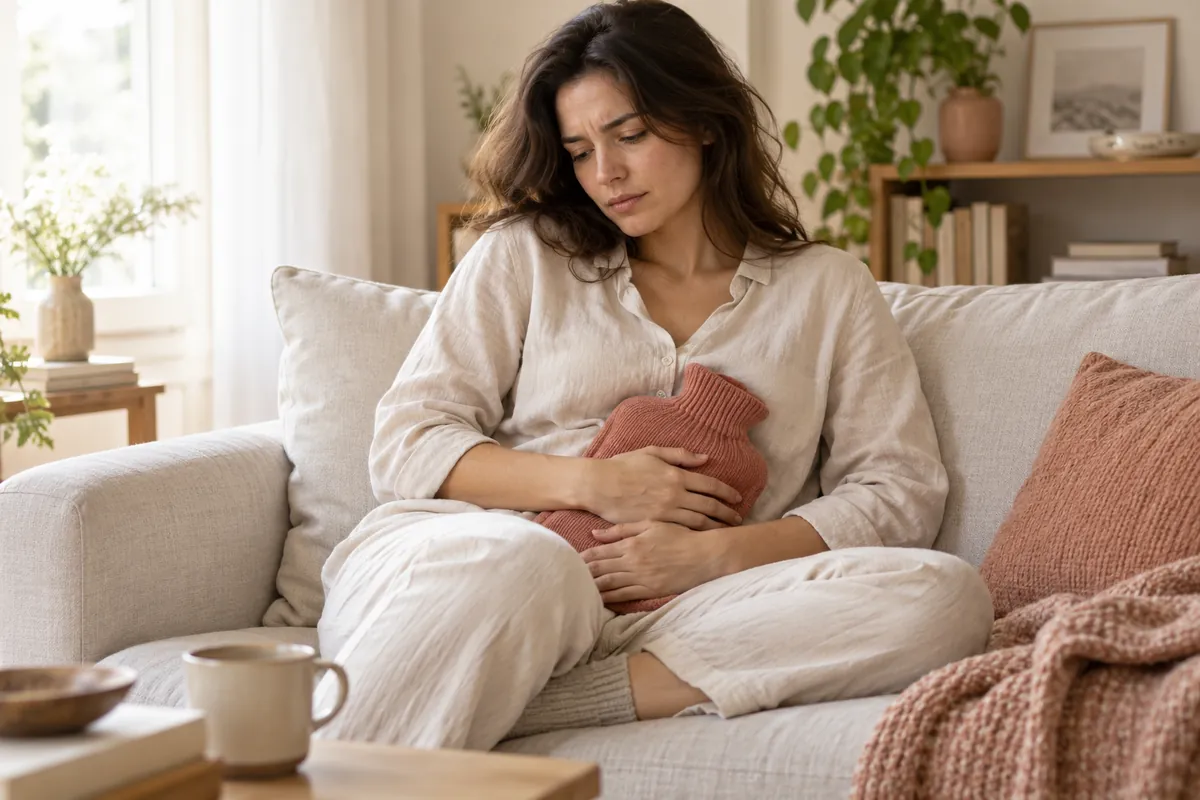
Yes. Heat is one of the first things worth trying for period cramps. A 2018 systematic review and meta-analysis by Jo and Lee brought together randomized trials of heat therapy for primary dysmenorrhea and found a reduction in pain intensity. The NHS also recommends a heat pad or a hot-water bottle wrapped in a towel, alongside options such as ibuprofen.
This advice is for familiar, recurring cramps that began in adolescence or within a few years of your first period, are usually worst in the first day or two of bleeding, and have no identified pelvic disease. Backache, nausea, and loose stools can accompany them. New pain after 25, a clear month-by-month increase, pelvic pain between periods, or a sudden change in bleeding calls for the medical assessment described below.
Heat eases pain; it does not stop the excess prostaglandin production behind primary cramps. If pain disrupts ordinary activities, heat and an appropriately used pain reliever such as paracetamol or ibuprofen can be used together. Follow the label and check with a clinician or pharmacist if you are unsure which medicine is suitable.
What medicine says about heat and cramps
Why cramps happen
When the uterine lining sheds, it releases prostaglandins, especially PGF2α. They make the uterine muscle contract to expel the lining. Strong contractions squeeze blood vessels in the uterine wall, reducing oxygen locally and causing pain. Prostaglandins circulating elsewhere help explain nausea, diarrhoea, and headaches. Mayo Clinic describes this chain of events.
How warmth relieves cramps in three ways
- More local blood flow. Heat widens vessels in the skin and deeper tissues and eases the reduced blood flow associated with contractions.
- Less muscle tension. Warmth relaxes tense abdominal and back muscles as well as the cramping sensation.
- Competing sensory signals. The gate-control theory of pain suggests that warmth and touch signals can partly crowd out pain signals at the spinal cord. That may contribute to the soothed feeling of a warm pad on the abdomen.
What the trials found
The 2018 review found significantly less pain with heat than with no treatment. Studies of sustained low-level warmth, including patches around 38.9°C used for up to 12 hours, showed steadier results. A few small trials found heat no worse than ibuprofen, but their small number, sample sizes, and limited quality make that comparison uncertain. It does not mean a pad can replace pain medicine. Used correctly, heat is an effective, inexpensive first step with few adverse effects; combining it with medication makes sense for moderate or severe cramps.
One limit is firm: a continuously heated pad or self-warming patch should not stay on while you sleep.
How TCM understands heat for period pain
A traditional summary is “where flow is obstructed, there is pain.” Cold is one common reason given for that obstruction. TCM compares cold’s constricting effect to water moving sluggishly through a pipe in winter: qi and blood are said to slow around the womb, producing pain. A cold lower abdomen and marked relief with warmth are the classic clues. The Suwen chapter Ju Tong Lun also describes cold pain easing when warmed. This is a traditional explanatory model for self-observation, not a modern medical diagnosis.
Three descriptions are useful here:
- Cold cramping (cold congealing with blood stasis): a chilly, gripping lower-abdominal pain that clearly improves with a heat pad or warm drink; cold hands and feet, darker menstrual flow, and clots may accompany it. Heat fits this pattern most directly.
- Distending pain (qi stagnation with blood stasis): a full, pressure-like ache that can reach the sides or lower back, with breast tenderness and irritability before bleeding. Passing a clot may ease the pain. Warmth can help, but emotional release and movement matter more in this traditional account.
- Lingering dull pain (qi and blood deficiency): a gentler ache during or after the period, comforted by pressure and warmth, often with light flow and fatigue. The traditional emphasis is nourishment rather than driving out cold.
These current pain patterns are distinct from long-term constitutional tendencies. In the nine-type framework, yang deficiency may lean toward cold-responsive pain, qi stagnation toward distension, and blood stasis toward fixed pain. The direction goes one way: one or two painful periods cannot establish a constitution. Patterns can overlap or change, and professional TCM assessment is needed to classify them. Cochrane finds the acupuncture and acupressure evidence insufficient for firm conclusions; professional acupuncture studies cannot be treated as proof that self-pressing a point will work. This traditional lens does not replace medical assessment or treatment.
Using heat day to day
Aim for about 40–45°C at the heat source, or a comfortably warm feeling through the cover, never a burning one. Even a source around 45°C held on the same spot for a long time can cause a low-temperature burn. Use it for 15–20 minutes at a time, then let the skin rest. A self-warming patch designed for longer use must be worn for no longer than its instructions allow. Keep a layer of clothing or fabric between every heat source and your skin. On the first one or two painful days, repeating a 20-minute session after a break is reasonable while the skin remains comfortable and free of persistent redness. Take a pad off before falling asleep; see how to sleep with cramps if nights are the hardest time.
Choose the form that fits the day:
| Heat source | Best use | Check before using |
|---|---|---|
| Electric pad | A broad area while resting at home | Choose a timer and automatic shutoff. Remove it before sleep. |
| Hot-water bottle | Simple, inexpensive home option | Fill about seven-tenths full with water around 60°C, expel air, fasten securely, and use a fabric cover. |
| Self-warming patch | Several hours of low heat at work or school | Attach over clothing and discard at the time stated on the package. Never wear it to bed. |
| Warm bath | Whole-body tension and backache | Soak 15–20 minutes in water around 38–40°C. |
Avoid abdominal heat over broken, infected, or irritated skin. Reduced skin sensation, including diabetic neuropathy, makes unnoticed burns more likely. If pregnancy is possible, avoid prolonged high heat on the abdomen; ask a clinician or use only brief mild warmth. Severe pain with fever deserves assessment before you try to cover the symptoms with a pad. For the wider plan of diet, movement, and relaxation, see non-medicine relief for cramps.
Five traditional care approaches
Start with one or two changes you can actually repeat. Match them to how the pain presents now; a constitution tendency is a longer-term guide.
Acupressure
Using a fingertip, press until you feel a mild ache or fullness, 60 seconds per point, once daily or twice on a painful day.
- SP6 (Sanyinjiao) is about four finger-widths above the inner ankle bone, behind the shinbone. Traditionally used for cold and distending cramps. Do not use in pregnancy.
- LI4 (Hegu) is on the back of the hand in the web between thumb and index finger, beside the midpoint of the second metacarpal. Traditionally paired with SP6 when distension is prominent. Do not use in pregnancy.
- ST36 (Zusanli) is about four finger-widths below the outer edge of the kneecap and one finger-width beside the shin. Traditionally chosen when a lingering ache follows the period with fatigue. Press each side for 60 seconds.
Cold pain may call for SP6 first; add LI4 for distension, or ST36 for fatigue after bleeding. You need not use all three. Someone with a yang-deficiency tendency and cold hands may keep gentle SP6 and ST36 massage as a habit outside the period; a qi-stagnation tendency also calls for the emotional practices below. Pause during a fever or cold, and use lighter pressure if weak.
Food and drink
These are food preparations. Ask a TCM practitioner before using their ingredients as medicinal herbs. Chinese ingredients such as dried tangerine peel, jujube dates, and dried rosebuds are sold at Asian groceries and online.
Eastern route
- Ginger and brown-sugar water: Simmer three slices of fresh ginger (about 15 g) and 1–2 spoonfuls of brown sugar in 300 ml water for 10 minutes. Drink warm when lower-abdominal pain feels cold and improves with heat; see ginger tea. Traditionally ginger warms the middle and disperses cold.
- Rosebud tea: Steep 5–6 dried edible rosebuds in boiling water, covered, for five minutes. Start a week before the period if distending pain accompanies irritability; see rose flower tea. Traditionally rose is used to ease constrained qi.
- Dried tangerine peel, ginger, and jujube drink: Simmer 3 g dried tangerine peel, two ginger slices, and three split jujube dates in water for 15 minutes. Drink as tea when cold pain comes with nausea and bloating. Traditionally the peel moves qi while ginger and dates warm the middle.
Western route
- Ginger and honey tea: Thinly slice two or three pieces of fresh ginger (about 10 g), cover with boiling water for 10 minutes, and add one teaspoon of honey once warm. This is an easy supermarket version of the first drink for cold-type cramps.
- Warm cinnamon milk: Warm 250 ml milk without boiling, stir in ¼ teaspoon cinnamon (about 1 g), and drink about an hour before bed. This is for someone who often feels cold and has cold-type cramps; the warm milk can feel soothing during a tense evening.
- Sweet-potato and oat breakfast: Steam one medium sweet potato (about 200 g). Cook 50 g oats into porridge and serve together, adding half a sliced banana if you like. It is a warm, easy breakfast when appetite is poor on the first two days.
Across both routes, set aside cold drinks, chilled fruit, and raw salads for the first two painful days: the traditional explanation is to avoid adding cold, while the modern explanation is that cold food can provoke gut-vessel contraction and spasms that compound lower-abdominal discomfort. These warmer foods best fit a yang-deficiency tendency and cold pain. If you tend to feel hot, have dry mouth or bitter taste, or have dark, thick flow, reduce or skip the ginger and cinnamon drinks; try the milder rose tea instead. A qi-stagnation tendency points toward rose tea, while a blood-stasis tendency puts more weight on movement. Ask a clinician before consuming large amounts of ginger or cinnamon if you take anticoagulants.
Emotional steadiness
Tension and anxiety raise muscle tone in the abdominal wall and back and can heighten sensitivity to the same uterine contractions. When pain begins, lie down with a hand on your abdomen, inhale for four seconds, exhale for six, and repeat ten cycles, ideally with the pad in place. During the week before bleeding, move avoidable all-night work or intense obligations away from the first painful days if you can. Meet a flare with a practical step instead of watching it tensely. This is particularly relevant to a qi-stagnation tendency, though anyone can use it in a stressful month.
Movement
On the first two days, keep it gentle: hold child’s pose for one to two minutes and alternate slow arches and releases in cat stretch eight to ten times. From day three, return to a 20–30-minute brisk walk, at a pace where you can still talk. Regular activity has research support for prevention and is traditionally used to keep qi and blood moving. Skip high-intensity intervals, heavy lifting, and prolonged inversions during the painful days. Aim to feel a little warm, not breathless or depleted. A blood-stasis tendency makes the walking habit especially relevant; a yang-deficiency tendency calls for avoiding heavy sweating.
Sleep and routine
Try to be asleep before 11 p.m. and allow seven to eight hours. Keep the abdomen, lower back, and feet warm; thin socks can help on a cold night. On the first two days, reduce avoidable commitments and get up for three to five minutes each hour if work keeps you seated. About 30 minutes before bed, use heat for 20 minutes while doing the slow breathing above, then remove the heat source before sleep. This routine suits every constitution, particularly someone with a yang-deficiency tendency who often feels cold.
For cold pain, begin with heat and warming food; for distension, give movement and emotional unwinding more weight; for a lingering dull ache, prioritize sleep and nourishing meals. The free constitution test can show relative tendencies across nine traditional types to help choose a place to start. Its result is for self-observation and cannot diagnose a cause.
Heating pad step card
| Item | What to do | Stop when |
|---|---|---|
| Temperature | About 40–45°C; comfortably warm through fabric | It feels hot or the skin reddens |
| Duration | 15–20 minutes per session; follow the package for sustained patches | Time is up; let skin rest |
| Barrier | Keep clothing or a fabric cover between heat and skin | Rash or stinging appears |
| Frequency | On the first one or two days, repeat a session after a break | Redness in the same spot persists |
| Sleep | A 20-minute session before bed can help you settle | Remove continuous heat before sleeping |
| Record | Score pain from 0–10 before and 20 minutes after each session | If there is no gain over 2–3 cycles, bring the record to a doctor |
Recording two or three periods shows which kind of pain responds to heat and how much. That record is useful at a medical appointment, too.
How long until you notice a difference
Many people feel some easing within minutes to 20 minutes of applying heat. If the pain score barely moves despite the right temperature and duration over a period, shift attention to other methods or seek assessment. Give acupressure, food, and routine changes two to three cycles to judge; review a regular walking habit after two to three months, when improved pelvic blood flow and regulation of prostaglandin levels can become evident. If careful self-care brings no improvement after two or three periods, bring the record to a gynecologist rather than adding more items to a self-care list.
When to see a doctor
Seek assessment for new cramps after 25, pain that clearly worsens from month to month, pain between periods or during sex, or a sudden major change in bleeding. Bleeding that soaks a pad an hour for several hours, pain that prevents work or daily life despite properly used heat and pain medicine, fever, unusual discharge, and fainting also need prompt attention. A blister or broken skin after heat is a burn: stop heating that area and have it cared for. If self-care has not helped after two or three periods, make an appointment and bring your scores, age at onset, cycle pattern, and measures tried. A clinician may recommend pelvic examination and ultrasound to look for secondary causes such as endometriosis, adenomyosis, or fibroids.
This is health education, not a diagnosis or individual treatment plan. If you take prescription medicines or have a chronic condition, discuss changes to your care with your clinician.
Common questions
Will a heating pad make my period heavier?
Heat increases local blood flow in the skin, but there is no reliable evidence that ordinary period heat significantly increases total menstrual flow. Hormones and the uterine lining largely determine that flow. If yours is already heavy, use a shorter comfortable session; a sudden marked increase in bleeding needs assessment regardless of the pad.
Can I stick a self-warming patch straight on my stomach?
No. A patch can stay above 50°C for hours. A low-temperature burn may hurt surprisingly little at first while deeper skin is injured. Put it over clothing, follow the package’s time limit, and remove it before bed.
What if I might be pregnant?
If your period is late or pregnancy is possible, pause prolonged high-temperature abdominal heat. Evidence about a short ordinary heat session early in pregnancy is limited, but caution is sensible. Use brief mild warmth below 40°C, a warm footbath, or ask an obstetric clinician. Once pregnancy is ruled out, ordinary period heat can resume.
Heat is inexpensive and often quick to help when its temperature, timing, and fabric barrier are right. For more options, read how to relieve cramps without medicine and how to sleep with cramps. The period pain overview explains the wider pattern.
Why does heat help one person's cramps but barely touch another's?
Heat fits a cold, warmth-responsive pain pattern best. Distending pain, fixed stabbing pain, and a lingering ache after a period call for different first steps. The free constitution test shows your tendencies across nine traditional types and can help you choose where to begin. It supports self-observation, not medical diagnosis.
References6 sources
- 01
Jo and Lee, Scientific Reports, 2018
- 02
NHS
- 03
Mayo Clinic
- 04
Cochrane
- 05
- 06
Traditional Chinese medical text
Personalized guidance
Use the app for constitution-friendly ideas and structured plans when available.
Download the App
Get personalized TCM health recommendations