Water Retention
Explore swelling around the ankles, legs and other areas, its timing and accompanying signs, traditional TCM concepts and when to seek care.
By WellTao · Published: · Editorial Policy
Water Retention · Articles in this topic
Articles are on the way
We will add articles to this topic over time. While you wait, explore the overview below for useful context.
Topic overview
Common signs
These descriptions can help you understand and record what you notice. They cannot establish a diagnosis on their own.
-
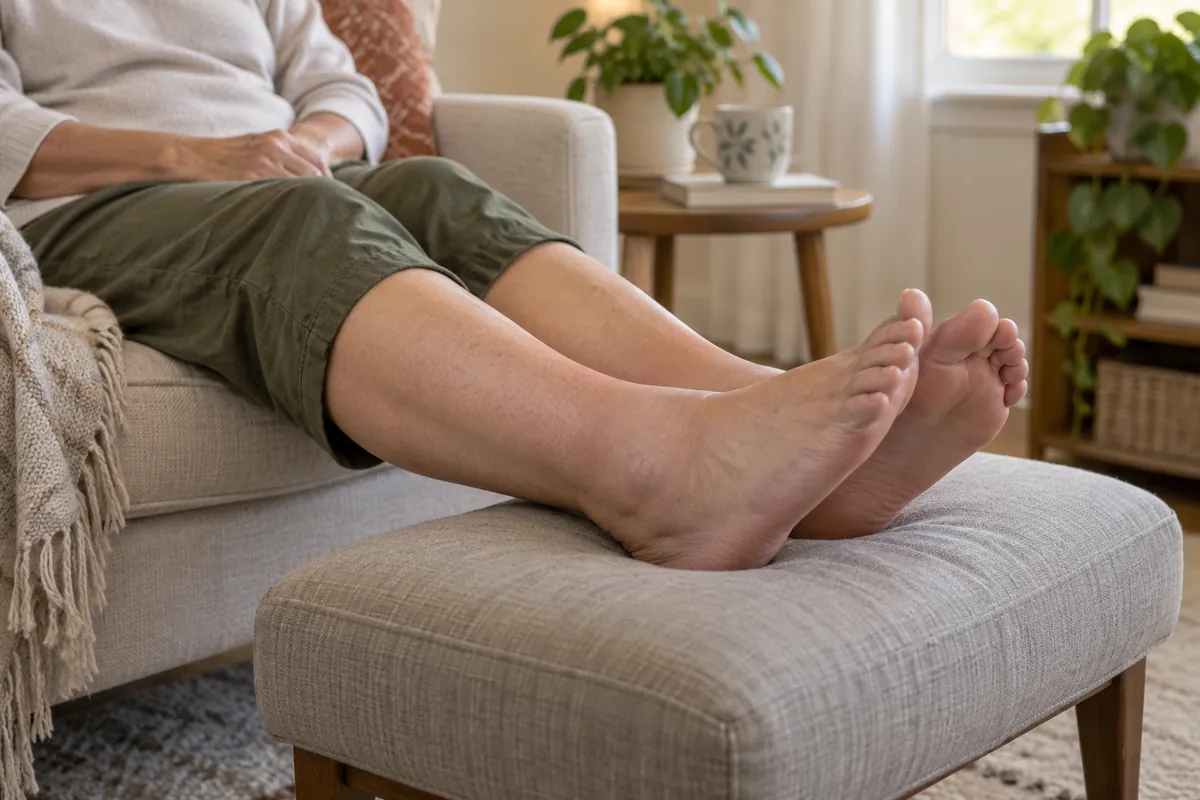
Swelling around the ankles or lower legs
Ankles that thicken after long sitting or standing, with deep sock marks, are the most visible sign. Compare both sides for symmetry, and note whether the swelling shows up daily and how long it lasts.
-
Pitting that bounces back slowly after pressing
Press a finger into the front of your shin or ankle for five seconds; if a dent lingers for a few seconds, fluid is pooling in the tissues. Swelling that doesn't pit behaves differently and is worth getting medically assessed.
-
Worse by evening, better in the morning
Legs that feel heavier and puffier as the day goes on, then settle overnight, usually point to prolonged sitting or slow fluid circulation. If swelling persists even after sleep, it's worth investigating the cause.
-
Shoes or rings suddenly feeling tight
Tighter shoes or rings without weight gain suggest fluid is quietly accumulating. Check at the same time of day for a few days in a row — a persistent trend deserves attention alongside any other symptoms.
-
A heavy, weighed-down body and easy fatigue
Persistent swelling with fatigue needs medical assessment rather than a trial of constitution-based care. New one-sided, painful, red or hot swelling needs urgent assessment.
Concepts in traditional Chinese medicine
- Spleen Deficiency with Dampness
- Kidney Yang Deficiency
- Qi Stagnation Blocking Fluids
- Damp-Heat Accumulation
These are concepts from a traditional medical framework, not modern medical diagnoses. Do not select a treatment or identify a pattern from symptoms alone. Discuss TCM approaches with a qualified health professional, and do not delay or replace needed medical care.
TCM safety and research overview (NCCIH)When to seek care
Seek a professional assessment if you notice any of the following:
- Sudden swelling in one leg only, with pain, warmth, or redness (a blood clot needs to be ruled out)
- Sudden swelling with chest pain, shortness of breath, or difficulty breathing (seek urgent care — this may signal a serious heart or lung problem)
- Breathlessness, inability to lie flat at night, or noticeably reduced or foamy urine
- Sudden swelling of the face, lips, or whole body with rash or itching (a possible allergic reaction)
- During pregnancy: sudden marked swelling with headache, blurred vision, or raised blood pressure
- Swelling that persists or keeps worsening despite rest and leg elevation
References1 source
- 01
NHS (UK National Health Service)
Download the App
Get personalized TCM health recommendations