What to Eat and Drink for Period Cramps
Ginger tea has the most period-pain research among common drinks. Compare chamomile, peppermint, cinnamon, coffee, cranberry juice, and meals rich in omega-3s, magnesium, and calcium.
By WellTao · Published: · Editorial Policy
More articles in this topicTable of contents
The short answer
For period cramps, begin with warm drinks. Ginger tea has the most direct period-pain research of the familiar options; chamomile, cinnamon, and peppermint each serve different purposes, and warm water is the foundation. Cut back on alcohol, very sweet drinks, and large amounts of iced drinks. If you choose one tea to try first, choose ginger.
Coffee depends on you: evidence does not show it inevitably worsens cramps, but caffeine’s vessel-constricting and stimulating effects make a two-cycle reduction worth testing if cramps, anxiety, or poor sleep are prominent. Cranberry juice has evidence for some urinary-tract uses, not for menstrual pain. For meals, look to omega-3 sources such as oily fish, flaxseed, and walnuts; magnesium sources such as greens, nuts, and legumes; and calcium sources such as dairy or tofu. New pain after 25, worsening pain, or loss of response to usual relief needs assessment before another menu experiment.
When food and drink are worth trying
Diet changes best fit familiar primary cramps: waves of lower-abdominal pain on the first day or two, eased by heat, recurring each month at a tolerable level or one that sometimes needs pain medicine. Food may lower the starting level of discomfort and reduce reliance on medicine, but it does not replace ibuprofen or another first-line treatment. If pain makes you miss work or school for a day or two every month, or also occurs between periods, with sex, or alongside a major bleeding change, seek clinical assessment first. Eating differently can remain supportive care.
How food and drink relate to cramps
Prostaglandins are central. As the uterine lining sheds, it releases prostaglandins, especially PGF2α. These contract the uterus strongly enough to briefly squeeze its vessels, while circulating prostaglandins contribute to nausea, diarrhoea, and headache. Higher levels usually mean worse pain; ibuprofen directly suppresses their production (Mayo Clinic). Foods and drinks discussed for cramps generally aim at inflammatory prostaglandin production, muscle spasm, or the nutrients needed for normal muscle relaxation.
Water matters. Bleeding, diarrhoea, and sweating can increase fluid loss. Dehydration and electrolyte imbalance make muscles prone to cramping and can add fatigue or headache (Mayo Clinic dehydration). Warm water is an inexpensive first step. Very caffeinated or sugary drinks are a poorer way to hydrate.
Caffeine cuts both ways. It blocks adenosine receptors, constricts vessels, stimulates the nervous system, and can increase urination. For some people, vessel constriction, anxiety, and lost sleep may amplify cramps. Yet a ten-year prospective cohort did not find a caffeine–PMS association, while ACOG’s premenstrual advice still says to avoid caffeine. That difference supports an individual test, not a universal ban.
Alcohol, sugar, and ice deserve a trial reduction. Alcohol encourages fluid loss and disturbs deep sleep; the NHS says cutting down may ease pain. Very sweet drinks spike and then drop blood sugar, adding fatigue and irritability. Modern medicine has no direct evidence that iced drinks cause dysmenorrhea: cold liquid warms on its way to the stomach. A large icy drink still cools the gut, and someone who feels cold during a period may choose warmth for the traditional cold-pattern reason.
The TCM view of food and drink
Traditional care organizes menstrual food around warmth and unobstructed movement. The Suwen chapter Ju Tong Lun describes cold constricting the vessels and pain stopping after heat: “when warmth is obtained, the pain stops.” Warm food and drink follow that observation. It is an experiential model for self-observation, not a modern diagnosis or a claim that an iced drink is poisonous.
Cold pain that eases with warmth, with cold hands and dark flow, is the traditional cold-congealing pattern; ginger and cinnamon drinks are chosen first, and ice is avoided. Distending pain with clots, breast fullness and more pain in stressful months is described as qi stagnation with blood stasis; rose tea and ginger tea are chosen, but emotional care matters even more. Fixed stabbing pain in the same place with dark clots is a stasis direction that food alone cannot adequately address and deserves a higher priority for assessment.
Yang deficiency can lean toward the cold pattern, qi stagnation toward distension, and blood stasis toward fixed pain in this nine-type framework. The pain pattern describes a current episode; a constitution describes a long-term self-care tendency. One or two episodes cannot establish your constitution. Patterns can mix or change and need professional TCM assessment. A constitution result can guide daily food, sleep, movement, and emotional-care priorities; it cannot choose points, medicinal herbs, or treatment. NCCIH and Cochrane also caution that evidence for some traditional methods is limited, so these ideas do not replace examination or treatment.
Drinks and meals to try
Ginger tea
Gingerols inhibit the synthesis of prostaglandins and inflammatory mediators, in a gentler way along the same pathway targeted by ibuprofen. NCCIH says ginger supplements may reduce the severity of cramps, while studies vary in quality; the Cochrane supplement review finds an encouraging but uncertain direction. For a kitchen tea, simmer 10–15 g fresh ginger (about three or four slices) in 300 ml water for 10 minutes. Begin one or two days before bleeding; drink one or two warm cups daily on the first two or three days. See ginger tea. If ginger causes heartburn, have it after food. Reduce it if flow is very heavy and bright red or you tend to feel overheated.
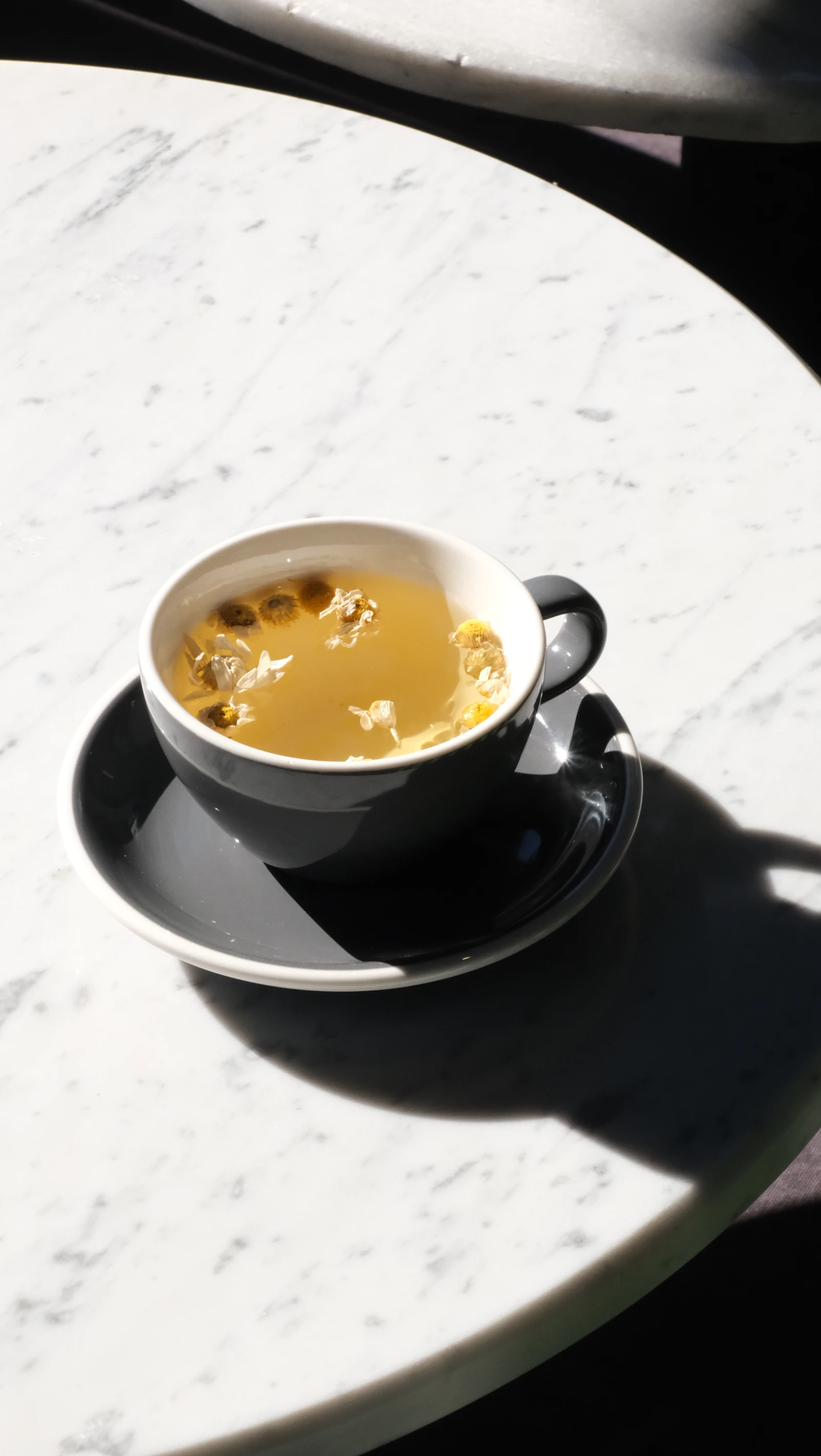
Chamomile tea
Apigenin and glycine in chamomile are discussed for mild antispasmodic and calming effects, useful when pain, anxiety, and poor sleep reinforce each other. Cochrane includes a small chamomile comparison, while NCCIH says research cannot confirm treatment of particular conditions. Steep 2–3 g dried chamomile (about one tea bag) in 250 ml boiling water for five to ten minutes; have one or two cups a day, especially one before bed. Avoid it if allergic to ragweed or other daisy-family plants, and ask a doctor first if taking warfarin or another anticoagulant.
Peppermint tea
Menthol relaxes smooth muscle, and NCCIH discusses peppermint oil for bowel spasms. Direct menstrual-cramp research is sparse. Its cooling taste makes it a second-line option when cramps come with nausea, behind ginger and chamomile. Steep 1–2 g dried peppermint leaves or a small handful of fresh leaves in 250 ml hot water for five minutes; have one cup a day. Use caution with reflux because peppermint can relax the lower esophageal sphincter and increase heartburn.
Cinnamon tea
A 2020 review of small randomized studies of cinnamon, fennel, and ginger found lower pain intensity and, for cinnamon, shorter duration, but the small studies and quality limits call for caution. Traditionally cinnamon fits warming care. Stir ¼–½ teaspoon cinnamon powder (about 0.5–1 g) into 250 ml hot water, or add it to milk or oats, once a day beginning before the period. Keep it at culinary quantities rather than large medicinal doses over time; do not drink large amounts during pregnancy.
Warm water, coffee, and cranberry juice
For a basic daily drink, take roughly 1.5–2 litres of water, sipping through the day and using pale-yellow urine as a guide. Someone who feels cold can drink it warm. Coffee has no reliable evidence of inevitably worsening cramps. If you usually drink two or three cups, halve that or switch to decaf for the first two or three days and compare two cycles. Do not stop abruptly if that gives you a withdrawal headache. Prioritize reducing it if anxiety or insomnia is already a problem.
Cranberry juice has no direct cramp-relief evidence. A 2023 Cochrane review concerned prevention of recurrent urinary infections, a different question. Keep drinking it for your usual urinary-health reason if you wish, but do not expect analgesia or add sugary servings for this purpose.
What to limit and what to put on a plate
Avoid alcohol when possible during the first two or three painful days. Replace very sweet milk tea, soda, or sweetened juice with a small diluted fresh juice or whole fruit. If iced drinks leave you colder or more uncomfortable, choose room-temperature or warm ones and check your two-cycle record.
- Omega-3 foods: Fatty acids from salmon, sardines, flaxseed, and walnuts compete in prostaglandin pathways. Small fish-oil trials in the Cochrane review suggest possible benefit with low-quality evidence. Roast 150 g salmon and serve with brown rice and broccoli, or mix one tablespoon ground flaxseed (about 10 g) into yoghurt.
- Magnesium foods: Magnesium supports smooth-muscle relaxation and nerve regulation; small early studies suggest possible benefit but are not conclusive. Serve spinach and mushrooms with eggs and wholegrain toast, and have about 20 g almonds in the afternoon. Cashews, beans, whole grains, and a little dark chocolate also fit.
- Calcium foods: Calcium participates in muscle contraction and relaxation. A PMS trial used 1,200 mg calcium carbonate daily and found lower premenstrual and menstrual symptoms, including cramps; supplement findings do not prove that one glass of milk stops pain. Make milk oats for breakfast or tofu with greens at dinner; yoghurt and cheese are other options.
Five traditional care approaches
Acupressure
Once or twice daily, rub gently to mild soreness for 60 seconds on each side. SP6 (Sanyinjiao), four finger-widths above the inner ankle behind the shin, is used for cold pain and backache. LI4 (Hegu), on the radial (thumb) side of the midpoint of the second metacarpal, within the thumb–index web, is paired for distension. Avoid both during pregnancy. ST36 (Zusanli), four widths below the outer knee beside the shin, is traditionally used when fatigue, low appetite, or diarrhoea accompany cramps. Use lighter pressure with heavy flow or weakness and pause with fever. Needling-study effects cannot be assumed for home pressure; this is an adjunct.
Food and drink
These are food preparations; consult a TCM practitioner before medicinal use. Dried tangerine peel, rosebuds, longan, and jujube dates are available at Asian grocers and online.
Eastern route
- Brown-sugar ginger tea: Simmer three ginger slices (about 10 g) in 300 ml water for 10 minutes, dissolving 10 g brown sugar at the end. Drink one warm cup daily from before bleeding for cold pain; use the sugar only to taste.
- Rosebud tea: Cover three to five edible dried rosebuds with 250 ml boiling water for five minutes. Drink daily from a week before bleeding for distending pain with clots; see rose flower tea.
- Longan-jujube millet porridge: Simmer 50 g millet, three split jujube dates, and five pieces dried longan in water for 30 minutes. Eat for breakfast when a post-period dull ache and fatigue persist.
- Dried-tangerine-peel, ginger, and jujube water: Simmer 3 g dried tangerine peel, two ginger slices, and two jujube dates for 10 minutes. Drink as tea when poor appetite, nausea, and bloating accompany the period.
Western route
- Ginger tea: Steep two or three thin fresh-ginger slices (about 10 g) in boiling water for 10 minutes; add a teaspoon of honey once warm. As with the Eastern version, drink one warm cup daily starting before the period.
- Cinnamon oat milk: Heat 250 ml milk or oat milk, add 40 g rolled oats and simmer three minutes, then stir in ¼ teaspoon cinnamon and perhaps half a banana. A warm calcium-and-magnesium breakfast for cold pain.
- Sweet potato and eggs: Steam one medium sweet potato (about 200 g) and serve with one or two boiled eggs and warm water for a steadier morning.
- Banana-nut yoghurt bowl: Add half a sliced banana, a small handful of chopped walnuts, and one tablespoon ground flaxseed to 200 g plain yoghurt for breakfast or a snack.
Yang deficiency and cold pain favor ginger first; qi stagnation with distension favors rose; blood stasis shifts attention to movement. If you tend to feel overheated or have bright-red heavy flow, reduce warming preparations and observe.
Emotional steadiness
From a week before bleeding, do five minutes of abdominal breathing each night: inhale through the nose for four seconds and exhale through the mouth for six, roughly six breaths a minute. On the first two painful days, shorten the must-do list. If bottled-up frustration accompanies distension, keep the rose-tea ritual but also leave time each day without another deadline. This particularly suits a qi-stagnation tendency.
Movement
On the first one or two painful days, walk 10–20 minutes or do gentle cat and child’s poses instead of lying still all day; reduce movement if flow is heavy and you are dizzy. Between periods, brisk walk or jog 20–30 minutes three times a week. Aim to finish mildly warm, not breathless or drained. Blood-stasis tendencies give movement priority; yang deficiency favors daylight and changing out of sweaty clothes promptly, while qi stagnation favors movement that relaxes mood.
Sleep and routine
Try to sleep before 11 p.m. for seven to eight hours, particularly the night before bleeding. Keep caffeine before 2 p.m. and switch to water or chamomile afterward. Finish a moderately sized dinner three hours before bed so bloating does not add to heaviness. Begin the morning with a warm glass of water. These regular habits apply to all tendencies, with sleep and morning warmth especially relevant to yang deficiency.
The free constitution test can show nine relative tendencies to help prioritize warmth, emotional care, or movement. Its result is for self-observation and cannot diagnose a menstrual-pain pattern.
Three-day food and pain record
For the first three days of bleeding, spend three minutes each night recording at least two complete cycles:
| Item | Record | Example |
|---|---|---|
| Pain | Worst 0–10 score | Day one: 7 |
| Character | Cold, distending, fixed; effect of heat | Cold pain eased by bottle |
| Drinks | Type, cups, time | Two ginger teas, morning and afternoon |
| Caffeine | Coffee, strong tea, energy drinks and time | One coffee at 9 a.m.; normally two |
| Alcohol, sweet drinks, ice | Amount if any | One iced milk tea |
| Meals | Main foods | Salmon, brown rice, broccoli |
| Other symptoms | Nausea, diarrhoea, backache | Nausea once in morning |
| Sleep | Bedtime and hours | 11:30 p.m., seven hours |
After two cycles compare the first-day score with and without ginger, after halving coffee, or following an iced drink. This is also useful detail for a clinician. Your own two-cycle comparison matters more than someone else’s anecdote.
When to expect a change
Warm water and avoiding alcohol or iced drinks can be compared this cycle, often within days. Begin teas before bleeding, compare first-day pain in the first cycle, then judge after two. Give a half-caffeine trial two cycles; if no difference, you may return to your usual amount. Omega-3, magnesium, and calcium food changes take one to three cycles; acupressure and sleep routines, roughly two to four weeks. If two cycles of careful changes make no difference, bring the record to a clinician instead of adding new drinks.
When to see a doctor
Seek assessment if cramps first appear after 25, worsen month by month, extend outside periods, occur with sex, resist usual medicine and heat, or arrive with a clear change in bleeding. Fever, fainting, or severe vomiting with period pain needs timely care. If trying to conceive and not becoming pregnant, discuss possible secondary causes such as endometriosis. Without a red flag, two cycles without improvement is a reasonable point to bring the three-day record to a clinician. This is health education, not individual medical advice. If taking an anticoagulant or another prescription drug, ask your clinician before trying herbal drinks.
Common questions
Does brown sugar water help?
The warmth and ginger do most of the work in a ginger-and-brown-sugar drink. Brown sugar itself has no pain-relief evidence; it adds sweetness and a little energy. Keep it to about 10 g for flavor instead of making the drink overly sweet.
Can I eat chocolate during my period?
Yes. A 10–20 g portion of dark chocolate containing at least 70% cocoa supplies magnesium. Milk and white chocolate are much sweeter. If a large sweet serving coincides with irritability or more pain, record it.
Can I drink milk?
Most people can; milk and yoghurt are useful calcium foods. Lactose intolerance can worsen bloating or diarrhoea during a sensitive period, so use lactose-free milk or yoghurt. If you feel cold and follow the traditional cold-pattern approach, warm the milk first.
Start with warm water and ginger tea, make meals that include omega-3s, magnesium, and calcium, and use the record to see what helps you. For quicker physical relief see heating pads; for a broader routine see relief without medicine and the period pain overview.
Why might ginger tea help someone else more than it helps you?
The response to food and drink differs from person to person. In traditional care, cold pain and distending pain with clots suggest different first drinks. The free constitution test shows tendencies across nine traditional types to help you choose a daily-care direction. It is for self-observation, not medical diagnosis.
References15 sources
- 01
Mayo Clinic
- 02
NHS
- 03
Mayo Clinic
- 04
NCCIH
- 05
NCCIH
- 06
NCCIH
- 07
- 08
- 09
Cochrane, 2023
- 10
American Journal of Epidemiology, 2016
- 11
- 12
American Journal of Obstetrics and Gynecology, 1998
- 13
Cochrane
- 14
- 15Huangdi Neijing, Suwen, Ju Tong Lun
Traditional Chinese medical text
Personalized guidance
Use the app for constitution-friendly ideas and structured plans when available.
Download the App
Get personalized TCM health recommendations