How to Reduce Stress Naturally: Four Daily Doses That Add Up
Natural stress relief is not one miracle habit. It is daily doses of movement, outdoor light, real social contact, and sleep — each with a dose, a time of day, and a realistic timeline. Plus how to stack them without overhauling your life.
By WellTao · Published: · Editorial Policy
More articles in this topicTable of contents
The short version
Natural stress reduction works through accumulation, not intensity. Four doses matter most: about 150 minutes of moderate movement per week, 20–30 minutes outdoors most days, one real conversation daily, and 7–8 hours of sleep on a fixed schedule. None of them is dramatic. Together they change your baseline within four to six weeks.
If you need relief in the next ten minutes, that is a different job — see quick stress relief. This article is about the floor you stand on.
Start with sleep and movement. They support each other and make the other habits easier. Add sunlight and social contact when the first two are stable.
Is your stress load or your recovery low
- Waking tired after eight hours in bed, but falling asleep late: likely a sleep timing problem;
- Feeling better after a walk but crashing by 4 p.m.: likely under-fueled or over-scheduled;
- Fine during work, flat on weekends: recovery deficit;
- Tense with no clear stressor, worse after long screen days: sensory overload;
- Symptoms that ease on vacation but return within days: the load, not your coping, is the issue.
This distinction matters. If the load is genuinely unsustainable, no habit stack will fix it. If recovery is low, small daily doses help more than a single big intervention.
What modern medicine says
Movement. Regular moderate aerobic exercise is associated with lower anxiety and better mood, and NCCIH lists physical activity among the approaches studied for stress. The practical dose in public health guidance is about 150 minutes of moderate activity weekly, plus two muscle-strengthening sessions. The effect on mood appears within a session and builds over weeks.
Outdoor light and nature. Morning daylight anchors the circadian rhythm, improving sleep onset at night. Time in green space is associated with lower self-reported stress, though study quality varies. The useful minimum: 20 minutes outdoors, ideally in the morning, without needing a wilderness trip.
Social connection. NCCIH and NIMH both highlight social support as a buffer for stress. The dose that matters is not quantity of messages but a conversation where you can be honest. Loneliness amplifies the stress response.
Sleep. Short sleep raises next-day cortisol and irritability, and impairs emotional regulation. A fixed wake time is the single most effective lever for most people — more reliable than trying to force an earlier bedtime.
Diet pattern. Regular meals with protein and fiber stabilize blood sugar and reduce the mid-afternoon crash. Very restrictive dieting is itself a stressor.
What “natural” does not mean. Herbal products marketed for stress are not automatically safe; they can interact with medication, and evidence varies. NCCIH recommends checking with a clinician, especially if you take prescription drugs.
The TCM view of daily nourishment
Traditional Chinese medicine frames stress resilience as the quality of qi and blood and the smoothness of their movement. Daily habits are said to nourish the spleen and stomach — the source of qi — while rest nourishes yin. Irregular meals, late nights, and constant mental effort are described as consuming both, leaving fatigue, poor appetite, and shallow sleep.
This is a traditional model of daily care, not a modern physiological claim. NCCIH’s TCM overview notes that such concepts are not interchangeable with biomedical terms.
As patterns:
- Qi stagnation: tight chest, sighing, irritability tied to frustration — responds well to movement and emotional expression;
- Qi deficiency: fatigue, weak appetite, loose stools — needs regular meals and rest more than intense exercise;
- Yin deficiency: dryness, night sweats, restless sleep — benefits from evening wind-down and avoiding late stimulation;
- Damp-heat, a traditional pattern of heaviness with heat-like signs: oily skin, bitter taste — benefits from less alcohol and fried food.
Patterns mix. Use them to adjust the dose, not to label yourself.
Four daily doses
1. Move for 20–30 minutes. Brisk walking most days, plus two resistance sessions weekly. Put it where it will actually happen: get off one stop early, walk after lunch, or do a 15-minute bodyweight circuit at home. The rule is “moderate”: you can talk but not sing.
2. Get outside in the morning. Ten to twenty minutes of daylight within an hour of waking, without sunglasses. Combine it with the walk if possible. On dark winter mornings, a bright light box for 20–30 minutes is a reasonable substitute, especially if you have seasonal low mood.
3. Have one real conversation. Not a status update in a group chat. A ten-minute call, a meal with someone, or a walk with a friend where you say how you actually are. Aim for one daily, and one longer contact weekly.
4. Protect the sleep window. Fixed wake time, seven days a week. Lights out early enough for 7–8 hours. No caffeine after 2 p.m., no alcohol within three hours of bed, and no work email in the final hour.
Stacking matters more than perfection. A morning walk covers daylight and movement. A phone call during the walk covers social contact. Two out of four on a bad day is a success, not a failure.
TCM methods
These support the daily doses rather than replacing them. Recipes are culinary uses; for medicinal use, consult a licensed practitioner.
Acupressure and self-massage
- Zusanli (ST36): four finger-widths below the kneecap, one finger outside the shin. One minute per side after meals; traditionally supports digestion and energy.
- Neiguan (PC6): three finger-widths above the inner wrist crease, between the tendons. One minute per side when the chest feels tight.
- Sanyinjiao (SP6): four finger-widths above the inner ankle, behind the shin. One minute per side in the evening; avoid during pregnancy.
Food support
Eastern route
- Millet, yam, and red date porridge: 40 g millet, 100 g yam, 3 pitted red dates, 800 ml water, simmered 30 minutes. A gentle breakfast for low appetite and fatigue.
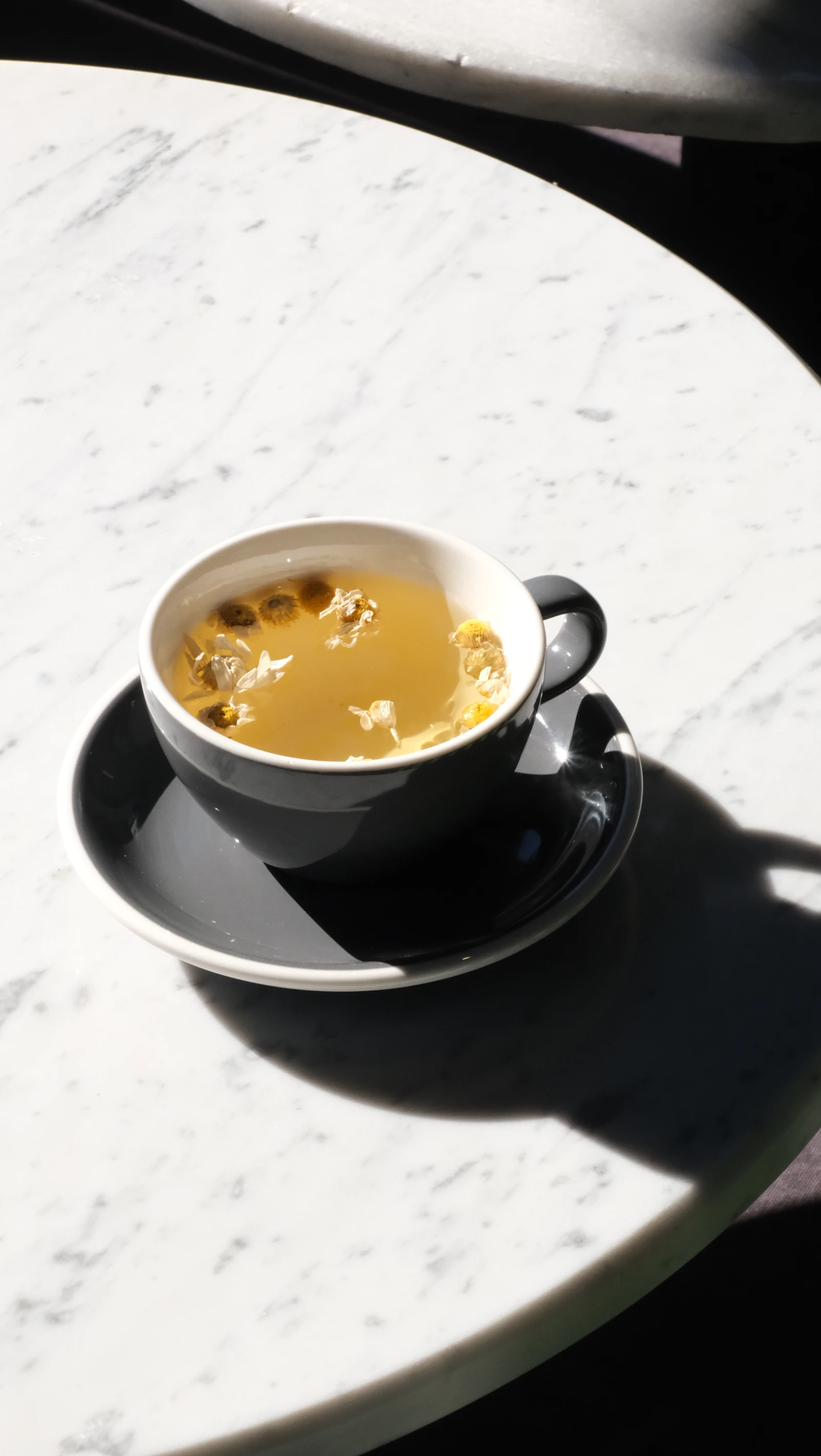
- Dried tangerine peel tea after meals: 3 g in 300 ml of 90°C water for 8 minutes. Traditionally used for bloating and belching; skip with reflux.
- Chrysanthemum and goji berry tea: 3 flowers and 10 berries in 300 ml water. For eye strain after long screen days. Goji can interact with warfarin.
Western route
- Oatmeal with nuts and fruit for breakfast; lentil or bean soup for lunch. Fiber and protein at regular times do more for afternoon mood than any supplement.
- Oily fish twice weekly, with greens and olive oil.
Emotional care
- Tell the truth to one person weekly. Not a complaint session — a specific account of how the week went. Naming it reduces the load.
- Keep a “done” list, not only a to-do list. Stress often comes from a sense of no progress. Three completed items a day is evidence.
- Set one boundary and hold it for a month. A fixed end to work, one screen-free hour, or no email before breakfast.
Movement
The daily walk is the base. Add gentle mobility — 5 minutes of shoulder and hip circles, or two baduanjin movements — on desk-heavy days. Toward qi deficiency, keep sessions short and stop before exhaustion; toward yin deficiency, avoid late intense exercise.
Daily rhythm
- Same wake time, daylight early, meals at regular hours.
- A 10-minute walk after dinner.
- Screens off an hour before bed.
- One day a week with no alarm, but not more than an hour later than usual.
Doses should fit your constitution and health. The constitution test is a way to organize observations, not a diagnosis.
Weekly dose checklist
| Habit | Target | Mon | Tue | Wed | Thu | Fri | Sat | Sun |
|---|---|---|---|---|---|---|---|---|
| Movement (min) | 150/week | |||||||
| Morning daylight | 5 days | |||||||
| Real conversation | daily | |||||||
| Sleep 7–8 h | daily |
Mark the dose, not the quality. After two weeks, keep the two habits with the highest completion rate and rebuild the others around them.
How long until it helps
- One walk: mood usually improves within the hour.
- Morning light: sleep onset improves in 3–7 days.
- Social contact: stress ratings improve within 1–2 weeks.
- Full stack: 4–6 weeks for a measurable change in baseline stress.
- If nothing changes in 6 weeks: the load itself needs attention, or there is a treatable condition such as depression or a sleep disorder.
When to see a doctor
- Low mood or anxiety lasting more than two weeks, or affecting work and relationships;
- Insomnia three or more nights a week for a month;
- Unexplained weight change, palpitations, or breathlessness;
- Using alcohol or sedatives to cope;
- Thoughts of harming yourself — seek emergency help.
This article is health education and does not replace individual medical advice.
Common questions
Do I need supplements?
Most people do not. Vitamin D if you are deficient, omega-3 from food, and a balanced diet cover the basics. Herbal stress products vary in quality and can interact with medication.
Is yoga better than walking?
Both help. Yoga adds flexibility and breathing; walking is easier to sustain daily. The best choice is the one you will do on a bad day.
How do I start when I have no energy?
Shrink the dose: a 5-minute walk, one phone call, lights out 15 minutes earlier. Momentum comes from completing something small, not from a perfect plan.
Can nature replace therapy?
No. Time outdoors supports mood but does not treat clinical anxiety or depression. If symptoms are significant, combine lifestyle changes with professional care.
For the acute side, see fast stress relief. For workplace sources, see managing stress at work.
The same routine can leave one person calmer and another depleted
Constitution affects how much movement and rest you need. The free constitution test is a self-observation tool, not a diagnosis; it can help you adjust the dose rather than copy someone else's plan.
References4 sources
- 01
U.S. National Center for Complementary and Integrative Health (NCCIH / NIH)
- 02
U.S. National Center for Complementary and Integrative Health (NCCIH / NIH)
- 03
U.S. National Institute of Mental Health (NIMH / NIH)
- 04
U.S. National Center for Complementary and Integrative Health (NCCIH / NIH)
Personalized guidance
Use the app for constitution-friendly ideas and structured plans when available.
Download the App
Get personalized TCM health recommendations