What Does Cortisol Do to Your Body? The Hormone Explained Without the Hype
Cortisol wakes you up, keeps blood sugar available, and tunes inflammation. It rises with stress and exercise, follows a daily rhythm, and only matters clinically when it is persistently too high or too low. This guide separates what it does from what it does not.
By WellTao · Published: · Editorial Policy
More articles in this topicTable of contents

The short version
Cortisol is a steroid hormone made by the adrenal glands. It does not exist to make you miserable. It raises blood glucose so your brain and muscles have fuel, keeps blood pressure stable, modulates inflammation and immunity, and helps set the sleep-wake rhythm. It rises sharply after waking, falls through the day, and spikes with exercise, arguments, or a near-miss in traffic.
Persistently high cortisol — from Cushing’s syndrome, certain medications, or extreme chronic stress — produces recognizable signs: trunk weight gain, easy bruising, high blood pressure, muscle weakness. Persistently low cortisol — adrenal insufficiency — causes fatigue, dizziness on standing, low blood pressure, and salt craving. Both are medical conditions diagnosed by tests.
The popular idea of “adrenal fatigue” is not a recognized diagnosis. Feeling exhausted is real; the explanation is usually sleep debt, sustained stress, depression, or another medical condition.
High, low, or just stressed
Patterns associated with high cortisol over time:
- Weight gain around the abdomen and face, while arms and legs stay thin;
- Easy bruising, thin skin, purple stretch marks;
- High blood pressure that is hard to control;
- Muscle weakness, especially in the thighs and shoulders;
- Worsening anxiety, irritability, or low mood;
- Irregular periods or lower libido.
Patterns associated with low cortisol:
- Deep fatigue that rest does not fix;
- Dizziness or fainting on standing;
- Low blood pressure, salt craving, nausea;
- Darkening of skin creases or gums (in primary adrenal insufficiency).
What most stressed people actually have: short sleep, high caffeine, unresolved workload, and a stress system that stays switched on. That can feel like “cortisol problems” without any measurable hormone abnormality. MedlinePlus notes that cortisol testing is used when a disorder is suspected, not to grade everyday stress.
What modern medicine says
Glucose and blood pressure. Cortisol promotes gluconeogenesis in the liver, raising blood glucose, and sensitizes blood vessels to constricting signals. That is useful during a challenge and problematic when chronic, especially for people with prediabetes or hypertension.
Inflammation and immunity. Cortisol suppresses inflammatory mediators and is used medically as a drug for exactly that reason. Chronic elevation shifts immune function in complex ways: some defenses weaken while low-grade inflammation persists.
Bone and muscle. High cortisol reduces bone formation and increases breakdown, and promotes protein breakdown in muscle. This is why long-term steroid medication carries bone-loss and muscle-wasting risks.
Brain and mood. Cortisol receptors are dense in the hippocampus and prefrontal cortex, regions involved in memory and emotional regulation. Chronic elevation is associated with memory complaints and mood symptoms, though causality in humans is difficult to untangle.
Sleep. Cortisol normally dips in the evening. Short sleep and late caffeine flatten that dip, which delays sleep further — the loop described in stress and your body.
Cycle and fertility. Cortisol interacts with the reproductive axis; sustained stress can disrupt ovulation and worsen PMS. It is one factor among several.
The daily curve. Cleveland Clinic describes the cortisol awakening response: levels peak 30–45 minutes after waking and decline through the day. Testing this curve requires timed samples, not a single afternoon blood draw.
The TCM view of kidney reserves
Traditional Chinese medicine treats the kidney — not the anatomical organ but a functional system — as the storehouse of essence and the root of constitutional vitality. In this model, prolonged stress and overwork draw on kidney reserves, producing a deep tiredness, low back ache, cold limbs, and night urination; if yin is consumed, dryness, night sweats, and restlessness appear instead. The adrenal glands have no separate place in this system — the comparison is analogical, not anatomical.
NCCIH’s TCM overview emphasizes that traditional concepts belong to a distinct framework and should not be presented as biomedical findings.
As patterns:
- Qi deficiency: fatigue, weak voice, shortness of breath on stairs, feeling worse after exertion;
- Yang deficiency, traditionally described as insufficient warming: cold hands and feet, low back coldness, frequent night urination;
- Yin deficiency: dry mouth and throat, night sweats, warm palms, broken sleep.
These describe tendencies, often mixed. They are self-care directions, not a substitute for hormone testing.
Everyday adjustments
1. Work with the curve, not against it. Get outside within an hour of waking for 10 minutes of daylight. Eat breakfast with protein. Do demanding cognitive work in the morning when cortisol and alertness are naturally higher.
2. Protect the evening dip. Last caffeine by 2 p.m., dim lights after sunset, and keep a consistent lights-out time. A late workout can be fine, but if sleep suffers, move it earlier.
3. Train regularly at moderate intensity. About 150 minutes of moderate aerobic activity weekly plus two resistance sessions. Avoid stacking hard sessions on short sleep.
4. Eat enough, regularly. Severe calorie restriction and skipped meals are stressors that raise cortisol. If you are dieting, keep protein adequate and avoid long fasting windows if they leave you wired and sleepless.
5. Limit alcohol. It raises overnight cortisol and fragments sleep. Three or more alcohol-free nights weekly is a reasonable target.
6. Build recovery into the week. Two scheduled recovery blocks — a walk without your phone, a meal with a friend, reading on paper — are more effective than waiting for a free weekend that never arrives.
TCM methods
Traditional care for depleted reserves emphasizes rest, warmth, and nourishment; for dryness and heat, moistening and calming. Recipes are culinary uses; for medicinal use, consult a licensed practitioner.
Acupressure and self-massage
- Taixi (KI3): in the depression between the inner ankle bone and the Achilles tendon. Gentle pressure for 30 seconds per side; traditionally described as supporting kidney reserves. Plain-text location because no dedicated page exists yet.
- Zusanli (ST36): four finger-widths below the kneecap, one finger outside the shin. One minute per side for fatigue. Halve the pressure if you lean toward qi deficiency.
- Sanyinjiao (SP6): four finger-widths above the inner ankle, behind the shin. One minute per side in the evening. Avoid during pregnancy.
- Mingmen (GV4): on the lower back, below the spinous process of the second lumbar vertebra. Rub with a warm palm for 1 minute; useful for a cold, achy low back.
Food support
Eastern route
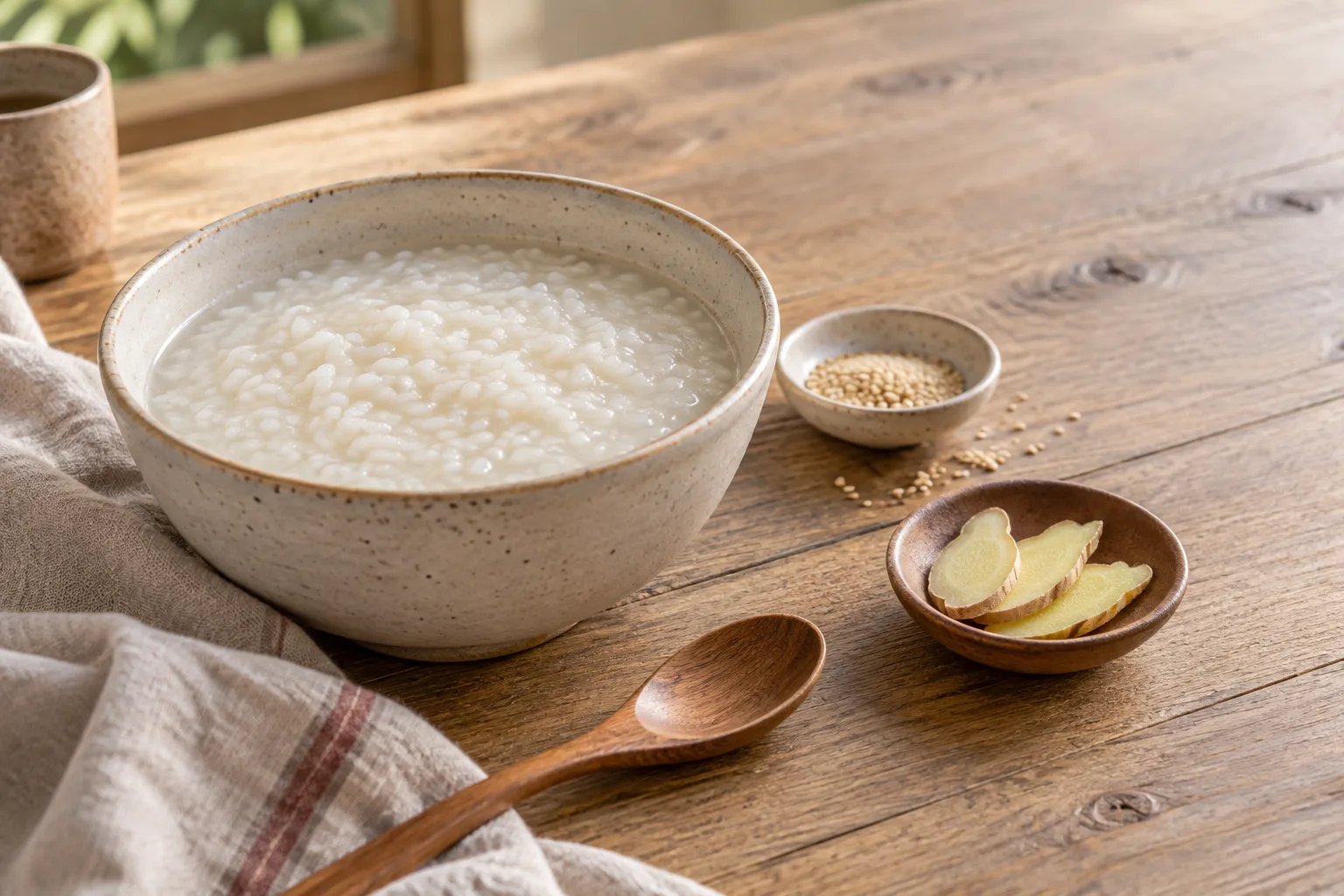
- Black bean and walnut congee: 30 g black beans soaked overnight, 15 g walnuts, 50 g rice, simmered 40 minutes. Traditionally used for low back weakness and fatigue. Dense; keep to a small bowl.
- Goji berry and red date tea: 10 goji berries, 3 pitted red dates, 400 ml water, simmered 10 minutes. Traditionally used for tiredness and dry eyes. Goji can interact with warfarin.
- Dried tangerine peel with rice: 3 g peel added to rice porridge. Traditionally used to prevent bloating from heavy meals.
Western route
- Eggs with whole-grain toast and greens: protein, B vitamins, and fiber for a steady morning.
- Sardines or salmon twice weekly: omega-3 fats and vitamin D, both relevant to mood and bone health.
Emotional care
- Separate “tired” from “depleted.” Tiredness responds to rest; depletion often needs a change in load. If a weekend does not restore you, the issue is the schedule, not your willpower.
- Name the fear behind the overwork. “If I stop, I’ll fall behind” is a belief, not a fact. Write it down and test it for a week.
- Tell one person how you actually are. Not the polite version. Social support lowers the stress response more reliably than any supplement.
Movement
Walking 20–30 minutes daily. Traditional options: baduanjin “two hands holding up the sky” and “rubbing the kidneys,” 4–6 repetitions, slow. Toward yin deficiency, avoid sweating heavily at night; toward yang deficiency, keep warm and avoid cold drafts after practice.
Daily rhythm
- Wake at a fixed time; daylight within the first hour.
- Eat lunch away from your desk.
- Take a 10-minute walk after dinner.
- Lights out within the same 30-minute window each night.
None of these practices diagnose or treat a cortisol disorder. If you have the signs in When to see a doctor, ask for testing. The constitution test is only a self-observation tool.
Daily rhythm check
| Time | What you did | Energy 1–10 | Notes |
|---|---|---|---|
| On waking | Daylight? Breakfast? | ||
| Mid-morning | Hardest task? | ||
| Afternoon | Caffeine? | ||
| Evening | Screens off? |
Look for one repeated mismatch: no daylight in the morning, caffeine after 2 p.m., or a second wind at 10 p.m. Fix one at a time for two weeks.
How long until it helps
- Morning daylight and fixed wake time: 1–2 weeks for easier mornings.
- Caffeine timing: 3–7 days for better sleep onset.
- Regular movement: 3–4 weeks for energy and mood.
- Perceived stress: 4–8 weeks of consistent basics.
A genuine cortisol disorder does not resolve with lifestyle changes; it requires medical treatment. If tests are normal, the focus belongs on sleep, mood, and load.
When to see a doctor
- Rapid weight gain around the trunk with easy bruising, purple stretch marks, or a rounded face;
- New or worsening high blood pressure, especially at a young age;
- Muscle weakness, bone fractures from minor trauma, or unexplained back pain;
- Persistent dizziness on standing, salt craving, nausea, or dark skin creases;
- Irregular periods, infertility, or low libido that persists;
- Severe fatigue with no explanation after basic blood tests.
Do not start herbal “adrenal” products before evaluation — some interact with medication and can interfere with testing. If you take steroid medication, never stop it abruptly.
This article is health education and does not replace individual medical advice.
Common questions
Is cortisol bad?
No. It is essential. People with adrenal insufficiency need cortisol replacement to live. The problem is chronic excess or deficiency, not the hormone itself.
Can stress alone cause Cushing’s syndrome?
No. Cushing’s syndrome is caused by a tumor, or by steroid medication. Severe chronic stress can raise cortisol within the normal range but does not produce the syndrome.
Do cortisol supplements work?
“Adrenal support” products are not standardized, evidence is weak, and some contain unlisted ingredients. Discuss with a clinician; do not use them to self-treat fatigue.
Why is my cortisol tested in the morning?
Because levels follow a daily rhythm and are highest after waking. A morning sample is easier to interpret. Some conditions require saliva curves or a 24-hour urine collection instead.
For practical levers, read how to lower cortisol naturally. For the broader picture, see what stress does to your body.
Cortisol follows a rhythm — so should your day
If your energy runs backwards, sleep is broken, and stress never fully clears, constitution may help you organize what you notice. The free constitution test is a self-observation tool, not a hormone test or diagnosis.
References4 sources
- 01
Cleveland Clinic
- 02
MedlinePlus (U.S. National Library of Medicine)
- 03
U.S. National Center for Complementary and Integrative Health (NCCIH / NIH)
- 04
U.S. National Institute of Mental Health (NIMH / NIH)
Personalized guidance
Use the app for constitution-friendly ideas and structured plans when available.
Download the App
Get personalized TCM health recommendations