Why Am I Always Stressed and Angry? Irritability Has Physical Causes
Feeling angry and tense all the time is not simply a bad personality. Short sleep, skipped meals, caffeine, alcohol, suppressed frustration, and hormonal shifts all lower the threshold. Here is how to find your mix and respond before you snap.
By WellTao · Published: · Editorial Policy
More articles in this topicTable of contents
The short version
Constant anger and stress usually mean your threshold has dropped, not that your character has changed. The most common causes are short sleep, unstable blood sugar from skipped meals, too much caffeine, alcohol the night before, and months of unspoken frustration.
Test the physical ones first: seven nights of fixed sleep, three meals with protein, caffeine before noon only, and no alcohol for two weeks. Many people notice a difference within ten days.
Then address the emotional side. Anger that has no outlet leaks into small triggers. Naming it, saying one true sentence to someone safe, and repairing after an outburst matter more than trying to feel nothing.
If irritability comes with low mood, loss of interest, or hopelessness for more than two weeks, get assessed for depression — it often presents as anger in men and in people who do not recognize sadness.
What is lowering your threshold
- Sleep debt: small annoyances feel intolerable; you snap and feel ashamed afterward;
- Blood sugar dips: irritability peaks mid-afternoon or when meals are late, along with shakiness and cravings;
- Caffeine: a wired, edgy feeling, jaw tension, poor sleep, and a short fuse;
- Alcohol: falling asleep fast but waking at 3 a.m., irritable and anxious the next day;
- Suppressed frustration: you say “it’s fine” for months, then explode over a minor thing;
- Hormonal shifts: irritability clustered in the week before a period, or around perimenopause, often with sleep disruption;
- Depression or anxiety: anger as the visible surface, with low mood or constant worry underneath.
Write down which ones fit. Most people have two or three, and the combination explains why one fix alone does not work.
What modern medicine says
Sleep loss lowers the anger threshold. Sleep deprivation increases amygdala reactivity to negative images and reduces prefrontal regulation. In practice, the same email that is mildly annoying after eight hours is enraging after five.
Blood glucose swings mimic anxiety and anger. Skipping meals, high-sugar breakfasts, and long gaps between eating produce tremor, irritability, and difficulty concentrating. This is not “just in your head”; it is physiology.
Caffeine and alcohol both destabilize mood. Caffeine can produce anxiety-like symptoms and disrupt sleep; alcohol relieves tension briefly but fragments sleep and increases next-day anxiety and irritability.
Suppressed anger does not disappear. Research on emotional suppression suggests that holding back expression increases physiological arousal and later reactivity. The goal is not to vent indiscriminately but to express accurately and early.
Irritability can be a symptom. NIMH notes that anxiety disorders involve excessive worry and can include irritability. Depression can present with anger, especially in men. Hormonal conditions — thyroid disease, perimenopause, PMS — also affect mood. These need assessment, not just coping skills.
Chronic stress keeps the system primed. NCCIH’s overview describes the sustained stress response as linked to sleep problems, headaches, and worsening mood. Anger and stress reinforce each other.
The TCM view of liver qi and fire
Traditional Chinese medicine associates anger with the liver. When qi flows freely, frustration passes. When it is chronically held, qi stagnates, producing chest tightness, sighing, and irritability. If stagnation continues, it can turn into liver fire: headaches, red eyes, a bitter taste, ringing in the ears, and outbursts. If yin is depleted, the same heat has less to balance it, so irritability worsens with fatigue and poor sleep.
This is a traditional model of patterns, not a modern diagnosis. NCCIH’s TCM overview notes that such concepts belong to a distinct framework.
As patterns:
- Qi stagnation: chest tightness, sighing, irritability tied to specific frustrations;
- Yin deficiency: dry mouth, night sweats, irritability worse when tired, poor sleep;
- Damp-heat, a traditional pattern of heaviness with heat-like signs: bitter taste, oily skin, short fuse;
- Qi deficiency: irritability mixed with exhaustion, worse after exertion.
Patterns often combine. They guide which habits to prioritize, not what to call yourself.
Everyday adjustments
1. Fix sleep before anything else. Fixed wake time, seven nights. If you wake at 3 a.m., get up rather than lying there angry. No caffeine after noon during this experiment.
2. Eat three times, with protein. Breakfast within two hours of waking, lunch before 1 p.m., dinner before 8 p.m. Carry a snack for the 4 p.m. dip — nuts, yogurt, or fruit with nut butter.
3. Cap caffeine and drop alcohol for two weeks. Taper caffeine to avoid withdrawal headaches. Notice the difference in the second week, not the first.
4. Learn your early signals. Jaw tightening, shoulder rise, faster speech, or a specific thought (“of course they did”). Intervene at the signal, not after the outburst.
5. Use a 10-second exit. “I need a minute” and leave the room. Walk, breathe out long, return. This is not avoidance; it is preventing damage.
6. Repair after an outburst. Name what happened, apologize for the delivery without excusing the content, and say what you will do differently. Repair is what keeps relationships intact.
7. Say the unsaid thing early. One honest sentence before resentment compounds: “When meetings start late, I lose the only hour I have for focused work.” Specific and early beats explosive and late.
TCM methods
These target stagnation and heat. Recipes are culinary uses; for medicinal use, consult a licensed practitioner.
Acupressure and self-massage
- Taichong (LV3): on the top of the foot, in the depression between the first and second toes, sliding upward. One minute per side, with slow exhales; traditionally used for irritability and headaches.
- Neiguan (PC6): three finger-widths above the inner wrist crease. One minute per side when the chest feels tight.
- Taiyang: the hollow behind the midpoint between the eyebrow and outer eye corner; gentle circles for 30 seconds for tension headaches.
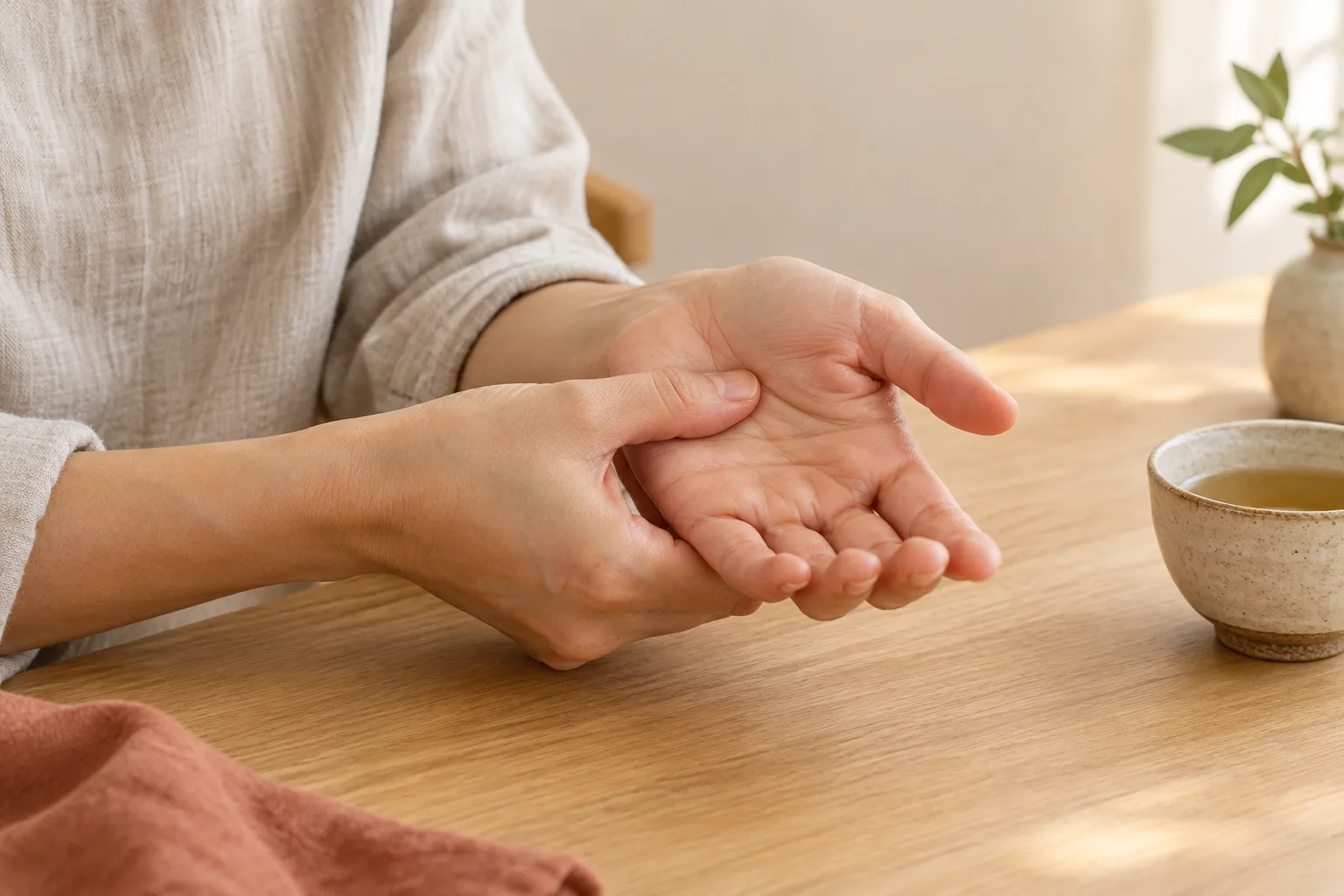
- Hegu (LI4): on the back of the hand, between the first and second metacarpal bones. One minute. Avoid during pregnancy.
Food support
Eastern route
- Chrysanthemum and goji berry tea: 3 dried chrysanthemum flowers and 10 goji berries in 300 ml of 90°C water. Traditionally used for red eyes and irritability with heat signs. Goji can interact with warfarin.
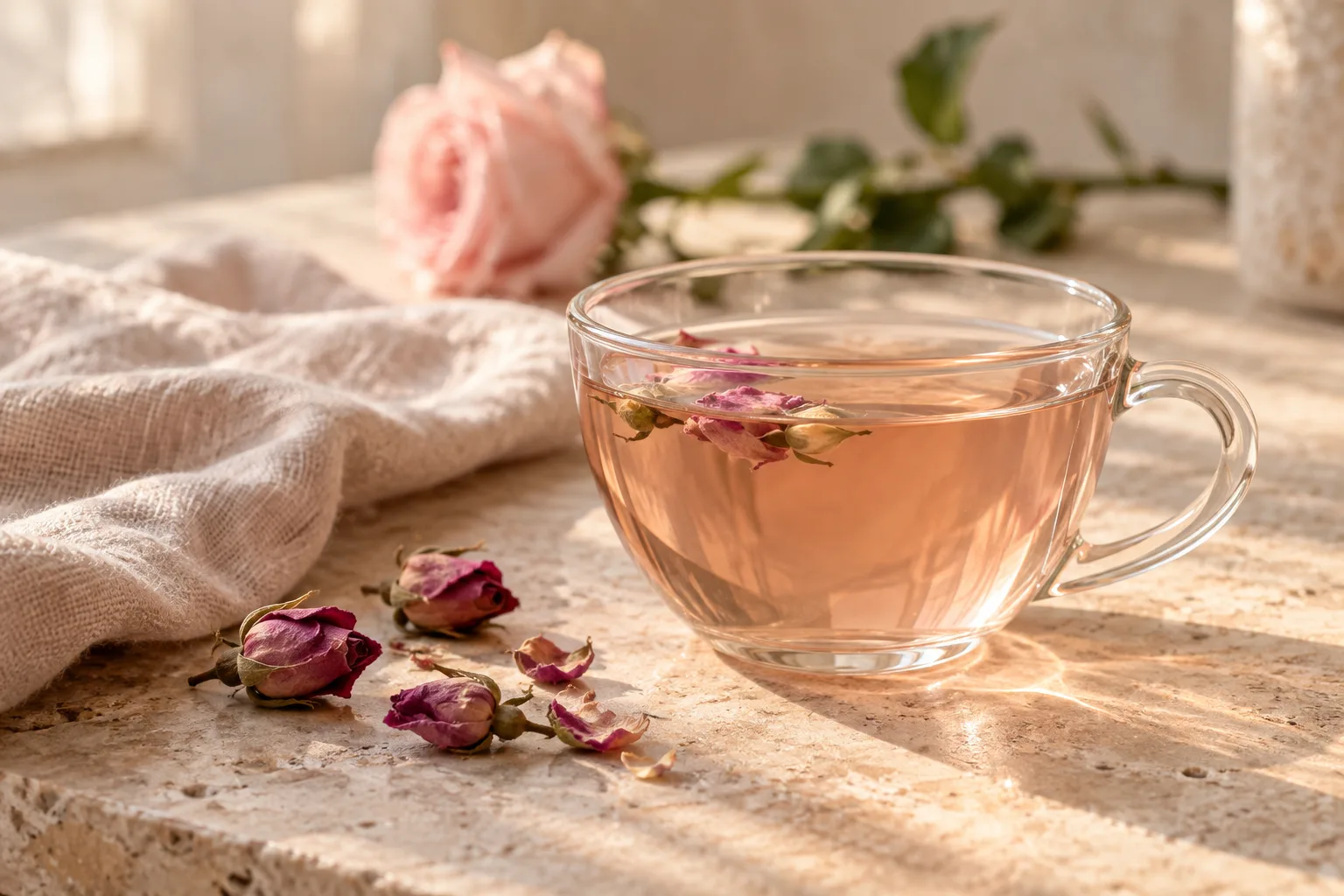
- Rose and dried tangerine peel tea: 3 rose buds and 3 g peel in 300 ml water for 8 minutes. Traditionally used for chest tightness and mood.
- Mung bean soup in warm weather: 50 g mung beans soaked and simmered until soft. Traditionally used for heat signs; not for cold hands and loose stools.
Western route
- Protein-and-fiber breakfast to prevent the mid-morning crash.
- Reduce ultra-processed snacks and sugary drinks, which spike and drop glucose.
Emotional care
- Name the anger and the need underneath. Anger often covers feeling dismissed, disrespected, or overwhelmed. “I’m angry because I felt ignored” is more actionable than “I’m angry.”
- Write the letter you will not send. Then write what you actually need to say in one sentence.
- Tell one person the truth weekly. Suppression thrives in silence.
Movement
Daily walking, plus 10 minutes of vigorous movement when anger is high — stairs, jumping jacks, a fast walk. Traditional: “punching with a glare” and “drawing the bow” from baduanjin, 4–6 repetitions with long exhales, to release chest tension.
Daily rhythm
- Morning daylight and breakfast.
- A real lunch break away from the desk.
- No alcohol on work nights during the experiment.
- Screens off an hour before bed.
Constitution is a self-care reference. The constitution test is not a diagnosis; persistent irritability with mood changes needs assessment.
Irritability trigger log
| Day | Sleep (h) | Last meal | Caffeine (time) | Alcohol | Trigger | Intensity 1–10 | Early signal | What I did |
|---|---|---|---|---|---|---|---|---|
| Mon |
After two weeks, look for the most common trigger and the earliest signal. The signal is where intervention works; the trigger is what to discuss.
How long until it helps
- Sleep and meals: 3–7 days for a noticeable drop in reactivity.
- Caffeine and alcohol changes: 1–2 weeks, with the second week clearer.
- Naming and early expression: 2–4 weeks to become habit.
- Depression or anxiety treatment: 4–8 weeks, and needs professional care.
If anger is affecting relationships or work, or you have hurt someone or fear you might, seek help sooner rather than experimenting alone.
When to see a doctor
- Anger with loss of control, threats, or physical aggression;
- Low mood, hopelessness, or loss of interest for more than two weeks;
- Anxiety or constant worry most days;
- Irritability with palpitations, weight change, or heat intolerance — check thyroid;
- Irritability clustered with periods or perimenopause that disrupts life;
- Thoughts of harming yourself or others — seek emergency help immediately.
This article is health education and does not replace individual medical advice.
Common questions
Is anger a sign of depression?
Sometimes. Depression can present as irritability, especially in men and in people who do not identify sadness. If anger comes with sleep and appetite changes, loss of interest, or hopelessness, get assessed.
Why am I angrier when I’m tired?
Sleep loss reduces prefrontal control and increases emotional reactivity. The threshold drops, so small triggers produce large responses. This is one of the most reliable findings in sleep research.
Does venting help?
Venting intensely without resolution tends to rehearse the anger. Better: name the feeling, identify the need, and take one concrete action. A brief physical outlet — walking fast — helps discharge arousal.
Could it be hormonal?
Yes. Thyroid disease, PMS, and perimenopause can all affect irritability. If the pattern tracks your cycle or comes with other physical changes, ask for an assessment.
For the constant-tension version, see why you feel stressed all the time. For pressure situations, see handling pressure.
Irritability often runs in a pattern, not a personality
People leaning toward qi stagnation tend to hold frustration until it erupts; those leaning toward yin deficiency get irritable when tired and dry. The free constitution test is a self-observation tool, not a diagnosis.
References4 sources
- 01
U.S. National Center for Complementary and Integrative Health (NCCIH / NIH)
- 02
U.S. National Institute of Mental Health (NIMH / NIH)
- 03
U.S. National Institute of Mental Health (NIMH / NIH)
- 04
U.S. National Center for Complementary and Integrative Health (NCCIH / NIH)
Personalized guidance
Use the app for constitution-friendly ideas and structured plans when available.
Download the App
Get personalized TCM health recommendations